Kobelco to Take Majority Stake in Case Construction, New Holland in $1 Billion Deal
Key Highlights
-
$1 billion deal: Kobelco will acquire 70 percent of CNH's construction equipment business, with CNH retaining 30 percent.
-
Broader equipment lineup: Kobelco gains Case Construction, New Holland Construction, and Eurocomach, expanding beyond excavators and cranes.
-
Agriculture focus: CNH shifts its attention to agricultural equipment and precision technology after years of construction equipment expansion.

Didn't see this one coming: CNH is selling majority control of its construction equipment business to Kobelco Construction Machinery. This comes after years of Case and New Holland brands aggressively expanding into new construction equipment categories — from mini skid steers to big motor graders.
On November 9, CNH announced an agreement to sell a 70 percent stake in its construction equipment business to Kobelco, a wholly owned subsidiary of Japan’s Kobe Steel. The transaction values CNH's construction equipment business at approximately $1 billion. The companies will establish a joint venture, with CNH receiving approximately $700 million in cash and retaining a 30 percent ownership stake. The transaction is expected to close by the end of 2027, pending regulatory approvals and all those other business-type conditions. From the press release:
“This transaction significantly advances CNH’s portfolio simplification and sharpens our focus on agriculture in line with our Path to 2030,” said Suzanne Heywood, chair of the CNH board of directors. “As the largest pure-play agriculture machinery OEM, CNH will be better positioned than ever to invest with conviction and create value for farmers, dealers, and shareholders at every point in the cycle.”
For CNH, the deal represents a major shift toward ag, focusing on its Case IH, New Holland Agriculture, and STEYR brands. For Kobelco, the agreement offers the opposite — an opportunity to become a much broader construction equipment player. Kobelco gave us three main reasons it’s making this move.
Why is Kobelco buying?
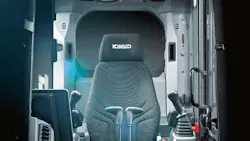
According to Kobelco, the transaction is driven by three major opportunities:
- A stronger global presence: CNH’s established dealer networks in North America and Latin America give Kobelco opportunities to reach more customers and expand into new markets.
- A broader equipment portfolio and more advanced tech: Kobelco specializes in excavators and cranes. CNH adds wheel loaders, skid steers, compact track loaders, backhoes, motor graders, dozers, and electric equipment. Kobelco also wants to combine CNH’s GNSS positioning capabilities with its K-DIVE remote-operation technology.
- A bigger aftermarket business: Combining the companies’ equipment populations and dealer networks creates opportunities to expand parts sales, maintenance, service, and customer support.
What the CNH-Kobelco transaction includes
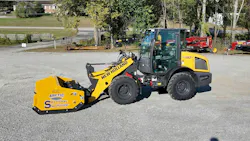
How will this all work? Under the agreement, CNH will transfer its construction equipment business into a newly established company. Kobelco will acquire 70 percent of that operation, while CNH retains the remaining 30 percent. CNH plans to use the proceeds to reduce debt and strengthen its balance sheet. Both companies will be subject to a three-year lock-up period on their ownership interests.
The joint venture will operate through two companies and become part of the Kobelco Construction Machinery Group. CNH will remain involved as a minority shareholder and strategic partner. Humayun Chishti, currently president of CNH’s Construction segment, is expected to lead the new operation as CEO following the closing. The business will continue selling equipment under the Case Construction Equipment, New Holland Construction, and Eurocomach brands.
Existing sales and service channels are expected to remain pretty much the same for now. CNH Capital will also continue providing retail financing, leases, rental programs, and insurance services. CNH agriculture dealers will also retain access to both Case and New Holland construction equipment that comes out of this new venture. From the press release:
Gerrit Marx, chief executive officer of CNH: “We undertook a comprehensive process to evaluate how best to position our construction equipment business, and it was clear that Kobelco is the right long-term steward, and that our joint venture approach will ensure a smooth transition for the business and our team members who support it. The CE JV will be a leader with the scale, focus, and agility to invest, accelerate innovation, and better serve global construction customers.”
CNH has spent years expanding its construction equipment business
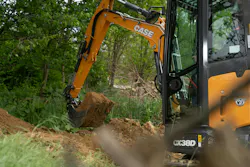
The timing of the transaction is interesting for sure — especially when considering CNH’s product expansions. Over the past several years, Case Construction Equipment and New Holland Construction have nearly completed their earthmoving portfolios. Some of that growth has come internally. Other products have grown out of acquisitions and OEM partnerships.
CNH acquired Italian manufacturer Sampierana in 2021, adding the Eurocomach brand of mini and midi excavators and compact loaders. More recently, Case and New Holland partnered with Netherlands-based Tobroco-Giant in 2023 to supply compact articulated loaders for North America. Case also announced an agreement with Bell Equipment in 2026 to manufacture three large motor graders ranging from 250 to 350 horsepower.
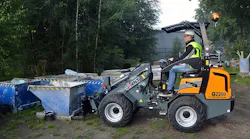
Alongside those partnerships, Case has continued developing very cool machines inhouse. It launched its unique Case Minotaur DL550 compact dozer loader in 2022. It completely revamped its famed backhoe loader lineup in 2023. Just this year Case introduced three next-generation N Series crawler dozers.
Electrification has become another major focus
Case first unveiled its 580EV electric backhoe loader in March 2020 at Conexpo. It was called Project Zeus. The commercial production version launched in 2024. Beyond backhoes, Case’s electric equipment portfolio includes the CX15EV mini excavator and CL36EV compact wheel loader. More recently, Case introduced the TL100EV electric mini track loader, an attachment carrier designed to fit through openings as narrow as 36 inches. Watch that video above.
How do Kobelco and CNH’s equipment portfolios compare?
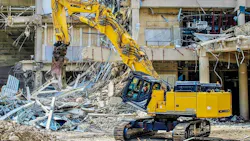
At first glance, the two manufacturers have an obvious overlap: excavators. Kobelco has built its reputation around hydraulic excavators. The company has a wide variety of machines spanning compacts, conventional crawler excavators, short-radius models, and specialized units (like demo or recycling excavators). In America, Kobelco is also a major manufacturer of crawler cranes. Outside North America, Kobelco offers other equipment categories, including small wheel loaders, vibratory rollers, plate compactors, scrap handlers, and specialized forestry equipment.
CNH, meanwhile, offers a considerably broader selection of construction equipment in America. Through Case Construction Equipment, New Holland Construction, and Eurocomach, its portfolio includes excavators, wheel loaders, compact wheel loaders, skid steer loaders, compact track loaders, backhoe loaders, crawler dozers, attachments, and motor graders. Excavators present the most obvious opportunity for shared engineering, manufacturing, and product development. They also raise questions about how the companies will manage overlapping excavator lines.
Why is CNH stepping away from construction equipment?

While Kobelco sees opportunities for expansion, CNH views the transaction as a way to "simplify" its business. The company wants to concentrate its resources on agricultural equipment and the precision technology that goes along with that. CNH says the transaction will position it as the world's largest manufacturer focused exclusively on agricultural machinery.
But also, maybe CNH is seeing the down cycle in the construction equipment business. As we've mentioned in previous posts, massive investments in data center construction are helping support parts of the nonresidential construction market. That spending has offset weakness in other sectors, but how long can it last? If the data center boom slows, equipment manufacturers could face an even tougher market.
“We are confident that this is the right next step for CNH, our dealers, customers, and colleagues,” said Marx in the press release. “As the agriculture industry moves toward recovery, this transaction strengthens CNH’s ability to invest in the products and technologies that matter most to farmers. At the same time, by creating a stronger construction equipment player, both CNH and CE JV dealers, along with their customers, will benefit from a suite of high-quality, cost-competitive construction machines that incorporate leading technology.”
On the flip side, the timing comes during a challenging period for agricultural equipment manufacturers. CNH reported third-quarter 2026 consolidated revenue of $4.35 billion, essentially flat compared with the previous year. Agriculture sales declined 2 percent to approximately $2.9 billion.
Interestingly, the company’s construction business performed better during the quarter. Construction net sales increased 5 percent to $777 million, driven primarily by higher North American volumes. The construction segment reported an adjusted operating margin of 8.4 percent, compared with 1.9 percent a year earlier. For the first nine months of 2026, construction sales reached $2.22 billion, up 5 percent year over year. However, adjusted operating profit declined 17 percent to $52 million over that period. Of note: CNH attributed part of its third-quarter construction profit improvement to tariff refunds and lower SG&A expenses.
A surprising change for CNH and a major opportunity for Kobelco

The transaction marks a significant change for two really big equipment brands. CNH has spent years building a broader construction equipment portfolio, particularly in compact machines. Kobelco has taken a more specialized approach. This joint venture brings those strategies together. We’ll keep you updated on what happens next.
About the Author
Keith Gribbins
Keith Gribbins is the head of content at Construction Equipment, where he leads editorial strategy across print, digital, video, and social channels. An award-winning journalist with more than 20 years of experience, Keith has won 17 national and regional editorial awards and is known for his hands-on reporting style, regularly visiting manufacturers, operating equipment, and covering major industry events worldwide.