Construction Market Summer 2026 Overview: Winners, Losers, and Where the Work Is
Key Highlights
- 🤖 AI keeps the shovels moving. Data center construction is still the industry's biggest growth engine, with spending up 46 percent year over year.
- 🛣️ Highways are humming — for now. Public infrastructure remains strong, but contractors are keeping one eye on Washington and the next transportation bill.
- 🏠 Housing is still stuck in low gear. Home affordability continues to squeeze residential construction, while contractors working in nonresidential markets keep adding jobs.

How was your summer? It’s not quite over. I know. But it feels like it’s sunsetting. Vacation’s gone. Kids are going back to school soon. My home renovation projects sit unfinished. Of course, maybe you never had time for vacation in the first place. Construction certainly didn’t slow down this summer — especially if you were working in a booming market like data centers.
This summer has been driven by a few of these aggressive markets, propping up construction’s overall output. Alas, I am now required by law to start off every article by mentioning AI, and so, it appears artificial intelligence continues to turn data centers into construction’s hottest market. Data center construction increased 46 percent over the past 12 months, according to this June report from the Associated General Contractors of America. U.S. data center construction spending has even surged past public transportation spending, topping $50 billion and signaling a huge shift in infrastructure priorities, according to an excellent article by our sister publication Roads & Bridges.
Public infrastructure is also currently providing a reliable stream of work. Highway contractors have a good amount of jobs today. The bigger question is what happens after Washington finishes debating the next transportation bill. Meanwhile, residential construction remains extremely blah because of affordability. The median price of a new single-family home sold in June 2026 was $398,300, according to the National Association of Home Builders. That’s insane, and that’s down 2.7 percent from a year earlier, largely because builders have been using more price cuts and incentives to move inventory.
At the same time, commercial building is uneven, and manufacturing has cooled after several years of extraordinary investment. Still, contractors continue hiring. There’s a lot going on, so let’s take a look at what’s been happening this summer in the many markets under the construction umbrella.
Construction in 2026 is becoming a tale of two markets
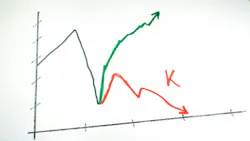
For this story, I dug through reports from the American Cement Association (ACA), Associated General Contractors of America (AGC), Associated Builders and Contractors (ABC), and National Association of Home Builders (NAHB). One trend appears repeatedly. Overall construction remains active, but growth is increasingly concentrated in verticals like digital infrastructure, power, and public works. The private sector is a good example of this.
The American Institute of Architects (AIA) described nonresidential construction in 2026 as a K-shaped outlook. According to AIA numbers, overall nonresidential building spending fell 2 percent to $846 billion in 2025 and declined another 7 percent during the first five months of 2026. As a result, the AIA Consensus Construction Forecast now expects overall nonresidential spending to slip 0.3 percent in 2026 before rebounding 3 percent in 2027. The commercial market tells a slightly different story, however, thanks almost entirely to data center construction. From this report:
"Commercial spending fell 3.2 percent in 2025, but the consensus now calls for a 4.8 percent increase in 2026, up from 3.0 percent in the January 2026 forecast, followed by a 5.8 percent gain in 2027, up from 3.5 percent previously. That upgrade, however, is almost entirely due to the rapid growth of data center activity. If data centers were excluded from the commercial outlook, the predictions would be a 1 percent decrease in 2026 and a mere 1 percent increase in 2027."
If one sector defines 2026, it’s data centers
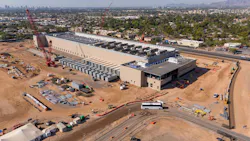
Data centers continue to dominate the conversation, and AI continues driving an unprecedented wave of digital infrastructure investment. According to ACA’s Market Intelligence report, data centers now account for 55 percent of office construction spending, up from 40 percent just one year ago. The association expects between 625,000 and 725,000 metric tons of cement to be consumed annually by data center construction through 2028. That seems like a lot of cement.
As I mentioned above, AGC reports data center construction increased 46 percent year over year, dramatically outperforming nearly every other private construction segment. Our sister publication Roads & Bridges recently highlighted another milestone. U.S. spending on data center construction now exceeds spending on public transportation projects, illustrating just how dramatically infrastructure priorities have shifted toward digital capacity. The growth is also creating enormous demand for electrical infrastructure — substations, transmission systems, utility upgrades, switchyards, standby generation, and high-voltage distribution.
How is the data center dynamic changing the industry? ABC reported today that its Construction Backlog Indicator fell to 8 months in July. Then they said this:
“Backlog fell sharply in July and is down to the lowest level since January,” said ABC Chief Economist Anirban Basu. “The data center boom masks the depth of this weakness, as there is a lack of momentum in any other segment. The 88 percent of ABC contractors that are not under contract to work on a data center had an average 7.5 months of backlog. That compares poorly to the 12 percent that are under contract to work on data centers, which have 11.4 months of backlog. This dynamic has been particularly difficult for small and mid-size contractors. Backlog in the $30-$50 million annual revenue category, for instance, fell to the lowest level since March 2020.”
Highway construction remains strong, but everyone’s watching Washington
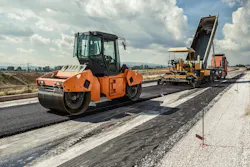
Thankfully, traditional infrastructure hasn’t disappeared. Highway and bridge construction continues providing stability. According to this August AGC report, highway and street construction declined 0.1 percent from May but was 3.1 percent higher than a year earlier. The association also warned, however, that uncertainty surrounding the next federal transportation authorization could slow future project planning. From that same August report:
“The latest spending data makes clear that public infrastructure is helping offset broader weakness in the construction market,” said Jeffrey D. Shoaf, AGC’s chief executive officer. “Congress should build on that momentum by renewing the federal highway and transit program before the current law expires. Providing contractors with long-term certainty will help keep infrastructure projects moving and support the entire economy, not just contractors and construction suppliers.”
That debate centers on the proposed BUILD America 250 Act, which would replace the Infrastructure Investment and Jobs Act. As Roads & Bridges recently reported, the proposed legislation would largely return federal transportation policy to its roots. Rather than creating numerous new grant programs, the bill emphasizes the core highway and bridge programs that state DOTs have relied on for decades. It also aims to provide more predictable formulas for funding and streamline permitting, but critics note it does not match the historic funding boost provided by the Infrastructure Investment and Jobs Act. I learned all this reading a great Gavin Jenkins’ article, which you can explore right here.
Single-family housing struggles, multifamily finds its footing
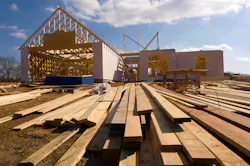
Homebuilders are not optimistic. According to the NAHB’s Housing Market Index, builder confidence has remained below 40 for 15 consecutive months. That’s the longest stretch since 2012. Any index number over 50 indicates that more builders view conditions as good than poor. Under 50 means conditions don’t look good. It’s easy to see why. Everything is expensive — elevated mortgage rates, expensive land, rising material costs —- meaning fewer and fewer people can afford new home prices these days.
According to this July NAHB report (the latest I could find), sales of newly built single-family homes rose 1.6 percent in June to a seasonally adjusted annual rate of 628,000, up from an upwardly revised May estimate. Yet, that pace for new home sales is still down 5.6 percent from a year earlier. It’s not all doom and gloom. ACA noted in its August Market Intelligence report that it sees single-family housing recovering eventually. Its economists anticipate modest growth beginning in 2027 as financing conditions improve.
Luckily, the multifamily sector is helping stabilize the industry. According to this July NAHB report, the multifamily sector, which includes apartment buildings and condos, increased 76.2 percent to an annualized 532,000 pace — up 17.2 percent compared to June 2025. No one can afford to live in houses, so they need multifamily options.
Employment remains a bright spot, if you’re not in residential
Despite uneven sectors, contractors continue hiring. AGC reports construction added 22,000 jobs in July and 82,000 over the past year. Nearly all those gains came from nonresidential construction. From that report, nonresidential firms added 20,000 employees in July and 126,400 positions or 2.6 percent over the past year. Residential builders and subcontractors combined added 2,100 workers in July but also shed 44,200 positions over 12 months. That last stat is nasty. Yet, construction wages remain strong. Average hourly earnings reached $39.24, rising faster than wages across the broader private economy. From this AGC report:
“The job gains in construction last month were the most since March, as firms continue to pay a premium to hire qualified workers,” said Ken Simonson, the association’s chief economist. “But any interruption in funding for highways or permitting for data centers would lead to layoffs in several parts of the industry.”
That’s the defining story of summer 2026. The industry isn’t slowing everywhere, but it’s becoming increasingly selective about where the work can be found.
About the Author
Keith Gribbins
Keith Gribbins is the head of content at Construction Equipment, where he leads editorial strategy across print, digital, video, and social channels. An award-winning journalist with more than 20 years of experience, Keith has won 17 national and regional editorial awards and is known for his hands-on reporting style, regularly visiting manufacturers, operating equipment, and covering major industry events worldwide.