Keep Winter Out of Your Fuel System with these Cold-Weather Maintenance Tips
Key Highlights
- Cold fuel can stop the whole crew. 🥶 Wax crystals and ice can plug filters, cutting fuel flow and leaving machines unable to start.
- Winter prep starts at the bulk tank. Check for water, treat fuel before wax forms, and service filters and water separators.
- Don’t wait for a frozen morning. Get going and read the full story below. You'll thank us come January.

It’s 5:00 a.m., 20 degrees out, and your excavator is out on the pad just spinning its starter. Behind it sit haul trucks waiting on dirt, an operator sitting in a pickup cab to stay warm, and a project falling behind schedule before the sun comes up. The immediate reaction is almost always to grab jumper cables and blame the batteries. Most of the time, the electrical system is fine. The problem is the fuel has gelled or iced, and the primary filters simply cannot pass it.
Years ago, getting around that was simple. Older mechanical engines ran around 3,000 psi through 30-micron filters. You could dump five gallons of kerosene into the saddle tank, give the air intake a shot of ether, and wait for the exhaust smoke to clear. Modern Tier 4 Final and Stage V equipment operate under entirely different rules. Common-rail injection systems run pressures over 30,000 psi with clearances under two microns. Run Ultra Low Sulfur Diesel (ULSD), seasonal bio-cuts, and condensation from an uninsulated skid tank through clearances that tight, and freezing temperatures will shut down an entire jobsite before 6:00 a.m. That combination quickly starves the high-pressure pump of lubrication, scoring plungers and sticking injector needles.
Wax, water, and biodiesel
Diesel fuel does not freeze solid like water — it drops out of suspension in distinct stages. As temperatures drop, paraffin wax falls out of solution, turning fuel hazy at the cloud point (typically 30°F to -10°F) and plugging filters at the Cold-Filter Plugging Point (CFPP). Legacy 30-micron filters could pass cloudy fuel without an issue, but modern 2-micron filters trap those wax crystals quickly, shutting off fuel flow before the engine can warm up.
Most rack diesel carries 5 to 20 percent biodiesel, which gels earlier than straight petroleum diesel. Saturated monoglycerides and trace steryl glucosides drop out first, leaving a sticky film across the filter. Standard petroleum antigels will not dissolve this fallout — winter additives must be formulated specifically for biodiesel blends.
Straight ULSD holds very little water, but biodiesel pulls humidity out of the air. When machines cool down overnight, that dissolved moisture drops out of suspension and settles at the bottom of the saddle tank and water separator. At 32°F, it turns to slush and ice. The fuel itself might still flow, but the filter plugs with ice just the same.
Fuel starvation in common rail engines

HPCR pumps rely on the diesel passing through them for lubrication. When a filter plugs, the transfer pump pulls a heavy vacuum on the suction line. That pressure drop causes fuel cavitation, stripping the lubricating film and scoring the high-pressure plungers. At the same time, modern HPCR systems circulate large volumes of hot fuel back to the tank. When wax or slush restricts the low pressure return line or fuel cooler, backpressure spikes. That pressure disrupts injector timing and can pop plastic return lines that could trigger fault codes and limp mode. When an inlet restriction starves the high pressure pump, the system cannot reach the baseline 4,000 to 5,000 psi rail pressure required by the ECM to fire injectors. The engine just cranks until the starter overheats and the batteries drag down.
Don’t let winter put your fleet on ice
It’s getting cold out. Some machines will work through winter. Others will sit until spring. Both need attention before the first hard freeze exposes a weak battery, freezes packed mud around the tracks, or turns moisture into a maintenance headache. Our winter equipment guide gathers advice from Volvo Construction Equipment, Takeuchi, JLG, and GOMACO. We cover seasonal storage, daily inspections, battery care, fuel-system protection, undercarriage cleanup, and cold-weather options. Whether you’re parking a paver or sending a loader out to plow snow, a little preparation can help prevent expensive downtime. Read “How to Prepare Construction Equipment for Winter Work or Cold-Weather Storage” for practical tips to get your fleet ready.

Bulk tank maintenance
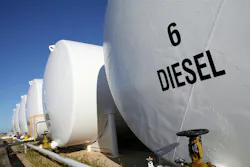
Most cold-weather machine failures originate in jobsite skid tanks or fuel trucks rather than on the equipment itself. Daily temperature swings cause exposed steel tanks to sweat internally, adding water directly to bulk fuel.
Antigels work by modifying wax crystals to keep them small and porous enough to allow liquid fuel to pass through filters. Always treat bulk fuel above its cloud point, ideally during delivery, so the additive mixes thoroughly before the crystals precipitate out.
Use water-finding paste on a gauge stick weekly to check the bottom of bulk tanks. If water is detected, pump it out from the lowest drain point before it reaches the transfer pump pickup. Run a 10-micron water-absorbing filter on the transfer pump discharge. If that transfer pump groans and slows to a crawl on a cold morning, don't get frustrated, thank it. It just sacrificed itself to catch a slug of slush before it ended up in a $300,000 excavator.
Winter recommendations
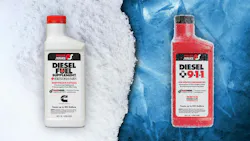
- Pre-winter filter replacement: Spin off summer primary and secondary filters to clear out fine dirt and sediment that speed up wax crystals blocking fuel flow.
- Service water separators: Clean out sediment traps, inspect plastic bowls for cracking, and verify water-in-fuel (WIF) sensor probes are clean and functioning.
- Top off at the end of the shift: Fill equipment tanks to 95 percent at shutdown to minimize headspace air and reduce overnight condensation.
- Bulk fuel treatment: Treat bulk fuel drops with an additive package that contains a cold flow improver, de-icer, and cetane improver — before the fuel reaches its cloud point.
- Keep emergency products on hand: Stock service trucks with emergency rescue de-icers that reliquefy the fuel without stripping lubricity.
Modern common-rail engines leave almost no room for error in freezing weather. Taking 10 minutes to check bulk tanks for water, treat fuel above the cloud point, and stay ahead of filter service is far cheaper than replacing pumps and injectors or explaining a dead jobsite to the project superintendent in January.
This story was written by Jessica Crabtree, fuel chemist and director of technical services at Power Service Products.