The Top 10 Trends Shaping Construction Equipment in 2026
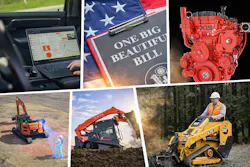
The construction equipment market continues to evolve. It’s transforming, shifting focus, getting smarter, and economizing all at once. Walk any major machine tradeshow (I just did) and you can see it. Scan recent product launches, and you begin to see the patterns. More tech is baked in. More options are offered at different price points. At the same time, bigger forces are shaping demand like data center construction. No single trend defines this moment, but I could maybe pick 10. Here’s a mix of technology, economics, and jobsite realities all colliding at once in 2026. Here are 10 trends defining the construction equipment market right now.
1. Grade control is getting simpler and more common
Grade control no longer feels like a premium add-on. It’s becoming standard equipment. High-end 3D systems still lead on large earthmoving jobs, but smaller and smaller units are embracing 3D automation tech. Example: Check out Komatsu’s new 15-metric-ton PC158USLCi-12. It’s the company’s first tight tail swing excavator with Intelligent Machine Control (IMC) 3.0. There’s also big growth in the 2D end. Factory-installed systems are cheaper, easier to use, and good enough for most applications. Check out Cat’s Ease of Use system. All of Hyundai's Next Generation crawler excavators (HX230L through HX400L) feature advanced, standard 2D machine guidance and control for enhanced digging precision (see video above). We also see tech companies like Topcon releasing entry-level 3D machine control setups like 3D MC-Edge, bridging the gap.
2. Compact equipment still rules the jobsite
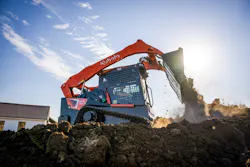
Mini excavators and compact track loaders (CTLs) continue to dominate sales. These machines hit a sweet spot in size and versatility. They’re powerful, portable, and adaptable. Contractors can trench, grade, lift, and load with each platform. Together, they are a powerful one-two dig-and-load combo. We’re seeing CTLs get bigger. Kubota just launched its largest CTL yet (the SVL110-3); other brands like Cat, Manitou, Takeuchi, and beyond have launched large-frame CTLs over the last few years. Also, the mini excavator market continues to expand. With more than 20+ brands, we’re still seeing OEMs like Kioti (a strong ag brand) enter the mini excavator market, aiming to take potential market share.
3. AI cameras move from hype to safety tool
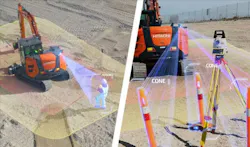
AI cameras will soon become standard safety tech. These multicamera systems detect people, obstacles, and unsafe behavior in real time. Some even log incidents for training and compliance. This is not future tech. It’s already on jobsites. Tenna, a construction technology company recently acquired by John Deere, just announced the TennaCam 2.0 HE 360 AI, a heavy equipment multicamera system offering 360-degree AI hazard detection, in-cab alerts, recording features, and more. Leica Geosystems’ new XSight360 system uses edge-based AI and up to six onboard cameras to provide operators with full 360-degree visibility around heavy equipment, object and people detection, cloud data recordings, and more. XSight360 was developed jointly with Xwatch Safety Solutions.
4. Data centers are driving the construction boom

Data centers are everywhere. These projects require heavy site prep, utilities, and tight schedules. That means more boom lifts, scissor lifts, excavators, loaders, and compact equipment on the ground. According to Brian Bieller, president of BOMAG Americas Inc., during an AEM/Conexpo press event: “There is reason to be optimistic. The boom that data centers posted includes construction spending [increasing] by 59.1 percent in 2023, 55.5 percent in 2024, and expected 37.4 percent in 2025. It’s still impactful because of the construction of new chip and fabrication plants and electric vehicle battery factories, which were incentivized by the CHIPS Act in 2022 and Inflation Reduction Act in 2023.”
5. Tax policy is accelerating fleet upgrades

The One Big Beautiful Bill Act could reshape buying cycles. The act permanently reinstates 100 percent bonus depreciation under Section 168(k) for qualifying property placed in service on or after January 19, 2025. The bill also expands Section 179 deductions, introduces Qualified Production Property incentives, preserves Pass-Through Entity Tax deductions, and does much more that equipment owners and fleet managers should know. I highly suggest you read this Carl Oliveri article right over here. New tax credits and 100 percent bonus depreciation make equipment purchases more attractive. Fleets can write off machines faster and improve cash flow.
6. Sensor fusion improves machine accuracy
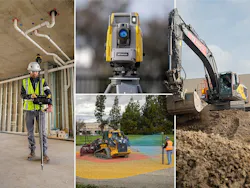
Machines are getting smarter by combining technologies. For instance, sensor fusion is changing how machines understand the jobsite. Instead of relying on one system, machines now combine multiple inputs. GNSS, LiDAR, cameras, and inertial sensors all work together. The machine blends that data into a single, real-time view of its position and surroundings. Machines can grade more precisely, avoid obstacles, and build accurate 3D maps, execute accurate 3D files, or both. Here’s Mark Contino, vice president of North American retail distribution at Topcon Positioning Systems, talking at a Conexpo press conference:
“We started this first back in the ‘90s,” said Contino. “We were the first manufacturer to provide multi-constellation Global Navigation Satellite Systems [GNSS]. We were the first to combine a fan beam laser with GNSS to create our Millimeter GPS solution. What you’re going to see and what you’ve been seeing over the last several years in the industry, especially from technology companies like Topcon, is what we call sensor fusion. And that’s bringing multiple types of technology together, whether it’s LiDAR and GPS or different things that are coming together to provide better solutions for our customers. Our goal always is to be able to get more done with less.”
7. Telematics have become jobsite control centers

Telematics platforms are evolving fast. They’re no longer just tracking hours and location. They’re managing workflows in real time. Systems now can connect multiple machines, capture data, provide security, facilitate maintenance, and inform operators and owners in one interface. Ditch Witch’s Orange Intel telematics platform connects the entire workflow from pre-inspection and rod-by-rod drill planning to as-builts and post-inspection reporting. Cat just announced a partnership with Geotab (one of the biggest telematics company in the world) to pull on-highway trucks into its VisionLink telematics ecosystem. That means one dashboard for yellow iron, highway tractors, service trucks, vans, and everything in between.
8. OEMs are splitting machines into tiers
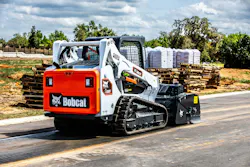
You now see base models and premium models of the same machine. Bobcat’s “Classic” and “Pro” lineup is a clear example. The Bobcat Pro CTLs and skid steers will have more features and therefore be at a higher price point. Classic models will cost less and have fewer bells and whistles. John Deere employs a similar strategy with its tier system. At the same time, online-first brands like Ignite Attachments are pushing price transparency and direct sales. Value is driving decisions as much as performance. For fleet managers, make sure you're pricing out multiple money tiers when selecting new construction equipment.
9. Multi-fuel engines offer flexibility
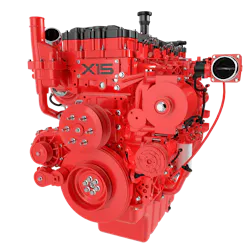
There is no single path to clean power. Multi-fuel engines are emerging as a practical solution. These engines can run diesel, HVO, natural gas, and even hydrogen blends. That gives fleets flexibility based on fuel availability and cost. A great example of this is Cummins’ X15 off-highway engine, which boasts a range of alternative fuel options, including HVO biofuels and hydrogen capabilities. Cummins also noted its Connected Solutions will be featured on the X15, offering remote monitoring, diagnostics, and over-the-air updates. The X15 is part of Cummins HELM (Higher Efficiency, Lower emissions, and Multiple fuels) platforms, which are a series of 7L to 15L engine platforms (B, X10, and X15) designed to be fuel-agnostic.
10. Mini track loaders are on the rise
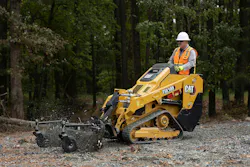
This category of equipment has many names — compact utility loaders, mini skid steers, compact tool carriers, or mini track loaders. Regardless of what you call them, these stand-on machines are compact, fast, and easy to operate. Operators can jump on and off quickly. That’s huge for landscaping, utilities, and tight jobsites. Major OEMs continue to enter the space. Caterpillar just announced its TUL100 compact utility loader. Case just announced another electric model. Bad Boy Mowers launched its Recon unit. Toro, Ditch Witch, Vermeer, Bobcat, Ariens, Wacker Neuson, Kubota, and tons of other manufacturers are all ready to sell you these mini track loaders in 2026. Check'em out.
About the Author
Keith Gribbins
Keith Gribbins is the head of content at Construction Equipment, where he leads editorial strategy across print, digital, video, and social channels. An award-winning journalist with more than 20 years of experience, Keith has won 17 national and regional editorial awards and is known for his hands-on reporting style, regularly visiting manufacturers, operating equipment, and covering major industry events worldwide.