One Way to Master a Mix of Rented and Owned Assets
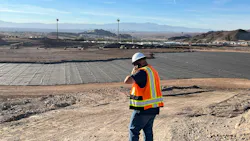
If you have a fleet where the numbers of owned and leased assets fluctuate a great deal and you have better visibility to the machines you own than the ones you rent, this story is for you.
Owned assets squawking data and the noise from having various vendors on the rental side can lead to confusion, billing problems, and unnecessary costs.
And that's just the start.
This was the case of Mid-America Golf and Landscape, a multi-state contractor specializing in synthetic turf and natural grass athletic fields, irrigation, and golf course construction. It manages a fleet of owned and rented equipment, from yellow iron to irrigation fusion machines and jobsite containers.
There are 50 to 60 vehicles, 10 to 15 trailers, 12 crawler dozers, 26 tractors, eight excavators, and 13 skid steer loaders.
Yet asset tracking was fragmented, owned equipment was tracked on spreadsheets, and inspections were managed elsewhere.
How bad was it?
The equipment manager often had to log into multiple systems daily, make phone calls to rental vendors, and chase supervisors for updates. Even with telematics installed on trucks, the data wasn’t connected to equipment billing or jobsite-level asset tracking.
There was no consolidated dashboard to view everything in one place.
“We had an idea of which job our equipment was on,” says Jim Van Dyke, Mid-America’s CFO, “but we didn’t know with 100% certainty. And we definitely didn’t have a single source of truth.”
As you can guess, the operation was rife with operational inefficiencies and financial; there was partial visibility at best. Equipment might be sitting idle while still being invoiced. Call-offs might not align with billing cycles, and maintenance schedules required manual oversight.
Van Dyke needed a solution — a management system that served owned and rented assets the same way at the same time.
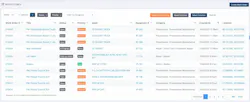
The quest for a solution
He and Mid-America first heard of Yardz, a tool for managing fleet and equipment, through the Construction Financial Management Association message board while exploring technology improvements. The company’s operations department was on a parallel quest for equipment tracking solutions.
Not everything operations found was a complete solution.
How to optimize fleet utilization
Mid-America found out that Yardz had the ability to unify both rented and owned assets, as well as aggregating all rentals in one location. Additionally, the platform also incorporated inspections, maintenance workflows, logistics tracking, and inventory management.
Mid-America was also able to add custom workflow features, such as logistics quoting functionality.
After some training, Yardz became embedded across departments. A cross-functional engagement transformed it from just a tracking tool into a centralized operational platform.
Today, the platform is actively used by:
- The equipment manager, who oversees both rental and owned assets
- Mechanics performing inspections and managing work orders
- Superintendents logging hours, mileage, and equipment issues
- Project managers monitoring jobsite assets remotely
- Drivers interacting with assigned equipment
- Finance leadership conducting invoice audits and oversight.
Results to bank on
The most immediate and measurable impact came from improved invoice oversight. Approximately six weeks after implementation, Van Dyke conducted spot checks on rental invoices using Yardz data; the findings were significant.
The company recovered $30,000 in credits from rental vendors. Shortly thereafter, another $10,000 in credits was identified.
In one instance, rental equipment had been called off but never picked up by the vendor. It sat idle for three months while billing continued. With telematics integrated into Yardz, Mid-America was able to produce clear evidence that the machine had not moved during that period.
That single situation accounted for roughly $10,000 in recovered charges. Without centralized documentation, disputing those charges would have been far more difficult and likely unsuccessful. “That alone justified the system,” Van Dyke says.
How to treat attachments like assets
Beyond direct financial recovery, time savings have been substantial. Leadership estimates that their equipment manager has gained roughly 25 percent more productive capacity. Instead of toggling between multiple vendor systems and making repeated phone calls, he now works within a single dashboard.
Superintendents increasingly log information directly through the app, reducing the need for follow-up. Project managers receive daily equipment reports, allowing them to question anomalies immediately, such as equipment that remains onsite after being called off.
Happy techs, too
Mechanics have benefited as well. Inspection schedules, maintenance records, and work order templates are centralized, creating accountability and documentation trails that improve compliance and long-term asset performance.
“Our mechanic loves it,” Van Dyke says. “It’s helped him keep track of when maintenance is done, and it leaves an easy-to-follow trail.”
Mid-America is preparing to further expand its use of the platform. Upcoming initiatives include implementing not-to-exceed rate functionality, refining warehouse tracking, and strengthening small-tool inventory controls.
What began as an effort to improve tracking has evolved into a broader operational transformation.
Most importantly, the company has more clarity. Leadership knows where assets are, what they cost, how they’re performing, and whether billing aligns with actual utilization.
About the Author
 Frank Raczon
Frank Raczon
Frank Raczon has covered and influenced the equipment industry for 35 years, including 15 years as senior editor of Construction Equipment, and marketing, advertising, and public relations work with the industry's top manufacturers. In addition to authoring "Caterpillar: Modern Earthmoving Marvels" (Motorbooks, 2015), he has won numerous awards in his career, highlighted by nods from the Construction Writers Association, the Association of Equipment Manufacturers, the Business Marketing Association, and BtoB magazine. Raczon has also won a number of awards from publishing peer groups such as ASBPE and TABPI.