Fleet Managers Need to Treat Attachments Like Assets
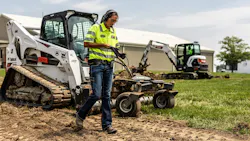
Key takeaways:
- Attachments are productivity assets, not accessories. Fleets that plan, track, and store them properly reduce downtime and keep crews moving.
- Poor attachment visibility creates hidden costs. Contractors often waste time searching for tools, renting attachments they already own, or dealing with unnecessary damage and repairs.
- Small operational changes can deliver quick returns. Simple practices like designated storage zones, labeling systems, and attachment planning can improve utilization, speed up changeovers, and boost jobsite efficiency.
Fleet management often centers on machines — tracking utilization, maintenance schedules, and total cost of ownership — while attachments receive far less attention. Yet attachments play a critical role in jobsite productivity and are too often managed reactively: purchased only when a need arises, stored wherever space is available, and tracked with little visibility.
High-performing fleets take a more intentional approach. They plan for and manage attachments with the same discipline applied to machines, ensuring the right tools are available, accessible, and job-ready. In an environment defined by tight labor markets, rising costs, and aggressive schedules, a more intentional approach to managing attachments can help crews stay productive and avoid unnecessary delays.
Common challenges on jobsites
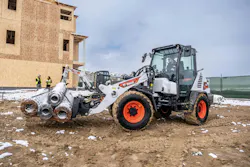
On many jobsites and in equipment yards, attachments are stored based on convenience rather than efficiency. As a result, crews may spend valuable time searching for a specific attachment, borrowing from another project, or renting equipment that already exists within the fleet but cannot be located. Each of those scenarios cost time and money while machines sit idle.
Storage practices often compound the challenge. Attachments are commonly parked wherever space is available, stacked out of sight, or left exposed to weather and traffic on busy sites. Over time, that can lead to unnecessary damage, increased maintenance needs, and shorter service life. Even small delays waiting for the right attachment can have a measurable impact by slowing schedules, interrupting workflow and reducing daily product
These issues are rarely the result of poor intent. Instead, they reflect how attachments are often managed reactively rather than as planned assets.
Planning separates proactive fleets from reactive ones
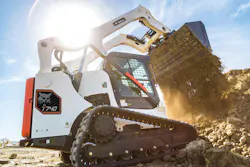
When you look at high-performing fleets, the differentiator is not fleet size or attachment count — it is planning. Top-performing fleet managers think about attachments the same way they think about machines. They plan what tools will be required for each job, ensure they arrive with the equipment, and know where they live when they are not in use.
This proactive approach minimizes scrambling in the field. Crews spend less time hunting for tools and more time working. Machines transition more smoothly between tasks, and operators are less likely to improvise solutions that slow progress or increase wear on equipment.
Planning also supports smarter purchasing decisions. When contractors understand how often attachments are used and where they deliver the most value, they can make more informed purchasing decisions and avoid owning attachments that see little use. Without that visibility, fleets often end up renting equipment they already own, borrowing across jobs, or delaying work altogether while crews track down what they need.
For operators, consistent access to the right attachment can directly influence daily productivity. When the correct tool is close by and ready to go, there is less waiting, fewer unnecessary trips across the site and more time spent on revenue-generating work. That consistency helps crews maintain momentum throughout the day.
Why storage and visibility matter
How and where attachments are stored has a direct impact on maintenance requirements, lifespan and overall cost of ownership. Attachments kept off the ground and protected from the elements typically last longer and require fewer repairs. Hoses, cutting edges and moving components fare better when they are not sitting in mud, snow or standing water.
Designated storage solutions, such as racks, pads or clearly defined drop zones, help protect equipment while reducing unnecessary repair costs over time. Proper storage also improves visibility. When attachments are easy to see and access, crews are more likely to notice wear or damage early, before it leads to unplanned downtime or major repairs.
Visibility also improves efficiency. Organized storage reduces guesswork about where tools are located, limits extra trips back to the yard and speeds up attachment changeovers. Saving just a few minutes per swap can add up quickly on jobs where machines frequently shift tasks.
Poor attachment management carries hidden costs as well. Duplicate purchases, unnecessary rentals and underused inventory can quietly add cost and reduce overall efficiency. Even attachments that see limited use still require transportation, storage space and periodic maintenance.
Keeping attachments job-ready
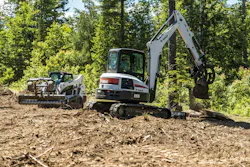
Effective attachment management does not always require complex systems or additional administrative burden. In many cases, simple and consistent best practices deliver meaningful results.
Examples include:
- Designated drop zones or racks for frequently used attachments
- Visual labels or color-coding for quick identification
- Storing attachments near the machines they are commonly paired with
- Returning used attachments to the same location each time
These habits make it easier for crews to find the right tool quickly and keep work moving without adding unnecessary steps to the day.
Clearer insight, faster decisions
Better attachment visibility allows crews to make quicker decisions. When operators can easily see what tools are on site and ready for use, there is less waiting and less uncertainty about whether the correct attachment is available.
Accessibility also supports faster changeovers. On jobs with frequent task changes, even small time savings per attachment swap can significantly improve daily output. Over the course of a week or month, that efficiency can translate into tighter schedules and fewer delays.
Managing attachments in mixed fleets
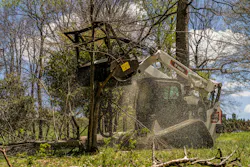
For contractors running mixed fleets, attachment management can seem more complex – but it does not have to be. The key is simplicity. Understanding which attachments work across multiple machines helps contractors avoid owning excess tools that see minimal use.
A basic tracking system, even a shared list, can go a long way. Knowing where attachments are assigned, which machines they fit and how often they are used makes it easier to move tools to where the work is happening rather than letting assets sit idle.
Standardizing attachments where possible also improves flexibility. When attachments can be shared across crews and machines, utilization improves and downtime decreases.
Seasonal demand is another important factor. Snow and ice tools may be essential during winter months, while grading, trenching or land-clearing attachments see heavier use during warmer seasons. Paying attention to how often attachments are used throughout the year can help contractors ensure the right tools are available when work ramps up.
Small changes, immediate returns
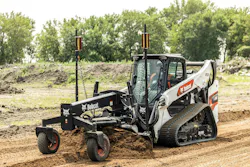
For fleet managers looking to improve attachment management quickly, a few foundational steps can make an immediate impact. First, clearly define where attachments belong — whether on the jobsite or in the yard — and communicate expectations to crews. Second, make attachments easy to identify so operators know what fits each machine and what is ready to work. Third, include attachments in job planning rather than treating them as an afterthought.
Ensuring the right attachments arrive with the machine can prevent delays before work even begins. These small improvements often deliver quick gains in efficiency while reducing frustration for operators and supervisors alike.
When attachments are planned, visible, and job-ready, they become more than supporting tools. They become an opportunity to improve utilization, reduce downtime, and get more consistent performance from the equipment already on hand. For business owners, better attachment management and small operational changes can unlock more value from assets already in the yard.
Dan Steinlicht is the general manager of attachments at Bobcat Company.