Greasing Guide: Keep Iron Moving with these Pro Lubrication Tips
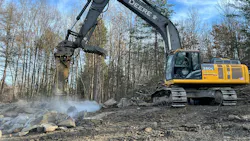
If we had a dollar for every time we heard a manufacturer’s product manager say, “The easier it is to do the maintenance, the more likely it gets done,” we’d be rich.
This is why OEMs devote so much investment and effort into easy-open service doors, ground-level access, and easy-to-reach components and grease points. But still, even the simplest maintenance isn’t always performed.
Greasing is a frequent culprit.
Lubrication is the defense that reduces friction between moving parts. Pivot points need grease to pivot properly. And when metal consistently contacts metal, damage follows. And where there is damage, downtime surely follows.

The folks at EquipmentShare have put together a primer on proper lubrication that covers vital tips for lubricating heavy equipment components.
Following these tenets can extend the life of your equipment, reduce maintenance costs, and help minimize downtime.
Where are the grease points?
Pivot points are crucial for the movement of attachments and other components in construction equipment. These points allow parts like booms, buckets, and blades to move and articulate.
Due to the constant motion and high stress placed on these areas, they need to be greased regularly. Proper lubrication ensures that the pivot points move freely, reducing wear and tear and preventing premature failure.
Bearings reduce friction between moving parts. They enable smooth rotational or linear motion and support heavy loads. Given their critical role, bearings require regular lubrication to reduce friction and prevent overheating. Well-lubricated bearings are less likely to seize up or fail.
Joints and pins also require regular greasing. These parts often bear the brunt of heavy loads and continuous movement. Regular lubrication ensures that joints and pins can move freely without friction, preventing them from becoming stiff or corroded. Corroded pins are difficult to remove.
Bushings are designed to reduce vibration and wear in various parts of heavy equipment. They often serve as a cushion between moving parts, protecting them from excessive friction and mechanical stress.
Constant lubrication of bushings is essential to maintain their effectiveness. Without adequate lubrication, bushings can wear out quickly, leading to increased vibration and potential damage to other components.
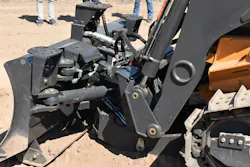
Lubrication needs vary with equipment categories. Size matters, as well.
Large machines like crawler dozers and excavators typically require more frequent lubrication. Since these machines have more moving parts, their pivot points, bearings, joints, pins, and bushings need regular lubrication to keep them running smoothly.
Smaller machines like compact track loaders and mini excavators may have fewer lubrication points, but they still require regular lubrication. The frequency and amount of lubrication may be less compared to larger machines, but these smaller units still need regular attention to stay in optimal condition.
Equipment operating in high-stress environments typically needs to be lubricated more frequently. Factors such as operating hours, workload intensity, and environmental conditions like dust, moisture, and extreme temperatures can impact how often a machine needs greasing.
Take a crawler dozer, for example. It may be working double shifts in a dusty, abrasive environment. That means it will require more frequent lubrication compared to a dozer operating in more moderate conditions.
Over-greasing vs. under-greasing
There’s no winner in this matchup.
Over-greasing can occur when you apply too much lubricant to a machine's components. This can lead to several problems. First, excessive grease can cause seals to rupture, allowing contaminants to enter and cause damage.
Second, over-greasing can generate excessive heat due to increased resistance in the bearing, which may accelerate wear and tear. Excess grease can also attract and hold onto dirt and debris, creating an abrasive “paste” that further damages the component.
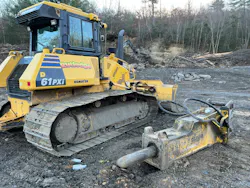
Signs of over-greasing include excess grease oozing out of seals or increased temperature of the component, according to EquipmentShare.
Under-greasing has its own consequences. In the short term, under-greased parts may exhibit increased friction and resistance, leading to immediate wear and inefficiency. Bearings, pivot points, and other critical components may start to grind. This is going to make operation sluggish and more difficult.
How to select and maintain breakers
In the long term, under-greasing can result in catastrophic failure of these components. Lack of lubrication leads to metal-on-metal contact, causing parts to overheat, seize, or break.
Out with the old grease
This is essential for maintaining the optimal performance and longevity of the equipment. Old grease can become contaminated with dirt, debris, and metal particles, which can compromise the effectiveness of new grease and accelerate wear and tear on critical components.
Old grease is a safety hazard. Always wear appropriate PPE, such as gloves, safety glasses, and long sleeves, to protect skin and eyes from harmful solvents and debris. Ensure work is done in a well-ventilated area to minimize inhalation risks.

Here’s how EquipmentShare recommends attacking old grease:
Manual Scraping: Use scrapers and brushes to manually remove old grease from surfaces. This method is straightforward but may require considerable effort, especially on heavily coated parts.
Solvents: Apply a solvent to dissolve and break down old grease. Allow it to sit for the recommended time before wiping it away or using a brush to scrub it off. Use a solvent that is appropriate for the material of the component to avoid damage.
Pressure Washing: A high-pressure washer can effectively remove grease, especially from hard-to-reach areas. This method is efficient but requires care to avoid damaging sensitive parts and to manage water and waste runoff appropriately.
Ultrasonic Cleaning: For smaller components, ultrasonic cleaners use high-frequency sound waves to agitate a cleaning solution, effectively removing grease and debris. This method is highly efficient and ensures thorough cleaning, EquipmentShare says.
Weather and environment
Greasing and lubrication strategies can vary significantly based on the weather and working environment, influencing both the type and quantity of grease required.
In hot environments, grease tends to thin out, which can lead to leakage and inadequate lubrication. High-temperature greases with a higher melting point are better suited for these conditions.
In cold environments, grease can thicken, becoming too viscous to flow properly and leading to poor lubrication. Low-temperature greases, often containing synthetic oils, remain fluid in extreme cold and provide adequate lubrication.
In wet environments, such as areas with high humidity or frequent water exposure, special water-resistant greases like marine greases are essential. These greases provide better adhesion and water washout resistance, so that the lubrication remains effective even when exposed to moisture.
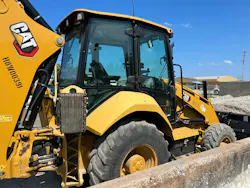
Grease manufacturers have added molybdenum disulfide to greases for additional protection, as well, and many continue to refine and improve formulas.
CITGO recently released its Mystik JT-6 HD460 Moly Plus #2. "HD460 Moly Plus #2 was developed for equipment operating in dirty, wet, and high-load environments common in the construction and mining industries," said Braden McElroy, GM of CITGO Lubricants.
The grease's formulation is meant to produce stronger adhesion to resist washout during rain or washdowns.
More wisdom for managers
Maintain a detailed lubrication schedule. It is a PM task as important as all the others. Documenting each lubrication also aids in tracking performance issues and anticipating future maintenance needs.
The better the lubricant, the better the protection. High-quality lubricants include additives that enhance performance including anti-wear agents, rust inhibitors, and extreme pressure additives. Always choose lubricants that meet or exceed the manufacturer’s specifications for your equipment.
How to cut dozer operating costs
"Although premium greases cost more upfront, they often reduce total cost of ownership through lower grease consumption, fewer component replacements, and increased uptime," said Anoop Kumar, senior staff scientist at Chevron. "Greases that stay in place longer reduce reapplication frequency, sometimes cutting usage by 25- to 35%."
Kumar also cautioned that there are several myths that can undermine a lubrication program. These are red flags for technicians and operators.
"'Grease is grease' is one," Kumar said. "Not all products are created equal. Using a grease that merely meets minimum specs can leave equipment vulnerable to wear and premature failure. "One grease fits all" is another. Attempting to consolidate to a single product may lead to compromises that affect protection across multiple applications.
Kumar said, "Color tells you everything" is also a myth. "Although some believe red means high-temp or green means eco-friendly, color is not a reliable indicator of performance. Grease selection should be based on formulation, not appearance."
Make sure all grease guns are calibrated correctly to dispense the right amount of lubricant and keep all lubrication points clean before applying grease. Dirt and dust can mix with the lubricant, leading to increased wear.

Plugged zerks
Graco offers advice on zerks that have blockages.
Two common causes of this are grease separation and contamination. Grease separation can be caused by several things, including low-quality grease, improperly specified grease, lack of greasing intervals, and equipment remaining idle for prolonged periods of time. Contamination is caused by environmental conditions.
In some instances, the solution can be as simple as changing a fitting that has malfunctioned and become blocked. The more common source of the problem is a blockage in the bushing of the joint.
There are a few different ways to remedy the blockage. The first is to apply a heat source and immediately attach a grease gun to the fitting and push the old grease out after it has been warmed and thinned out.
Another solution, according to Graco, is to find a dispensing mechanism that can push a light solvent into the joint and remove the blockage. Traditionally, using a high-pressure grease gun to force the blockage out while rotating the pin back and forth has been the best way to discharge this type of blockage.
In worst-case scenarios, the pin may need to be completely removed and the pin and bushing grease grooves cleaned.
Don't ignore inspections, training
Alongside scheduled lubrication, regularly inspect lubrication points for signs of wear, corrosion, or leakage. This can help identify potential issues early and address them before they escalate.
How to build a training matrix for an equipment shop
Ensure that all operators and maintenance personnel are properly trained in lubrication practices. Understanding the nuances of lubrication can prevent common mistakes that lead to equipment failure.
About the Author
 Frank Raczon
Frank Raczon
Frank Raczon has influenced and covered the equipment industry for 35 years, including 15 years as senior editor of Construction Equipment, and marketing, advertising, and public relations work for the industry's top manufacturers. He authored "Caterpillar: Modern Earthmoving Marvels" (Motorbooks, 2015), and has won numerous awards in his career, highlighted by nods from the Construction Writers Association, the Association of Equipment Manufacturers, the Business Marketing Association, and BtoB magazine. Raczon has also won awards from publishing peer groups such as ASBPE and TABPI.