Peruse Some Popular Backhoe Loaders: Top Machines and the Tech Behind Them
Key Highlights
- The backhoe market is smaller, but the machine still fills an important niche. Utilities, municipalities, and contractors can dig, load, lift, and road.
- Backhoes have gotten a serious tech upgrade. Choose pilot controls, automation, side-shift configurations, grade control, telematics, or alternative power.
- There’s still plenty of iron to compare. Descend below for popular backhoes from Cat, Case, John Deere, JCB, Bobcat, Kubota, and New Holland.
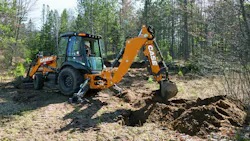
Dig and load. It’s the two basic concepts of construction, engineered into one machine. Put a loader on the front of a tractor, hang a backhoe off the rear, and give one operator the ability to swivel between the two. Over the decades, that basic dig-and-load concept has evolved into one of the most recognizable categories of equipment on the jobsite. And even though backhoe loader popularity has decreased over the years, it’s still one of the go-to machines for a variety of customers (utility contractors to municipalities) because it can dig, load, lift, take attachments, and road between jobs.
The market has certainly shrunk over the years. It’s crazy to think brands like Volvo CE, Terex, Hyundai, Komatsu, and even Yanmar used to sell backhoe loaders in America. Does anyone remember those tiny Terramite backhoes? I used to work with those folks when I started 25 years ago, but now the compact and subcompact backhoe loader market is very small. JCB and Kubota still make smallish backhoes, and you can still find a subcompact backhoe via a brand like Tamarack. But today, this sector is ruled by larger backhoes (14-foot dig depth and above) that usually cost from $115,000 to $170,000 new.
In 2026, the U.S. market is served by a core group of global brands — Case, Caterpillar, John Deere, JCB, New Holland, Bobcat, and Kubota. To give us some perspective into what’s trending, we’ve rounded up the most popular backhoe loaders on the market, detailing key specs, features, and capabilities. But before we get into that, let’s take a look at what’s trending in the backhoe market beyond brand offerings. Let’s talk about why this old-school multitasker still earns a place on the modern jobsite.
What has changed over the years?
So much has changed. Four-wheel drive has improved mobility. Auxiliary hydraulics and quick couplers have expanded attachment usage. Pilot and electronic controls have reduced operator effort and added control features. Extendable dippers have added reach. Plus, there’s so much cool tech now. We got grade control, backup cameras, automation like return to dig and kickouts, telematics, and even battery-electric units entering the market. Let’s take a look-see.
Six trends shaping today’s backhoe market
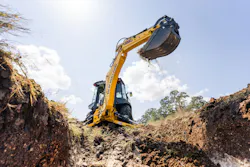
Earlier this year, Construction Equipment interviewed backhoe experts from Case, Caterpillar, and John Deere. Across all three conversations, several trends emerged about where this mature machine category is headed. Here’s what we learned.
1. Backhoes are becoming tool carriers: Digging and loading will always be the backhoe’s basic functionality, but attachments can dramatically expand this machine’s various missions. Multipurpose buckets, hydraulic breakers, thumbs, forks, brooms, compactors, and other tools are all available. Just remember: Auxiliary hydraulics and coupler systems are increasingly important specs when considering a machine.
2. Controls and automation keep getting smarter: Fun fact! I still operate in backhoe pattern when I dig with an excavator, but now those old backhoe wobble sticks are being replaced by pilot and electronic controls that offer excavator pattern options. These new controls reduce operator effort, and they open the door to automation. Through them, operators can now utilize ride control, return-to-dig, boom kickouts, parallel lift, automatic stabilizer functions, and programmable operating modes.
3. Side-shift backhoes are a growing option: North America has traditionally been a center-pivot market, and side-shift-style backhoes have always been more popular in Europe. What’s side-shift? Instead of swinging from a fixed center pivot, the backhoe assembly can move laterally across a carriage at the rear of the machine. That lets operators dig closer to walls or structures and do less repositioning. Side-shift units also typically use vertical stabilizers to reduce the machine’s footprint.
4. Cabs and tech are pretty badass: The first backhoe loaders in the 1950s were essentially open-station tractors. Today, operators enjoy climate control cabs with air-ride seats, LCD displays, backhoe cameras, joystick controls, powershift transmissions, and telematics access. Grade guidance is also available. Grade assist, e-fence-style working limits, payload weighing, and other operator-assist features are natural fits for this category.
5. Backhoes are built to hit the road: Full-size backhoes can typically travel in the 20-plus-miles-per-hour range, with some models approaching or exceeding 25 miles per hour. Automatic transmissions, torque-converter lockup, ride control, and other powertrain tech can improve roading. JCB’s latest 3CX and 4CX models use a six-speed autoshift transmission with TorqueLock and can reach nearly 30 miles per hour. Cat also offers six-speed transmissions and lock-up torque converters on certain models.
6. Alternative power has reached the backhoe: It’s a very small market in America, but battery-electric backhoes are being showcased today. Case CE offers the 580EV battery-electric backhoe, while John Deere has demonstrated its 310 X-Tier E-Power concept. JCB has also installed its hydrogen combustion engine into a backhoe loader as part of its hydrogen development work. The use case is interesting. Municipalities and utilities are major backhoe customers. Hmm….
Your backhoe can probably do more
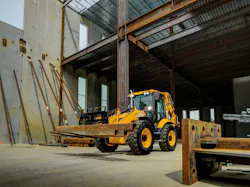
This section was written by Charlie Walbridge, product manager at JCB.
A crew starts the morning digging a utility trench with a backhoe. A few hours later, they need to break pavement, handle a section of pipe, and clean up debris. Suddenly, another machine gets called in, along with another operator and possibly another trailer. The backhoe is still on site, but it no longer has the tools to keep working. Did the backhoe reach its limit, or was the configuration shortsighted?
A backhoe equipped with a general-purpose loader bucket, standard digging bucket, and limited auxiliary hydraulics will naturally spend most of its time digging and loading. But that reflects how the machine was equipped, not necessarily what the machine is capable of doing. Configure the backhoe around the range of work it will encounter throughout the day, and its role on the jobsite can expand considerably.
Look at the tasks you regularly hand off. If pavement removal requires another machine, a hydraulic breaker may keep that work with the backhoe. If crews need another machine to move pipe, logs or debris, a thumb or grapple can add material handling capability. A multipurpose loader bucket expands the front end beyond loading to grabbing, stripping, grading, and spreading material. Extending dippers can add reach and digging depth. The attachment itself is only part of the equation. Hydraulic flow, auxiliary circuits, couplers, and controls all determine which tools a machine can use effectively. Those decisions are much easier to make before the machine arrives than after a crew discovers a capability gap on the jobsite.
The goal is not to equip a backhoe for every possible application. Look at the work that regularly requires another machine, operator, or trailer. Spec the backhoe around those recurring tasks, and you may find considerably more capability in the machine already on site.
Some of the most popular backhoes on the market
Backhoe loaders remain one of the jobsite’s great multitaskers. Here are the most popular units from Caterpillar, Bobcat, JCB, Case, John Deere, Kubota, and New Holland.
Kubota M62 tractor loader backhoe
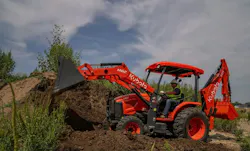
Built for demanding jobsites, Kubota’s M62 tractor loader backhoe combines power, versatility, and performance to help contractors tackle a wide range of construction applications. Powered by a 63-gross-horsepower Kubota diesel engine, the M62 is designed for trenching, excavation, material handling, and site preparation. The M62 features a performance-matched backhoe with a maximum digging depth of approximately 14 feet and a front loader capable of lifting up to 3,960 pounds at the pivot pin. Its six-range HST Plus transmission provides smooth operation and precise control, while the integrated main frame delivers durability for repetitive digging and loading tasks. Designed with operator productivity in mind, the M62 features a reversible operator seat, good visibility, and compatibility with multiple attachments to help crews accomplish more with one machine. From utility installation to general construction, the M62 delivers performance and flexibility for contractors seeking a versatile jobsite solution. For more info, visit Kubota’s website.
Case 580 Super N backhoe loader
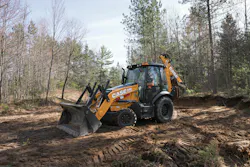
The Case 580 Super N Construction King backhoe loader combines digging power, loading capability, and operator-focused technology in one versatile machine. Powered by a 97-horsepower engine, it delivers 14,452 pounds of backhoe bucket breakout force and a maximum digging depth of 17 feet, 11 inches. Case PowerBoost provides additional digging force without a drop in engine rpm, while the optional PowerDrive transmission supports performance on grades and under heavy loads. PowerLift temporarily increases hydraulic relief pressure while reducing engine speed, slowing hydraulic response, and enabling higher lift capacity for precise tasks such as setting pipe and manhole covers. The 580 Super N also features Case ProControl for precise boom positioning and reduced rebound, along with Eco Mode to help manage fuel consumption. Integrated myCaseConstruction telematics provides access to equipment information to support fleet management and maintenance planning. For more info, visit Case Construction Equipment’s website.
John Deere 310 P-Tier backhoe loader
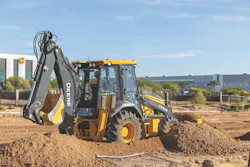
The John Deere 310 P-Tier backhoe loader is built for digging, loading, and material handling across construction, utility, and property maintenance jobs. Its 4.5-liter PowerTech engine delivers 100 net peak horsepower, while the standard dipper stick reaches a maximum digging depth of 13 feet, 8 inches. An open-center hydraulic system provides smooth control when operators use multiple functions, helping them move between tasks. The machine’s 16,217-pound operating weight provides a stable foundation for everyday work. Operators can choose standard mechanical backhoe controls or optional pilot controls with pattern select to suit their preferences. A standard four-speed powershift transmission with hydraulic reverser simplifies direction changes during loading cycles. Together, these features give crews a versatile machine for trenching, backfilling, lifting, and moving materials. The 310 P-Tier pairs backhoe utility with configurable controls and dependable performance for varied demands on the jobsite throughout the day. For more info, visit John Deere’s website.
Cat 440 and 450 backhoe loaders
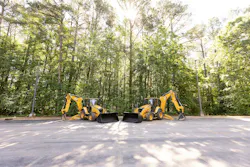
Caterpillar’s next-generation 440 and 450 backhoe loaders bring updated engines, hydraulics, controls, and technology to the larger end of Cat’s lineup. Both use the Cat C3.6 engine, with the 440 producing 127 gross horsepower — more than 9 percent higher than its predecessor — while the 450 delivers 145 gross horsepower. Maximum digging depth with a standard stick is 15 feet, 6 inches on the 440 and 17 feet on the 450. A load-sensing piston pump provides full hydraulic lifting and digging forces at any engine speed, while adjustable auxiliary flow helps match hydraulic performance to attachments. Operators can choose seat-mounted or pod-mounted electronic joysticks and independently adjust loader and backhoe response settings. Other features include return-to-dig, parallel lift, an available Integrated Tool Carrier coupler, an updated touchscreen display, Product Link connectivity, and VisionLink fleet monitoring. The 440 offers 8,782 pounds of maximum loader lift capacity, while the 450 delivers 8,886 pounds. For more info, please visit Cat’s website.
Bobcat B760 backhoe loader
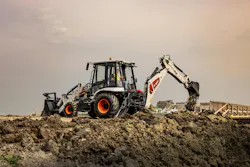
Designed for performance, durability, easy operation, and simple maintenance, the Bobcat B760 backhoe loader is perfect for a wide variety of jobsite tasks, while offering excellent dig, load, and carry versatility. The B760 features a standard equipped extendable backhoe arm that enables a dig depth of up to 18.4 feet, providing 6 to 8 inches of additional dig depth compared to other machines of the same size. The B760 offers an impressive backhoe lift capacity of more than 2,200 pounds at full reach and nearly 180 degrees of backhoe swing for less repositioning and fast cycle times. The B760’s performance and versatility extend throughout the machine, as its front-end loader also provides a lift capacity of 7,985 pounds with its standard, general-purpose bucket. Designed to help operators reach maximum productivity in less time, the B760 has thoughtfully laid out, easy-to-use controls. From the detailed, 5-inch, color display panel providing full-featured machine interaction and monitoring to pilot controls for fast and precise backhoe operations, the adjustable operator station and optional cab enclosure are built for all-day comfort and minimal operator fatigue. For more info, visit Bobcat’s website.
New Holland B95D loader backhoe
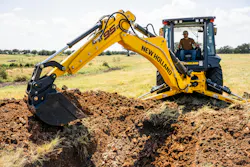
The New Holland B95D loader backhoe is built to deliver the versatility, power, and productivity that contractors need every day. Powered by a 97-horsepower FPT Industrial Tier 4 Final engine, the B95D combines strong performance with fuel-saving features such as Eco mode, auto-idle, and auto-shutdown. Its full-frame chassis, four-wheel-drive capability, and locking rear differential provide the traction and durability required for demanding jobsite conditions. Operator comfort is a key advantage of the B95D. The redesigned D Series cab offers 10 percent more interior space, improved visibility, increased storage, reduced noise levels, and available heated seating to keep operators productive throughout long workdays. The B95D delivers outstanding jobsite versatility with loader lift capacities up to 7,996 pounds, bucket breakout forces of 12,933 pounds-force, and digging depths up to 18 feet, 6 inches with the extendable dipper option. Multiple bucket configurations, hydraulic attachment capability, and easy service access make the B95D a dependable solution for loading, excavation, grading, lifting, and material handling applications. For more info, visit New Holland Construction’s website.
About the Author
Keith Gribbins
Keith Gribbins is the head of content at Construction Equipment, where he leads editorial strategy across print, digital, video, and social channels. An award-winning journalist with more than 20 years of experience, Keith has won 17 national and regional editorial awards and is known for his hands-on reporting style, regularly visiting manufacturers, operating equipment, and covering major industry events worldwide.