Backhoe Market Trends for 2026: Case Explains Electrification, Side-Shift, Sector Demand, and Beyond
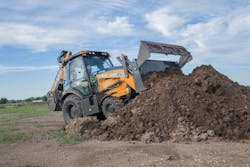
The backhoe loader has been a staple of North American jobsites for decades. It’s the machine parked outside municipal yards. The iron trenching utilities. The do-it-all unit that can load trucks in the morning and dig footings in the afternoon. But this category isn’t standing still. Electrification is entering the mix. Side-shift configurations are gaining attention. Pilot controls, ride control, and grade guidance are reshaping operator expectations.
To kick off a new interview series with leading backhoe manufacturers, we’re starting with George MacIntyre, product manager, backhoe loaders, at Case Construction Equipment. In this Q&A, MacIntyre walks us through Case’s current lineup — including the electric 580EV. This is the first in a series of conversations with OEMs across the backhoe market. Our goal: understand where demand is headed in 2026 and beyond — from configurations and attachments to controls, technology, and powertrain evolution. Here we go…
Keith Gribbins: George, thanks so much for taking the time to talk to Construction Equipment. Case is a classic equipment brand that we love, and it's known as the original American backhoe brand. The company launched its first unit in 1957. What is Case’s lineup like in 2026? George, maybe you can walk us through Case’s current backhoe portfolio.
MacIntyre: Thanks, Keith. Today Case Construction Equipment offers a complete lineup of 10 backhoes in varying configurations, along with a fully electric model — the 580EV — to give our customers clear choices based on how they work and what features they value. Our differentiator is flexibility, with Case backhoes offering a true 2-in-1 machine with options like side shift, comfort steering, and tool carrier-style fronts, backed by the strength of the Case dealer network.
What backhoe model do you expect to lead demand in 2026?
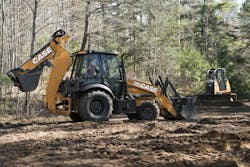
The 580SN is the most popular Case backhoe loader, and for good reason. Its performance profile aligns with the vast majority of jobsite needs, making it a versatile choice for contractors and municipalities alike. The machine is slightly narrower than its counterparts, equipped with an 82-inch loader bucket that helps it maneuver into tighter spaces where jobsite constraints are a real factor.
As part of the Case N Series lineup, the 580SN features the industry-exclusive over-center backhoe design. With the boom locked in the transport position, the weight of the boom and dipper are brought towards the front axle, creating exceptional balance for truck loading and other loader-focused tasks. The result is a machine that combines proven performance, smart design, and the agility to work efficiently in confined environments.
Which customer segments are strongest right now — municipal, utilities, rental, GC, ag — and how is that mix changing?
The stronger customer segments right now are municipalities, utilities, and general construction. Rental activity had softened last year due to an oversupply of machines in the segment, but we expect that to rebound in 2026 as rental houses begin replenishing their fleets again. The agriculture segment has been slower, though it represents only a small share of overall backhoe loader demand.
When customers cross-shop, how do you position a backhoe vs. a one CTL + one mini excavator combo?
The sales proposition for a backhoe loader is fundamentally different from that of a CTL and mini excavator combination, with one of the biggest distinctions being mobility. CTLs and minis typically require trailering, while a backhoe loader can more easily be roaded from site to site. With travel speeds over 20 mph, a backhoe loader is a strong choice when crews need to cover longer distances within a large jobsite or between jobs. A backhoe loader also delivers true two-in-one capability with only one skilled operator required. In a market where experienced operators are increasingly hard to find, that single operator efficiency provides meaningful flexibility and helps keep work moving.
Side-shift vs. center pivot: how do you guide customers to the right choice, and what applications benefit most?
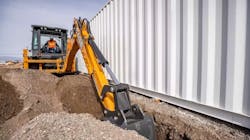
It largely depends on the job and jobsite conditions, which is the first and most important factor we encourage our customers to consider. Side shift is really ideal for narrow or congested areas where precise trench placement and minimal repositioning are critical, like for utility work. Center pivot is better for more open sites where frequent repositioning isn’t a limitation and simplicity is preferred. We are finding that while side shift is still relatively unfamiliar in the U.S. and Canada, interest continues to grow among contractors and municipalities who recognize the advantages it can deliver.
What attachments and front-end options are customers actually buying most — 4-in-1, forks, thumb, breaker — and why?
For loader attachments, 4-in-1 buckets remain popular, and we’re seeing growing interest in 6-in-1 buckets, which add flip-over fork capability to the traditional 4-in-1 design. For snow applications, sectional snow pushes have gained significant traction thanks to their overall performance and ability to protect the plow from damage from curbs or other obstacles. On the backhoe side, the most in-demand attachment beyond buckets is the hydraulic breaker. There is also strong demand for hydraulic thumbs, and Case offers a factory bolt-on solution that can be removed when needed. The widespread use of thumbs on mini excavators has helped to drive similar demand on backhoe loaders.
Pilot/joystick controls vs. mechanical levers: what’s the demand split today, and where do you see it going?
The trend in backhoe controls has clearly shifted toward pilot joystick systems. Pilot controls are better suited for larger crews where multiple operators run the same machine, and the learning curve is shorter because the control pattern aligns with excavators and other equipment. Pilot controls are also more intuitive for the next generation of operators entering the industry, helping crews stay productive from day one.
At the same time, Case continues to see relatively strong demand for traditional mechanical controls, which include our classic four stick layout and the two lever wobble sticks on applicable models. Many operators prefer the tactile responsiveness of mechanical controls and the ability to feel the bucket and boom as they work. It provides a level of feedback that keeps them connected to the machine and the job.
Awesome info. What are the top performance/technology features customers value most right now — hydraulics, automation assists, ride control?
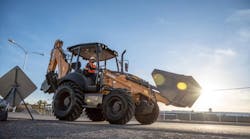
Backhoe loaders continue to evolve by adopting the most popular features from both wheel loaders and mini excavators. On the loader end, automatic ride control has become nearly universal on Case machines, with more than 90 percent of units equipped with it. The Case Comfort Steer system is another standout feature, dramatically reducing steering wheel turns during loader work and enabling quicker, more efficient truck loading. Return to dig and return to height remain proven, high-value features because they streamline repetitive loader cycles and help operators work faster and more consistently. By automating key reset points, these functions reduce wasted motion and aid productivity levels.
Precision technologies such as 2D grade guidance are also seeing increased adoption, helping operators dig with greater accuracy and consistency. These systems can reduce the need for on-ground grade checking and improve overall jobsite efficiency.
From an operator’s standpoint, what techniques or operating habits have the biggest impact on productivity, fuel efficiency, and long-term component life when running a backhoe loader?
Operators often want to increase power, but more power doesn’t always mean more productivity. Case backhoes offer multiple fuel saving settings, including Eco mode and auto idle, that help operators work efficiently without sacrificing performance. Using these features means getting the job done with less fuel and reduced wear on components of the machine.
Looking three to five years out, what changes most for backhoes: powertrain, controls, jobsite role, customer base?
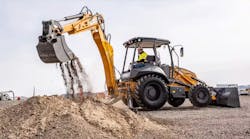
In the future, we’re expecting even greater technology integration in backhoes, mirroring the transformation happening across the construction equipment industry. Case Advanced Smart Features are helping to drive that shift by making machines more efficient, more precise, easier to operate and better connected. The Case 580EV electric backhoe is a standout example of this progress, with design features that will carry over to future diesel models.
About the Author
Keith Gribbins
Keith Gribbins is the head of content at Construction Equipment, where he leads editorial strategy across print, digital, video, and social channels. An award-winning journalist with more than 20 years of experience, Keith has won 17 national and regional editorial awards and is known for his hands-on reporting style, regularly visiting manufacturers, operating equipment, and covering major industry events worldwide.