From Digging to Roading: John Deere Breaks Down the Modern Backhoe and Where It Fits in Today’s Fleets
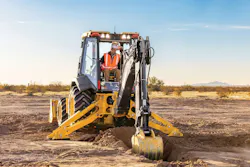
The backhoe loader is one of the classic machines on any jobsite, and it is still one of the ultimate do-it-all tools. Dig. Load. Road. Wield attachments. But this category isn’t stuck in the past. Backhoes are getting smarter, more comfortable, and more efficient. We've been detailing these trends via conversations with Case and Caterpillar. Now we’re adding another perspective. In this Q&A, we dig into the backhoe lineup strategy, customer demand, and feature trends with John Deere. We discuss it all with Emily Pagura, product marketing manager with backhoes. Let’s dig in.
CE: Emily, thanks so much for talking to us today. We very much appreciate your time, and we’re big fans of the John Deere brand. Maybe you can start off this conversation by walking us through John Deere’s current backhoe lineup. Give us a rundown of models and size classes. Also tell us what makes your backhoes unique?
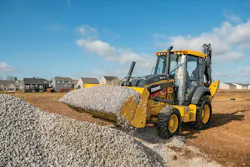
Pagura: John Deere currently offers five backhoe loader models, including the 310 G-Tier, 310 P-Tier, 320 P-Tier, 410 P-Tier, and 710 P-Tier. What sets this specific lineup apart is the brand-new cab update, which offers overhead windows for a 25 percent larger window opening, slimmer side posts, increased transition space from loader to backhoe operations, and improved control module organization, all aimed at keeping the operator efficient and comfortable. This updated lineup also features a rear vision system with two cameras on the roof cab for increased rear visibility, along with major improvements in overall operator visibility and user experience.
What backhoe models do you expect to lead demand in 2026?
For 2026, we’re seeing that the under-15-ft dig-depth size class is widely popular, which includes the 310 G-Tier, 310 P-Tier, and 320 P-Tier models. Popular configurations for customers include the extendible dipperstick and auxiliary hydraulics. We’ve also seen that customers like our new guarding packages that group things like the boom protection plate, stabilizer guards, stabilizer pads, heavy-duty front grille screen, and the MFWD guard under the machine. Buying equipment is an investment, and customers add this extra guarding to protect their investment from the tough reality of jobsites, both to keep the machine running efficiently and to maintain its value.”
It is interesting to see the smaller models trending. How has the backhoe market been performing overall for John Deere over the last 12 months — up, down, or flat?
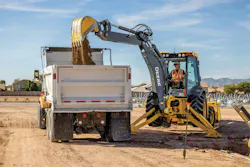
We are optimistic about current market conditions and future outcomes for 2026. While a variety of factors are influencing the market, backhoe loaders continue to offer strong versatility and customer value, which positively impacts their performance.
Which customer segments are strongest right now — municipal, utilities, rental, GC, ag?
From a segment perspective, we continue to see strong volume and opportunity within municipal markets. Backhoe loaders are easy to transport, highly versatile, and provide many benefits to these customers. In addition, backhoe loaders remain popular within rental fleets for the same reasons.
When customers cross-shop, how do you position a backhoe vs. one-CTL-and-one-mini-excavator combo?
Equipment decisions ultimately come down to value and customer preference. For some, the combination of a compact track loader and a compact excavator offers advantages, such as the ability to operate both machines simultaneously. Additionally, both machines are smaller than a backhoe loader, which can be beneficial on tight jobsites.
On the other hand, a backhoe loader requires only one operator, which is a major advantage in today’s labor-constrained environment. It is also easier to transport, as it can be driven to a jobsite rather than hauled with a truck and trailer, which may require a CDL. Additionally, purchasing a backhoe loader instead of two separate machines means customers only need to purchase, service, and maintain one piece of equipment.
What attachments and front-end options are customers buying most — 4-in-1 buckets, forks, thumbs, breakers, brooms?
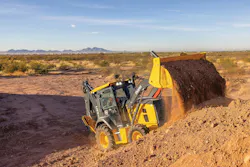
The 4-in-1, or multi-purpose, bucket is extremely popular on backhoe loaders, as it adds even more versatility to an already versatile machine. This increased capability allows customers to take on a wider range of jobs with less equipment.
Pilot or joystick controls vs. mechanical levers: what’s the demand split today, and where do you see it going?
We’ve started seeing a lot of our customers select pilot controls over mechanical levers for the ease of use they offer. In general, pilot controls require less physical effort from the operator, leading to less fatigue.
What are the top performance and technology features customers value most right now — hydraulics, automation assists, ride control, kickouts?
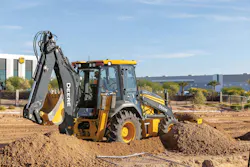
While all performance features are important, ride control remains a highly valued addition, especially on backhoe loaders. It is particularly beneficial when traveling between sites, as it improves both operator comfort and material retention. Also aiding in performance, our industry-first rear camera system, which is displayed on an 8-inch touchscreen, supplements operator vision, and reduces rear structure obstructions, improving overall jobsite awareness.
What are the three daily maintenance checks you wish every operator did without fail?
First is greasing: Backhoe loaders have many moving parts, and proper lubrication helps prevent premature wear.
Second is tires: Incorrect tire pressure can reduce performance. It’s also important to check for damage and wear to ensure timely replacement.
Third is ensuring compliance with road travel requirements: Depending on the location, operators may need specific lights, turn signals, or slow-moving vehicle signs. Since road travel is a key benefit of backhoe loaders, it’s critical to follow all local regulations.
From an operator’s standpoint, what techniques or operating habits have the biggest impact on productivity and fuel efficiency?
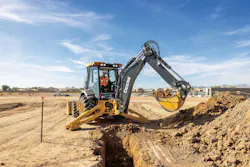
The maintenance checks and priority focus areas listed are particularly impactful on productivity. Focusing on jobsite needs, various performance modes and features can be utilized to maximize capability. Lift Mode gives operators an extra boost when craning heavy objects, while our Economy Mode helps optimize fuel usage for more efficient operations. Auto Ride Control, which automatically engages at designated speeds, helps improve operator comfort and material retention when traveling long distances. Lastly, AutoShift enables automated shifting in long transport or in load and carry applications.
Looking three to five years out, what changes most for backhoes — powertrain, diesel, electric, hydrogen, controls, jobsite role, customer base?
Looking ahead, future backhoe loader models will likely evolve in line with broader industry trends, with continued advancements in technology and alternative power sources being key areas of focus.
Awesome info, Emily. We really appreciate you taking the time to talk to Construction Equipment. To learn more about John Deere’s backhoe loader lineup, visit their website.
This interview builds on our recent conversations with Case and Caterpillar. Give both of those conversations a read at those links.
About the Author
Keith Gribbins
Keith Gribbins is the head of content at Construction Equipment, where he leads editorial strategy across print, digital, video, and social channels. An award-winning journalist with more than 20 years of experience, Keith has won 17 national and regional editorial awards and is known for his hands-on reporting style, regularly visiting manufacturers, operating equipment, and covering major industry events worldwide.