JLG Completes SkyTrak Overhaul with Redesigned 10042, 10054, and 12054 Telehandlers
Key Highlights
- Bigger booms, smarter brains: The 10,000- and 12,000-pound SkyTrak telehandlers keep their big lifts but gain SmartShift, new electronics, a redesigned cab, and standard ClearSky Smart Fleet telematics.
- Built for the biggest jobs: Whether it's setting structural steel, unloading flatbeds, stocking upper floors, or preparing for the apocalypse, these telehandlers are designed for heavy material-handling work.
- Like, maybe, just read it already: We could tell you the whole story, but man, that's pretty lazy on your part. Read the big feature downstairs.
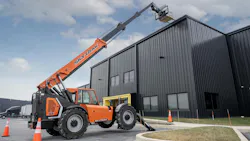
The big dogs are finally getting their update. Over the last three years, we’ve watched JLG’s SkyTrak telehandler brand get revamped. JLG announced the redesigned 6034 and 6042 in July 2023. The 8042 redesigned model was announced in May 2024. Now, JLG has unveiled new versions of its SkyTrak 10042, 10054, and 12054 telehandlers. These big rigs complete a multi-year refresh with a long list of upgrades. From the press release:
“Completing the redesign of the SkyTrak telehandler lineup represents a major milestone for the brand,” says John Boehme, senior product manager — telehandlers, JLG. “We engineered these updated SkyTrak 10K and 12K telehandler models with advanced technology and functional updates inspired directly by customer feedback, supporting productivity and operator confidence without compromising the workhorse reputation SkyTrak is known for.”
What are some applications and specs for these units?
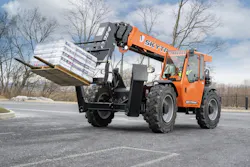
When the loads get bigger and the placement points get farther away, these are the telehandlers contractors call in. The SkyTrak 10042, 10054, and 12054 sit at the top of JLG’s North American lineup. With big lift capacities, this trio is designed to spearhead the biggest material-handling tasks in your choice of sectors. A 10042 could handle pipe and conduit on utility projects. A 12054 could stock upper floors of a multistory commercial building with pallets of block, brick, drywall, and roofing. The 10054 could load and unload flatbed trucks during and after the apocalypse. That's just a sampling.
These units can use three steering modes to accomplish all this — four-wheel circle, four-wheel crab, and two-wheel front. The redesigned 10042, 10054, and 12054 telehandlers can also use a fairly wide range of attachments for big teleys, engineered with auxiliary hydraulics and a quick-attachment interface. In fact, one of the redesigns relocates the auxiliary hydraulic connections to the side of the boom head to make hydraulic attachment changes easier. These updated models also include an electric-over-hydraulic joystick that now integrates auxiliary hydraulic controls and attachment tilt functions, making these hydraulic attachments easier to operate.
Common attachments for the 10042, 10054, and 12054 include:
- Pallet forks (the primary attachment, of course)
- Cubing forks
- Lumber forks
- Light-material buckets
- Truss booms
- Hook attachments
- Pipe grapples
- Work platforms/personnel platforms (where regulations and machine approvals allow)
The 10042 lifts up to 10,000 pounds and reaches 42 feet, 1 inch, making it well suited for commercial construction and material staging. Need more height? The 10054 stretches that same 10,000-pound capacity to 53 feet, 2 inches with nearly 39 feet of forward reach. At the top sits the 12054, boosting maximum lift capacity to 12,000 pounds while matching the 53-foot lift height and 38-foot, 10-inch forward reach.
Let’s talk other big updates
While the lift charts remain familiar, almost everything around the operator has evolved. Each machine now uses a Tier 4 Final Cummins F3.8 diesel rated at 110 horsepower. Power flows through a four-speed Powershift transmission featuring JLG’s new SmartShift technology. The system automatically manages shifts between third and fourth gears to improve efficiency without additional operator input.
Perhaps the biggest story is how much technology now comes standard or optional on these machines. JLG added optional Load Stability Indication (LSI), which continuously monitors forward load conditions and provides visual guidance to operators as they approach lifting limits. Another option, Seatbelt Engagement and Operator Presence (SEAOP), combines visual and audible alerts while restricting certain machine functions when engagement requirements aren’t met.
The enclosed cab also received a significant rethink. A larger LCD display presents more operating information at a glance. Simplified single-page load charts should speed up referencing during lifting operations. Even the glass changed. Flat cab glass now makes replacement easier and potentially less expensive after inevitable jobsite mishaps. That’s big for rental companies.
Let’s talk tech and connectivity
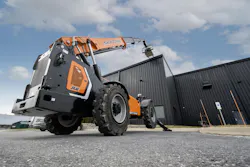
Every redesigned machine includes the JLG ClearSky Smart Fleet, giving fleet managers two-way communications for telematics, diagnostics, troubleshooting, and fleet management. Optional technology packages expand awareness even further with:
- Multi-view camera system displaying left, right, and rear views on one monitor.
- Reverse sensing system with in-cab audible alerts.
- White-noise backup alarm for more directional warning around the machine.
More JLG telehandler stories worth reading
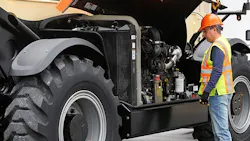
We’ve been spending plenty of time covering JLG lately because the company has been pushing technology well beyond traditional lifting equipment. Here are three recent stories worth checking out.
- The future of autonomous access equipment: We recently explored JLG’s vision for autonomous boom lifts, scissor lifts, and connected jobsites.
- Our ultimate telehandler buying guide: If you’re shopping for a telehandler, don’t miss our comprehensive buyer’s guide. We cover everything from steering modes to load stability systems.
- Smart telehandler maintenance for longer machine life: We also partnered with JLG, JCB, and Bobcat to create a deep maintenance guide for telehandlers. Check it or check yourself!