John Deere Explains SmartDetect: How AI Cameras Can Make Construction Equipment Safer
Key takeaways:
- AI cameras do more than record. John Deere's SmartDetect system identifies people and hazards in real time, helping operators avoid incidents before they happen.
- Fleet data adds value beyond the cab. SmartDetect integrates with John Deere Operations Center to provide alerts, event data, heat maps, and insights for safety and fleet management.
- The future is predictive safety. John Deere sees AI cameras evolving from hazard detection to anticipating risks and helping operators prevent incidents before they develop.
It feels like artificial intelligence is rapidly changing pretty much eveything. Construction equipment is no exception. Cameras are also no exception. AI-powered camera systems can now identify people, equipment, obstacles, and other hazards in real time, helping equipment operators improve awareness while giving fleet managers valuable data for training and risk management.
Over the past few months, Construction Equipment has been exploring this fast-moving technology through a series of in-depth Q&As with industry leaders, including Tenna and Brigade Electronics. Each company approaches their AI-powered vision a little differently, but all are working toward the same goal: making jobsites safer and more productive. Now it's John Deere's turn. In this exclusive Q&A, we talk with Nathan Demski, senior product manager, and Colton Kreber, product marketing manager, both with John Deere Construction and Forestry, about the company's SmartDetect and SmartDetect Assist technologies. We discuss how AI cameras work, what they cost, how they integrate with telematics, where they deliver the biggest return on investment, and where AI-powered jobsite awareness is headed next.
CE: Nathan and Colton, thanks so much for taking the time to talk to Construction Equipment today. I am a big John Deere fan. The company has long specialized in building practical, operator-focused machines, and it's exciting to see that same philosophy now being applied to AI-powered safety technology. For instance, we’ve been seeing an interesting amount of AI cameras showing up at tradeshows and on machines in the last 12 months. Maybe we can start off this conversation with some basics. What is an AI camera or AI camera system? How is it different from a normal camera?
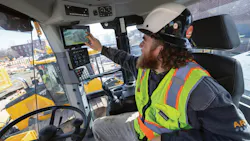
Kreber: An AI camera system combines advanced imaging hardware with on‑board edge device processing and artificial intelligence in the form of computer vision machine learning (CVML) to interpret what it sees in real time. Unlike traditional cameras, which simply provide a visual feed, AI-enabled systems can recognize objects, identify potential hazards, and provide actionable alerts to operators — helping turn visibility into awareness and, ultimately, safer in the moment decision-making.
Can you give us an overview of your AI cameras for construction equipment. What products do you offer? How many cameras are in your system? What technologies or options do they offer?
Kreber: John Deere’s approach to AI camera systems is focused on enhancing operator awareness and jobsite safety through intelligent perception with our SmartDetect and SmartDetect Assist solutions. Our systems use strategically positioned cameras around the machine paired with construction industry trained CVML models to detect objects and humans to ulitmately provide the machines operator with timely alerts.
Demski: Beyond the capabilities of identifying a possible hazard with our SmartDetect solution Deere has recently launched the next evolution in this technology with SmartDetect Assist. We bring in additional sensor modalities to provide further layers of information to the model and if needed will automatically slow or stop the machine before contact is made with a known object. This isnt about replacing the operator but having the machine work in tandem with the operator through long days on a busy jobsite. Depending on machine configuration and application, these systems can support multiple viewing angles, dynamic detection zones, and seamless integration with state of the art in-cab displays. The result is a smarter awareness system that complements operator skill without adding complexity or nuisance.
How much does an AI camera system typically cost for a piece of construction equipment? Are there other service fees involved (say, a telematics connection)?
Kreber: Costs can vary based on the machine and configuration, but SmartDetect and SmartDetect Assist are designed to deliver strong overall value through improved safety, increased awareness, and reduced exposure to jobsite risk. Rather than focusing on the upfront investment alone, many customers evaluate these systems based on their ability to help prevent incidents, improve operational confidence, and support long-term fleet performance.
Demski: John Deere’s jobsite safety solutions work in tandem with our existing onboard telematics soluiton, JDLink, as well as offboard data engine via John Deere Operations Center. More advanced solutions delivering high streams of data, such as video recordings, do come with with a separate service fee for the solution.
What software and apps do your AI camera systems work with? What cool features can be accessed in the software? Recordings? Telematics connections? AI recommendations?
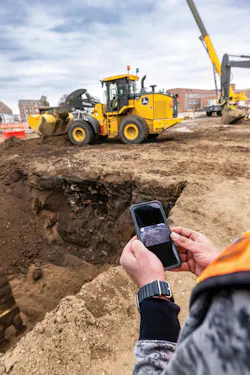
Kreber: SmartDetect and SmartDetect Assist are designed to work within the broader John Deere technology ecosystem, integrating with in-cab displays and connected machine platforms like John Deere Operations Center. Through these integrations, operators and fleet managers can access features such as real-time alerts, visual event data, and machine insights that help improve awareness and decision-making. They can also get weekly reports and heat maps through a SmartDetect Digital Subscription. As connectivity expands, these systems can also support broader data sharing across the fleet to help identify trends and opportunities for improvement.
Can AI cameras connect to a telematics platform? How is that done? What information can be imported? What platforms can your cameras connect too?
Demski: Yes, our machines and integrated machine technologies — such as SmartDetect — can connect to our telematics platform, John Deere Operations Center, as part of a fully connected equipment ecosystem. This connection is enabled through onboard telematics hardware and secure data transmission, allowing machine and event data to flow seamlessly from the jobsite to the cloud.
Through this integration, relevant information such as machine location, utilization, and SmartDetect event data — e.g., object detections and operator alerts — can be captured and shared in near real time. This creates a more complete picture of jobsite activity, helping fleet managers monitor performance, identify trends, and address potential safety risks. Importantly, the focus is not just on collecting data, but on delivering actionable insights. By organizing and visualizing this information within Operations Center, customers can better understand how machines are being used, support operator coaching and training efforts through informed safety briefings, and make more informed decisions to improve jobsite safety, efficiency, and overall productivity.
How are these AI cameras installed on the machine? What is the process? How long does it take? How much does installation cost?
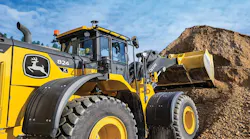
Kreber: Installation is designed to be flexible and streamlined, supporting both factory-fit and field-install options depending on the machine generation and the level of technology the customer selects. For newer machines, systems like SmartDetect can often be integrated directly during the manufacturing process. For existing fleets, field-install kits allow dealers or trained technicians to retrofit machines with minimal disruption.
Demski: The installation process typically involves mounting cameras in strategic locations, integrating them with the machine’s electrical and display systems, and calibrating the software to ensure accurate detection and reliable performance. This work is performed using standardized procedures to ensure consistency, quality, and ease of service across different machine models. Timelines can vary based on the specific configuration and machine type, but installations are designed to be completed efficiently — often within a short service window — so equipment can return to work quickly. Similarly, costs will depend on factors such as the number of cameras, system capabilities, and whether the installation is completed at the factory or in the field.
How much connectivity is required — can these systems function effectively offline or in low-signal areas?
Kreber: These systems are designed to operate reliably across a wide range of jobsite conditions, including areas with limited, intermittent, or no cellular connectivity. Core capabilities — such as object detection and in-cab operator alerts — run directly on the machine using onboard processing. This means operators continue to receive real-time visual and audible alerts even when the machine is completely offline, ensuring that safety functionality is always available when it matters most.
Demski: Robust connectivity enhances the system but is not required for its primary functions. When a connection is available, the machine can securely transmit event data, machine information, and usage insights to the customers John Deere Operations Center account. This allows fleet managers to review activity across machines, analyze trends, and support broader safety and productivity initiatives. Overall, the system is designed with a “work anywhere” approach: delivering consistent, real-time performance on the machine while using connectivity to extend visibility and insights beyond the jobsite when conditions allow.
What categories of construction equipment are using AI camera systems? Excavators? Wheel loaders? Telehandlers? Dozers?
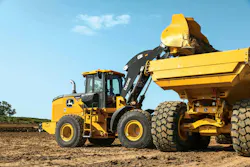
Kreber: AI camera systems are already being applied across a growing range of construction equipment categories, with wheel loaders among the primary applications today. These machines are often operating in dynamic, high-traffic environments, making them a strong fit for technologies like SmartDetect that enhance visibility and operator awareness.
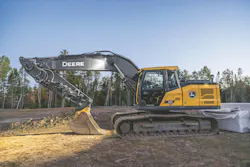
Demski: Other jobsite-critical equipment such as excavators, dozers, and additional material-handling machines are natural next steps for integration; as they present similar safety and visibility challenges. Each machine category introduces unique operating conditions, so solutions are thoughtfully developed and tailored to ensure they provide meaningful value in those specific applications. The broader goal is to scale AI-based detection capabilities across the fleet in a way that is both practical and impactful. By extending these systems to more machine types over time, customers can benefit from a more consistent approach to jobsite safety, improved operator awareness, and better overall visibility into fleet activity.
Where are AI camera systems delivering the most value on jobsites today — safety, productivity, liability reduction, something else?
Kreber: The greatest value today is at the intersection of safety and awareness. By helping operators better understand their surroundings, these systems can reduce the likelihood of incidents and improve confidence on the jobsite. At the same time, there are productivity benefits — fewer disruptions, smoother workflows, and more consistent operation — all of which contribute to overall jobsite performance.
How should fleet managers evaluate ROI on AI cameras beyond just incident reduction?
Kreber: While incident reduction is an important measure of value, many fleet managers take a broader view when evaluating the ROI of AI camera systems like SmartDetect. Beyond safety outcomes, these solutions can drive meaningful improvements across daily operations and long-term performance. For example, increased operator confidence and awareness can lead to smoother, more controlled machine operation; especially in busy or complex jobsite environments. This often translates into better productivity and more consistent performance across operators. Additionally, early identification of potential hazards can help prevent work stoppages and reduce unplanned downtime, keeping projects on schedule.
Demski: AI camera systems can also improve overall jobsite coordination. By providing greater visibility into machine activity and interactions, fleet managers are better equipped to understand how work is progressing and where adjustments may be needed. This level of insight supports more proactive decision-making rather than reactive problem-solving. Another important factor is administrative efficiency. With captured event data and visual context, reviewing incidents or near-misses becomes more streamlined and objective, reducing the time and effort required for investigation and reporting. Taken together, these benefits of improved operator performance, reduced disruptions, enhanced jobsite visibility, and lower administrative burden direclty contribute to stronger overall fleet efficiency. Over time, this more holistic impact often represents a significant portion of the system’s total return on investment.
How accurate are current systems at distinguishing between real hazards and false positives?
Kreber: AI camera systems have made significant progress in their ability to differentiate between meaningful hazards and non-critical objects. Advances in computer vision and machine learning allow these systems to better recognize people and relevant obstacles, helping ensure that alerts are timely and relevant rather than excessive or distracting. That said, this is an area of continuous improvement. Real-world jobsites present highly dynamic and unpredictable conditions, so ongoing development is focused on further refining detection accuracy while minimizing false positives. The goal is to deliver alerts that operators can trust. Alerts that are consistent, actionable, and supportive of safe decision-making without creating unnecessary noise or nuisance.
What’s the right balance between assisting the operator and overwhelming them with warnings?
Demski: We see technologies like SmartDetect and SmartDetect Assist continuing to evolve toward more predictive and proactive capabilities. While today’s systems focus on detecting hazards and alerting operators in real time, the next step is to move earlier in the decision-making cycle. As AI models improve and more data is leveraged, these systems will increasingly be able to anticipate risk based on patterns in machine movement, jobsite conditions, and operator behavior. This shift toward predictive safety means operators can be supported before a situation fully develops, helping prevent incidents rather than simply reacting to them.
At the same time, these advancements will continue to build on, and integrate with, existing machine intelligence. Rather than jumping directly to full autonomy, the near-term focus is on augmenting the operator, enhancing awareness, and improving decision-making in a way that feels natural and trustworthy in real-world environments. Ultimately, the goal is a more connected, intelligent jobsite where safety and productivity are continuously improving through a combination of human expertise and advanced technology.
Such great, info. Thank you. Is there anything else you’d like to mention? Please do!
Demski: Striking the right balance is critical to ensuring AI camera systems are effective in real-world conditions. Our approach is to prioritize alerts that are both timely and relevant, focusing on situations that truly require operator attention rather than generating excessive notifications. This is achieved through a combination of intelligent detection, filtering, and thoughtful system design. By emphasizing meaningful hazards and presenting alerts in a clear, intuitive way, the system helps operators quickly understand what matters most in the moment. The goal is to enhance situational awareness without adding cognitive load or unnecessary distraction. Ultimately, the system is designed to act as a supportive tool, augmenting the operator’s awareness and decision-making while maintaining a seamless and natural operating experience.
How are manufacturers designing interfaces to make AI camera systems usable in the cab? Describe the cab experience. Are there extra monitors? Do your systems integrate into the machine monitor?
Demski: The user interface is intentionally simple and intuitive. Camera views, detections, and alerts are presented in a clear, easy-to-interpret format, allowing operators to quickly understand what is happening around the machine without needing to shift focus away from their primary task. Visual cues are directly paired with audible alerts to ensure important information is noticed, while still avoiding unnecessary distraction. Design decisions prioritize usability in real working conditions, considering factors such as visibility in different lighting environments, intuitive adjustments, and minimal interaction requirements. The system is built so that operators can rely on it as a natural extension of the machine, enhancing awareness and decision-making without interrupting workflow or adding cognitive burden.
How are fleets using AI camera footage for training, compliance, or defending against claims?
Kreber: Fleet operators are increasingly finding value in AI camera data as more than just a record of events. It is becoming a practical tool for training, documentation, and risk management. From a training perspective, recorded events and detections provide real-world examples that can be used to reinforce best practices. Instead of relying solely on theoretical instruction, managers can review specific situations with operators, helping them better understand both strong performance and opportunities for improvement. This makes coaching more targeted, consistent, and impactful.
Demski: In terms of compliance, camera data can support documentation efforts by providing a clear record of jobsite activity. This can help demonstrate that proper procedures are being followed and that safety-focused technologies are actively in use. Having this level of visibility can be valuable in meeting internal standards as well as external requirements. AI camera systems also play an important role in managing and defending against claims. When incidents or near-misses occur, having visual context and event data allows fleets to more accurately understand what happened. This can help reduce ambiguity, support faster investigations, and provide objective information when addressing disputes or liability questions.
Ultimately, the value lies not just in capturing footage, but in turning that information into actionable insights. By leveraging camera data effectively, fleets can strengthen training programs, improve accountability, and make more informed decisions that support both safety and operational performance.
What’s next? What’s the next leap for AI cameras — full autonomy, predictive safety, or something else entirely?
Kreber: SmartDetect and SmartDetect Assist represent an important step forward in how we approach jobsite awareness and safety. At John Deere, our focus is on delivering solutions that are practical, intuitive, and built for real-world conditions rather than controlled environments. These technologies are designed to integrate seamlessly into the way work already gets done, helping operators stay aware of their surroundings and make better decisions throughout the day. By combining advanced AI capabilities with a deep understanding of jobsite needs, we aim to provide tools that customers can trust and rely on. At John Deere, our focus is to help customers operate more safely, confidently, and efficiently every day, while continuing to build toward a more connected and intelligent jobsite experience.
If you want to learn more about SmartDetect, visit this link.
About the Author
Keith Gribbins
Keith Gribbins is the head of content at Construction Equipment, where he leads editorial strategy across print, digital, video, and social channels. An award-winning journalist with more than 20 years of experience, Keith has won 17 national and regional editorial awards and is known for his hands-on reporting style, regularly visiting manufacturers, operating equipment, and covering major industry events worldwide.