Q&A: Brigade Electronics on AI Cameras, Telematics, and Evolving Jobsites
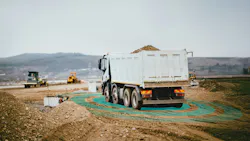
This Q&A continues our recent coverage of AI camera systems and the growing role of artificial intelligence in construction equipment safety. Over the past few weeks, we’ve explored how AI cameras have arrived as both a great safety and educational tool. Operators can easily spot hazards, reduce blind spots, and work more confidently, and safety managers can have visibility into jobsite incidents and near misses.
For this installment, we spoke with Corey Heniser, CEO of Brigade Electronics, about how AI camera systems work on construction equipment and where fleets can realize the most value. It feels like only a few years ago when operators were excited about having a normal camera. Now the technology is evolving into an active safety system. We dig into everything from Human Form Recognition and telematics integration to installation and ROI. And we’re not done yet. This is part of an ongoing series examining AI cameras across the construction industry, with one more major feature still to come. Maybe sign up for our newsletter, so you don’t miss out.
CE: Corey, thanks so much for taking the time to talk to Construction Equipment today. I personally dig the Brigade brand. The company actually specializes in safety cameras, sensors, and warning alarms. One of the product categories that the company is focused on heavily these days is AI cameras for off-highway machinery. We’ve been seeing an interesting amount of these cameras showing up at tradeshows and on machines in the last 12 months. Maybe we can start off this conversation with some basics. What is an AI camera or AI camera system? How is it different from a normal camera?
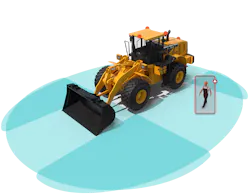
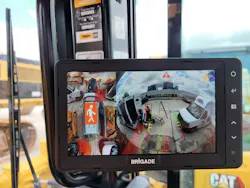
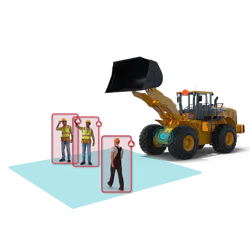
Heniser: A camera equipped with AI uses advanced artificial intelligence to recognize and report on specific elements within its field of view. While AI has become a common buzzword, it is important to understand the practical capabilities available today and how they enhance the operator experience. One key application is Human Form Recognition or HFR. This AI algorithm detects and identifies human forms within a predefined detection zone. When a person is detected in the path of a moving vehicle, the system provides both visual and audible alerts to the operator.
The primary advantage over a traditional camera system is the audible alert, which actively draws the operator’s attention to the monitor. In this way, AI transforms a passive camera system into an active alerting solution. AI is also widely used in dashboard camera systems. A standard dashboard camera primarily records video and captures short clips when a G-force event occurs, such as harsh braking, sharp turns, or impacts. In contrast, AI-enhanced cameras are designed to interpret what is happening both inside the cab, driver-facing, and in front of the vehicle. forward-facing.
These systems analyze conditions in real time and report potential risks, allowing operators to correct their actions before an incident occurs. For example, driver-facing AI cameras detect unsafe behaviors such as distracted driving, fatigue, or phone usage. When the AI identifies a risk, it alerts the operator immediately so corrective action can be taken. Systems with recording capabilities also tag these events, enabling safety managers to use the footage for proactive coaching and training. Similarly, forward-facing AI cameras monitor roadway behavior ahead of the vehicle. These systems can detect risks such as illegal lane changes, following too closely, or potential forward collisions. When an alert is triggered, the event can be recorded and shared with safety managers, supporting ongoing behavior improvement and risk reduction initiatives.
Give us an overview of your AI cameras for construction equipment. What products do you offer?
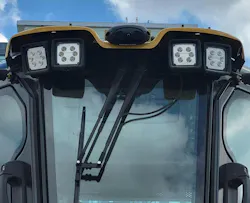
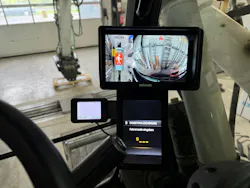
Brigade has integrated AI technology across a wide range of products, including its award-winning Backeye 360 system, single reversing cameras, mobile recording solutions, and dashboard camera systems. When combined with the Backeye 360 system, AI delivers not only a continuous overhead view, but also intelligent visual overlays that clearly indicate where a person has been detected. These alerts appear both within the 360-degree overhead image and as an enlarged view from the specific camera that identified the detection. Construction fleets have significant flexibility in determining what the operator sees based on machine type, operating conditions, and jobsite requirements. Brigade works closely with customers to configure these parameters prior to installation, ensuring the system is optimized for each application.
How much does an AI camera system typically cost for a piece of construction equipment? Are there other service fees involved?
We structure our pricing based on the type of customer relationship and how our products are brought to market — whether that’s end user, distributor, or OEM. This approach allows us to align pricing with factors such as volume, level of engagement, and overall partnership.
Brigade’s AI-based systems are available as standalone solutions with no ongoing service fees, while others can integrate with Brigade’s telematics platform through a monthly subscription. In addition, Brigade systems are compatible with a variety of third-party telematics platforms. This flexibility reflects Brigade’s commitment to improving safety for fleets of all sizes, budgets, and preferred telematics partners.
What software and apps do your AI camera systems work with? What cool features can be accessed in the software? Recordings? Telematics connections?
One of Brigade’s newest solutions is the AI Box, a dedicated ECU that transforms existing non-AI cameras into an advanced AI-enabled system — without requiring a full hardware replacement. This approach allows fleets to retain the cameras and monitors they have already invested in while significantly reducing vehicle downtime. With a simple installation process, operators can upgrade their current systems quickly and cost-effectively to take advantage of AI functionality.
Can AI cameras connect to a telematics platform? How is that done? What information can be imported? What platforms can your cameras connect to?
Brigade’s AI cameras and systems are designed to integrate seamlessly with the Brigade Telematics platform, as well as leading third-party platforms such as Geotab and Samsara. Brigade works closely with customers to support integration with most telematics providers they may already be using, ensuring flexibility and ease of adoption. The specific data shared through these platforms is driven by user requirements, with many fleets choosing to capture tagged video clips based on defined events and triggers. In addition, data such as vehicle speed, location, and radar detection can be incorporated, allowing safety managers to build a complete picture of what was happening both inside the cab and around the vehicle when an alert was generated or an incident occurred.
How are these AI cameras installed on the machine? What is the process? How long does it take?
In most cases, end-user fleets rely on Brigade’s professional installation services, which are provided either directly by Brigade or through one of its certified installation partners. Some customers prefer to have their in-house teams handle installation, and Brigade supports this approach as well by providing training and guidance.
Installation timelines and complexity vary depending on the solution selected, but the core process typically includes planning camera, monitor, and auxiliary hardware locations — such as mobile digital recorders — securely mounting the components, and routing and connecting the necessary cabling. Fleets can choose to operate the system using default settings, which many customers find sufficient, or make adjustments through the monitor interface to customize trigger priorities, detection zones, audible alert notifications, and other parameters. Brigade’s technical team conducts extensive on-site research to develop recommended configurations based on vehicle type and application, helping ensure each system is optimized for real-world use while delivering maximum safety and performance.
How much connectivity is required — can these systems function effectively offline or in low-signal areas?
Brigade’s AI vision solutions do not require connectivity to operate, as the ECU is vehicle-mounted and processes data directly in the cab. Connectivity becomes relevant only when fleets want the ability to remotely access live video or review recorded footage. To support these needs, Brigade offers both Wi-Fi and cellular connectivity options, enabling live viewing as well as over the air uploading and downloading of triggered video events. Fleets can also review continuous recordings from a mobile digital recorder or a camera with built-in recording capabilities and selectively upload specific video clips as needed.
What categories of construction equipment are using AI camera systems? Excavators? Wheel loaders? Telehandlers? Dozers?
Today, you can find Brigade’s AI camera systems on wheel loaders, excavators, telehandlers, dump trucks, and pretty much any mobile yellow iron equipment used in the construction industry — regardless of size or working environment.
Where are AI camera systems delivering the most value on jobsites today — safety, productivity, liability reduction, something else?
Most customers exploring AI camera systems are initially focused on improving safety, often citing fewer incidents and near-miss events as early benefits. Once the systems are in place, fleets frequently recognize additional advantages, including increased productivity due to reduced downtime from incidents. Customers also highlight how AI reporting and video footage are used as real-world training tools, providing clear examples of what could have happened or what occurred on the road or jobsite. The availability of video evidence offers peace of mind, supplying critical context for accident reconstruction and claim defense. In addition, fleets are leveraging AI-generated data to deliver more targeted coaching and training for operators who have been identified for unsafe behaviors, further strengthening overall safety performance.
How should fleet managers evaluate ROI on AI cameras beyond just incident reduction?
As noted earlier, incident reduction is typically the primary driver for adopting AI camera systems, as the true cost of an incident extends well beyond injuries, repairs, and equipment downtime. Incidents often lead to increased insurance premiums, which can have a long-term financial impact on a fleet. Additional areas of return on investment include operator onboarding and retention. The construction industry continues to face a shortage of experienced operators, and AI technology plays a valuable role in closing that gap. Through real-time, spoken warnings for unsafe behaviors, AI systems reinforce the training operators receive from their employer. This continuous feedback helps newer operators develop safer, more effective operating habits more quickly, resulting in improved productivity on the jobsite compared to machines that are not equipped with AI technology.
How accurate are current systems at distinguishing between real hazards and false positives?
AI technology for fleet safety has advanced significantly in recent years, with the use of real-world data contributing to much higher levels of accuracy. While continued improvements are still being made, today’s systems represent a major step forward. For example, certain challenges remain with detecting fatigue or distraction when drivers are wearing specific sunglass lens types.
That said, AI-based Human Form Recognition has proven to be highly accurate when properly implemented. A recent demonstration at Conexpo highlighted this progress. During the event, our AI camera was configured with a very narrow detection zone. An attendee who uses a cane shared that he had tried AI systems in the past but experienced false detections, where narrow objects such as poles or sticks were incorrectly identified as people. To demonstrate how far the technology has evolved, we asked him to place only his cane — without any part of his body — within the detection zone. The system correctly determined that it was not a person. When he then placed his leg next to his cane within the same field of view, the AI accurately identified the human form, putting a red box only around his leg. The demonstration clearly illustrated the system’s ability to distinguish between human and non-human objects, even in challenging scenarios. The attendees were impressed enough to reconsider AI technology based on that single experience.
What’s the right balance between assisting the operator and overwhelming them with warnings?
Striking the right balance is critical. Operators already manage a high cognitive load, with numerous systems competing for attention in the cab while they focus on performing their job safely and efficiently. Consolidating alerts into a single interface and prioritizing audible warnings for only the most critical events helps reduce unnecessary distractions and prevent alert fatigue. This philosophy is central to Brigade’s system design. Brigade engineers its solutions to intelligently prioritize alerts and triggers while allowing multiple inputs to feed into one unified interface. In addition, Brigade partners with providers that offer monitor-based interfaces for external tools, helping reduce noise and cab clutter. The result is a more streamlined operator experience that keeps attention focused on the most important safety-critical alerts.