Q&A: Tenna’s Jose Cueva on AI Cameras, 360 Visibility, and Smart Fleets
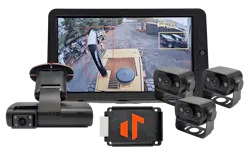
AI cameras are quickly becoming one of the most talked about technology categories in construction equipment. From compact loaders to haul trucks, these systems promise to improve visibility, reduce struck-by incidents, and give fleets better insight into how machines actually operate on the jobsite. But how do they work? How are they installed? And are they really smart enough for the chaos of a construction site? Let’s find out. Construction Equipment spoke with Jose Cueva, cofounder and chief product officer at Tenna, about AI camera technology, 360-degree visibility systems, telematics integration, and where this fast-growing technology category is headed next. Here we go….
CE: First off, Jose. Thanks so much for taking the time today to talk to Construction Equipment today. We’re big fans of the Tenna brand and all of its cool products. One of the product categories that the company is focused on these days is AI cameras for off-highway machinery. We’ve been seeing an interesting amount of these cameras showing up at tradeshows and on machines in the last 12 months. Maybe we can start off this conversation with some basics. What is an AI camera or AI camera system? How is it different from a normal camera?
Cueva: A normal camera records what happened. An AI camera is built to help prevent what is about to happen. In construction, that difference matters. A camera that only gives you footage after a worker was struck, a truck backed into a crew, or a machine clipped another asset is not enough. AI cameras detect risk in real time — people, vehicles, equipment, distracted driving, proximity hazards — and alert the operator or driver while there is still time to react.
Give us an overview of your AI cameras for construction equipment. What products do you offer? How many cameras are in your system? What do these cameras do? How do they work? What technologies or options do they offer?

Tenna offers AI cameras for both sides of construction risk: the road and the jobsite. For vehicles, TennaCAM 2.0 Fleet supports road-facing and driver-facing AI detection for unsafe driving behaviors, distraction, fatigue, following distance, harsh events and incident review. For heavy equipment, TennaCAM 2.0 HE 360 AI is our new 360-degree heavy equipment camera system. It is a fully integrated kit with AI-enabled 360-degree cameras, auxiliary cameras, CANbus integration and a required 10-inch in-cab monitor. It detects workers, pedestrians, vehicles and equipment around the machine and delivers real-time visual and audible alerts in the cab. The system was launched in February 2026 and is purpose-built for construction jobsites, not generic highway fleet use.
How much does an AI camera system typically cost for a piece of construction equipment? Are there other service fees involved, say, a telematics connection?
Cost varies by equipment type, camera configuration, installation scope, and platform package. Heavy equipment is not one-size-fits-all. A compact loader, articulated truck, and excavator do not install the same way. There is hardware, installation, and recurring software/data/connectivity involved. The important point is that contractors should not evaluate this like a cheap accessory. One avoided struck-by incident, one defended claim, one prevented machine collision, or one avoided shutdown can justify the investment.
What software and apps do your AI camera systems work with? What cool features can be accessed in the software? Recordings? Telematics connections? AI recommendations?
Tenna’s camera systems work inside the Tenna platform, alongside asset tracking, maintenance, inspections, driver and operations scorecards, utilization, geofences, work orders, parts management, mechanic time cards, reporting, and more. The value is not just video. The value is context. Was the truck inspected? Were the brakes overdue? Was the driver repeatedly speeding? Was the machine in a congested work zone? Did the operator receive an alert? Can safety review the event and coach from it? That is where Tenna is different. We are not bolting a camera onto a construction fleet. We are tying video into the operating system of the fleet.
You can access event-based recordings, full video history, AI-detected safety events, telematics data, and asset-level insights all in one place on Tenna. That means when something happens, you’re not guessing — you know the condition of the equipment, whether it was inspected, how it was being operated, and what led up to the event. Coaching is a big part of this. Tenna’s camera system doesn’t just record unsafe behavior — it helps correct it. Operators and drivers can be alerted in real time when risk is detected, whether that’s a proximity hazard, unsafe driving, or something more operationally focused like excessive idling. Managers can then follow up with targeted, digital coaching using actual video footage. It’s direct, it’s visual, and it’s a lot more effective than a generic safety meeting.
We also support live streaming. That gives supervisors and safety teams the ability to see what’s happening on a jobsite in real time, especially during high-risk or critical operations. If something looks off, they can step in immediately instead of finding out after the fact. Beyond safety, there’s operational visibility. When you can see how machines are actually working, like loaders in an earthmoving operation. You start to spot inefficiencies. Bottlenecks, idle time, poor cycle times. That’s where contractors can use the system to improve production, not just reduce risk. That’s the difference. This isn’t just a camera system — it’s visibility into how your fleet actually operates.
Very cool. Can AI cameras connect to a telematics platform? How is that done, and what information can be imported?
Yes. AI cameras should connect to telematics, but contractors need to be careful about how. Tenna connects camera events with asset data, GPS, utilization, CANbus data — all from telematics hardware — as well as inspections, maintenance records, scorecards, and workflows on a single platform. We also support OEM and AEMP-style integrations across mixed fleets. The goal is not just importing dots on a map. The goal is connecting safety, equipment condition, and operational behavior.
A truck is not safe just because it has a camera. If nobody inspected the trailer, if the brakes are worn out and overdue for replacement, if the backup alarm is broken, the camera is only showing you the failure. Tenna’s cameras, both on- and off-road, pair with Tenna telematics hardware as a backup to camera failure. If a camera is damaged, disconnected, or intentionally compromised, the tracker continues reporting. We’ve seen this play out in customer theft situations where the camera was taken out, but the telematics device led directly to asset recovery. That same device is not just a backup — it’s an advanced CANbus tracker pulling in utilization, fuel consumption, fault codes, cycle time, idle time, RPM, and more working with the camera. Now you have one connected solution informing safety through the camera, maintenance through real machine data, and job productivity through actual usage. Even more powerful, that same data can be used to automate equipment hours for job costing and billing — replacing manual operator inputs into paper or digital timesheets with data that reflects how the machine actually worked.
How are these AI cameras installed on the machine? What is the process like? How long does it take?
Installation depends on the machine and camera configuration. For heavy equipment, Tenna’s system is installed as a complete kit, including cameras, auxiliary cameras, CANbus connection, and in-cab monitor.
This is another area where construction experience matters. Heavy equipment is not a sedan. Installation isn’t just sticking a camera on glass — it’s a full system. The CANbus device is installed inside the cab, out of sight, and protected. A dual-facing camera is mounted on the windshield for driver and road visibility where applicable, and ruggedized, weatherproof auxiliary cameras are installed at strategic points around the machine — rear, sides, and other blind spots — to deliver a true 360-degree view. Placement matters. If you don’t understand how that machine actually operates on a jobsite, you’re not installing it correctly. Installers need to understand vibration, visibility, wiring, machine operation, service access, hydraulics, attachments, and how the operator actually works.
How much connectivity is required — can these systems function effectively offline or in low-signal areas?
Construction does not happen only in perfect LTE coverage. AI for pedestrian detection and vehicle collision works locally even when offline. The camera is constantly recording, regardless of cell service, so video footage is always being captured. Cell service allows for video data to be uploaded to the cloud for remote access, but the solution itself works to keep the operator safe and productive in any area.
That makes sense. What categories of construction equipment are using AI camera systems today? Excavators? Wheel loaders? Telehandlers? Dozers?
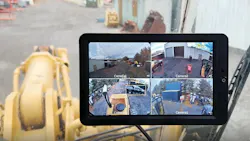
The strongest use cases are machines with blind spots and people working around them: wheel loaders, articulated trucks, haul trucks, dozers, excavators, telehandlers, loaders, utility vehicles, dump trucks, and other heavy equipment with enclosed cabs operating in congested zones. The common denominator is not the machine category. It is proximity risk: people, vehicles, and equipment working too close together.
In your opinion, where are AI camera systems delivering the most value on jobsites today — safety, productivity, liability reduction, something else?
Safety is the first answer, but not the only answer. AI cameras reduce struck-by risk, property damage, downtime, claim exposure, insurance friction and operator uncertainty. They also give supervisors better coaching material. The biggest value is preventing the incident before it becomes a claim, injury, shutdown, or lawsuit. And contractors need to remember: Not all risk is on the road. A lot of generic camera companies are built around highway fleets. Construction risk continues when the truck turns off the public road and enters the site. Tenna is actively and continuously working on the future of these cameras beyond safety and into smart productivity, production, and equipment cost/billing solutions.
How should fleet managers evaluate ROI on AI cameras beyond just incident reduction?
Fleet managers should evaluate:
- Safety events prevented
- Claims defended
- Downtime avoided
- Equipment damage reduced
- Training improved
- Insurance conversations strengthened
- Operator confidence improved
- Maintenance issues surfaced faster
- Inspection compliance improved
- Asset utilization and risk trends understood by asset class
- Idle time reduced
- Idle fuel burn reduced
- Compliance metrics (based on required inspections being completed on time with sufficient detail as this could potentially avoid site/safety violations)
- Spotter needs (360 AI cameras could reduce the need for spotters which is particularly important with current construction labor shortages)
We are seeing a growing trend of project owners and state agencies requiring cameras and recording capabilities on high risk and high visibility jobs, so cameras are work-enablers for winning future work with these owners. A camera vendor will talk about clips. A construction platform should talk about total risk.
How accurate are current systems at distinguishing between real hazards and false positives?
AI is improving quickly, but accuracy depends on the environment, installation, calibration, configuration, and the quality of the detection model. The right question is not “Will there ever be a false alert?” The right question is “Is the system giving operators meaningful, actionable warnings without creating noise?” Tenna’s approach is focused alerts, not alarm fatigue. That said, there are certainly still instances where AI needs to continue to be trained to avoid false positives, such as the AI mistaking a head scratch for cell phone use. Accuracy is +95 percent when the system is installed and deployed properly. AI performance is deeply impacted by poor installations — e.g. not giving the camera the right viewing angle to discern potential hazards and threats.
What’s the right balance between assisting the operator and overwhelming them with warnings?
Operators do not need a machine screaming at them all day. They need clear, timely, believable alerts. If everything is urgent, nothing is urgent. The system has to be tuned for construction reality: people moving nearby, machines working in tight spaces, changing site conditions, and different asset classes. A pickup going 5 mph over the speed limit on an entry ramp is not the same risk as a loaded dump truck doing the same thing in a work zone. Scorecards and alerts need to reflect that. Tenna has configurable Scorecards so operators get a weekly score on both safety, compliance, and performance metrics along with coaching that allows them to reflect on their behavior and improve upon it weekly. This is in addition to instant alerts for imminent safety risks.
Awesome info. How are manufacturers designing interfaces to make AI camera systems usable in the cab? Describe the cab experience. Are there extra monitors? Do your systems integrate into the machine monitor? What is the user interface like?
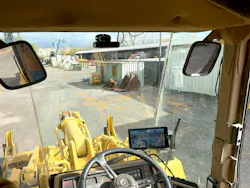
TennaCAM 2.0 HE 360 AI includes a required 10-inch in-cab monitor so the operator gets the full safety benefit in real time. The experience is visual and audible: The operator can see surrounding risk and receive alerts when people, vehicles or equipment enter hazard zones. That matters because the cab is where the decision happens. A dashboard in the office after the fact does not stop the collision.
How are fleets using AI camera footage for training, compliance, or defending against claims?
Fleet managers use footage to coach drivers and operators, document what happened, defend against false claims, support insurance conversations and reinforce policy. But again, video alone is not enough. The strongest programs connect video to inspections, maintenance, category-specific scorecards, and training. If a driver or operator had repeated events, coach them. If an inspection defect was ignored, fix the process. If the brakes were overdue, that is not a camera problem — that is a fleet management problem.
What’s next? What’s the next leap for AI cameras — full autonomy, predictive safety, or something else entirely?
The next leap is moving into informing on productivity, production, jobsite conditions, and job costs/billing, not just more cameras. The future is connecting video, telematics, inspections, maintenance, utilization, jobsite conditions, and operator behavior so contractors can see risk forming before an incident happens. Full autonomy may come in pieces, but construction is too dynamic to pretend the jobsite is a controlled lab. The near-term win is smarter, more connected safety intelligence built for the way contractors actually work.
Awesome info, Jose. We really appreciate you taking the time. Is there anything else you’d like to mention?
Contractors should be skeptical of generic fleet technology being repackaged for construction. Construction is different. The assets are different. The jobsites are different. The risks are different. A camera company that only understands highway behavior is missing half the problem. Your truck is not safe because it has a camera. Your machine is not safe because it recorded the incident. Your fleet is safer when inspections, maintenance, telematics, cameras, scorecards, and coaching all work together.
That is why Tenna built this as part of a construction platform — not as another disconnected device. Contractors need a partner with not only the cameras but the expertise in construction to install, deploy, and incorporate into meaningful SOPs these solutions.
Thanks again, Jose. For more information on Tenna, feel free to visit https://www.tenna.com/.
About the Author
Keith Gribbins
Keith Gribbins is the head of content at Construction Equipment, where he leads editorial strategy across print, digital, video, and social channels. An award-winning journalist with more than 20 years of experience, Keith has won 17 national and regional editorial awards and is known for his hands-on reporting style, regularly visiting manufacturers, operating equipment, and covering major industry events worldwide.