7 Insights from VMAC’s Compressor Report: Service Fleets Are Keeping Trucks Longer and Passing on EVs
Key Highlights
- Yeah, like hardly anyone is buying electric service trucks. Only 5.7 percent of respondents plan to invest in an EV.
- Fleets are watching replacement costs. The largest share of service vehicles is three to five years old, while 17.9 percent are 10 to 14 years old. Yikes?
- Air tools are still loved ❤️ but battery tools are gaining ground. In fact, 45.7 percent expect battery tools to replace some pneumatic tools.

Service trucks are essential to our fleet manager readership. These rolling mechanic shops carry tools, replacement parts, cranes, welders, and compressors. Yet, despite their importance, we do not see much industrywide data about how companies equip, operate, and replace these vehicles. That makes VMAC’s yearly compressed air survey and report essential reading for fleet masters. While the report focused on mobile air, it has a ton of info on service trucks and fleet trends. For instance…
According to VMAC’s 2026 State of the Mobile Compressed Air Industry Report (read it here), almost no one’s buying battery-powered service trucks. From the press release:
“Electrification will continue to be an important part of the commercial vehicle industry, but adoption has to align with the operational realities of the work being performed,” said Mike Pettigrew, VMAC marketing manager. “For service fleets, the decision is ultimately about whether a vehicle can reliably support the full workday, including driving to remote jobsites and powering auxiliary equipment and the tools technicians depend on. The industry will move toward electrification as the technology and supporting infrastructure demonstrate they can consistently meet those requirements.”
There are loads of interesting factoids in this report. For instance, 35.2 percent of respondents identified the air compressor as their most important individual piece of service vehicle equipment. Interesting, right? So here are seven other things construction fleet managers and equipment operators should know from VMAC’s 2026 State of the Mobile Compressed Air Industry Report. Drum roll please…
1. Electric service vehicles remain a tough sell
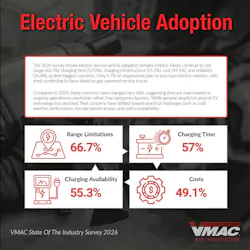
As Pettigrew explained in the opening quote, service fleets are not lining up to buy electric trucks and vans. Only 5.7 percent of respondents plan to purchase electric vehicles. That’s not a surprising stat considering America’s lack of interest in electric construction equipment. The hesitation comes down to those same basic operating challenges like range limitations, charging time, and cost (see chart above). Also, let's consider how service vehicles work. They travel to remote jobsites, idle for long periods, and then power auxiliary equipment with compressors and gen sets. How will that workflow change with electric?
2. Most service truck fleets have five vehicles or fewer
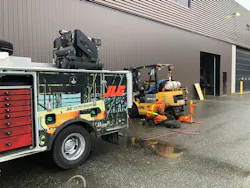
Service truck fleets are small on average. The report notes that its 2025 survey found nearly three out of four respondents operating one to five service trucks. Service trucks also remain the dominant platform. Vans fill a smaller, more specialized role, with the report finding that 67 percent of respondents operate no service vans. Another 26.8 percent operate between one and five. Vans can work well in urban settings and lighter-duty applications, but trucks offer more flexibility for large compressors, cranes, welders, and cargo. Also interesting: About 39 percent of respondents expect service-truck counts to increase, while nearly 60 percent expect no change.
3. Fleets are keeping service vehicles longer
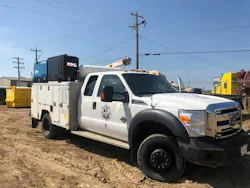
This is something we don’t love to hear: Replacement cycles appear to be stretching. According to the VMAC report, the largest share of service vehicles, 31.8 percent, falls between three and five years old. Another 20.1 percent falls between six and nine years. Vehicles between 10 and 14 years account for 17.9 percent. Only 14 percent of respondents reported vehicles under three years old. Those are not great stats. The report suggests fleets are holding vehicles longer. That approach can reduce capital spending, but it’s a risk. Remember, underfunding your CAPEX budget can create a downward spiral of doom!
4. Rotary screw compressors remain the favorite
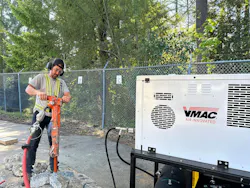
More than 73 percent of respondents prefer rotary screw air compressors for mobile applications. Just 27 percent favor reciprocating models. We’ll note here that VMAC is a manufacturer of rotary screw compressors, and this is their report. According to that report, the appeal of rotary screw comes from advantages like continuous airflow, compact packaging, and the ability to support demanding pneumatic tools. The report also notes that rotary screw compressors can operate at a 100 percent duty cycle, producing air continuously without stopping to refill a receiver tank or cool down.
5. Most service trucks need less than 100 cfm
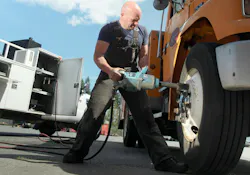
Sizing is so important for efficiency. The VMAC report found that 77.7 percent of respondents need less than 100 cubic feet per minute (cfm) of compressed air. The largest group, 34.1 percent, needs between 30 and 59 cfm. Another 30.2 percent require between 60 and 99 cfm. Only 9.5 percent need more than 150 cfm. Those numbers suggest most service fleets can meet their needs with relatively compact systems. Maybe a VMAC system? Impact wrenches remain the most frequently used pneumatic tools, used by 86 percent of respondents. Ratchets followed at 54.8 percent and grinders at 47.8 percent.
6. Battery tools are growing
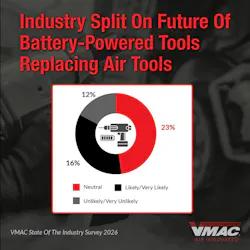
Here’s an interesting factoid. Electric vehicles aren’t trending, but battery-powered tools are. About 45.7 percent of respondents believe battery tools will likely or very likely replace some pneumatic tools. That increased from 39 percent in 2025. Battery tools offer some interesting advantages. They require no hose, start quickly, and move easily around equipment. They can also free up space inside a service body. Of course, according to the survey, pneumatic tools like impact wrenches, grinders, and ratchets still see the heaviest use.
7. There is plenty more in the full report
Those six previous insights don’t even begin to scratch the surface of VMAC’s 20-page report, so our last insight is to go read that report. The survey also examines compressor configurations, pneumatic tool use, fleet spending, labor challenges, tariffs, and supply chains. So go read the full report right here.
About the Author
Keith Gribbins
Keith Gribbins is the head of content at Construction Equipment, where he leads editorial strategy across print, digital, video, and social channels. An award-winning journalist with more than 20 years of experience, Keith has won 17 national and regional editorial awards and is known for his hands-on reporting style, regularly visiting manufacturers, operating equipment, and covering major industry events worldwide.