Video: What Service Fleets Are Saying About Compressors, EVs, and Battery Tools
Air power. Field mechanics still love it, but service pros are turning more and more to battery-power tools (vs. compressed air). That’s an interesting factoid, no? It’s one of many insights we learned reading VMAC’s latest State of the Mobile Compressed Air Industry Report.
This is an annual industry survey and benchmarking report produced by VMAC, a manufacturer of mobile compressed-air systems. While it does talk a lot about compressors, the report also gives us a snapshot of how fleets are making decisions about their service trucks.
Now, this report is 21 pages long, and of course, we encourage you to read it via the link above. But! If you don’t have that kind of time, try watching our latest Weekly Iron video. Construction Equipment’s Miles Cooksy takes the report to the video screen, highlighting some of the numbers that jumped out at us. If service trucks are part of your fleet, hit play.
What Miles breaks down
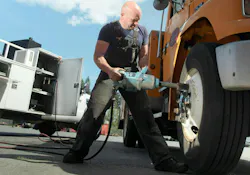
The video digs into:
- Electric service-truck adoption
- Battery versus pneumatic tool trends
- Compressor preferences and air demand
- Service-truck fleet sizes
- Aging service vehicles and replacement cycles
Electric trucks? No. Electric tools? Yes!
One of the report’s clearest divides involves electrification. Folks love it for tools but not for trucks. Only 5.7 percent of respondents plan to purchase an electric service vehicle. Yet about 45.7 percent expect battery tools to replace at least some pneumatic tools, up from 39 percent in 2025. Battery tools may be growing, but compressed air remains a major part of the service-truck equation. In fact, 35.2 percent of respondents called the air compressor their most important individual piece of service-vehicle equipment. More than 73 percent prefer rotary screw compressors for mobile applications. Impact wrenches remain the most commonly used pneumatic tool, at 86 percent. Just remember: This survey comes from an air compressor manufacturer.
Building a service truck? Start with the work
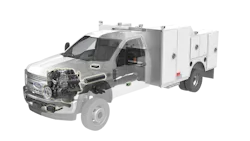
Once you know what other fleets are doing, there’s a more important question: What does your service truck need? About a year ago, we somewhat tackled that question in our guide to spec’ing service-truck air compressors and welders. Like most equipment purchases, pros will need to right-size the equipment around the technician’s actual jobs. Some fun facts:
- Compressed air needs may be lower than you think. A typical service truck may only need 30 to 40 cubic feet per minute. Many pneumatic tools require less than 40.
- Welding power depends on the work. A basic service truck may work with 200 to 250 amps, while heavier jobs can require more than 300 amps.
- Climate can affect your compressor choice. Extreme heat may favor hydraulic systems with additional cooling, while cold climates can require extra protection.
- Space and weight matter. Underhood compressors can free up deck and cargo space for tools, parts, and other equipment.
- Multifunction systems can consolidate equipment. Combining compressed air, welding, auxiliary power, and other functions can reduce the number of separate components riding on the truck.
Read the entire story by clicking this link.
About the Author
Keith Gribbins
Keith Gribbins is the head of content at Construction Equipment, where he leads editorial strategy across print, digital, video, and social channels. An award-winning journalist with more than 20 years of experience, Keith has won 17 national and regional editorial awards and is known for his hands-on reporting style, regularly visiting manufacturers, operating equipment, and covering major industry events worldwide.