The Most Overlooked Inspection in Equipment Management (Deployment Inspections)
Key Highlights
- The missing inspection: Deployment inspections fill the gap between preventive maintenance and daily pre-use checks.
- Catch problems before they reach the jobsite: Check batteries, fluids, tires, maintenance schedules, and safety requirements before deployment.
- Advice you won't find anywhere else: Craig Gramlich, a Certified Equipment Manager (CEM), shares firsthand fleet management insights you won't find anywhere but here.

Few things frustrate a project manager or superintendent faster than a crew standing around waiting for equipment that was supposed to be ready to work. I know. I’ve been that project manager and that fleet manager. Years ago, we picked up a piling scope on a remote project, only to discover the project was already well behind schedule before we even set foot on site. Piling was now on the critical path, with downstream contractors mobilizing to put structures on top of piles that weren’t even in the ground yet.
To help the client recover schedule, we proposed adding a third drill rig and crew. I knew another drill was sitting in the yard, so after working through the plan with the client, we got the go-ahead and a sizeable change order reflecting the urgency. Now we had to deliver.
A cold start to an expensive lesson
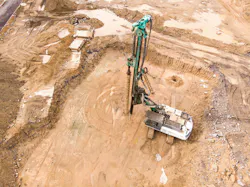
We scrambled to assemble another crew, pulling people from several regions. Since nobody was local, that meant flights, travel, camp, and hotel accommodations, and another crew on the project payroll. Operations got everyone cleared, orientated, and ready to work. The equipment team moved fast too, getting the drill loaded and shipped in record time. It was a beautiful, sunny fall afternoon when that drill left the yard.
By the next morning there was frost on the windshields, fresh snow on the ground, and a dramatic drop in temperature. Our operator grabbed his coffee, walked out to the drill, and discovered it wouldn’t start. A quick look at the logbook revealed the drill hadn’t been used since the beginning of summer which meant it likely still had summer diesel in the tank. Sure enough, the fuel had gelled. A mechanic was dispatched to address the plugged injectors, filters, and fuel lines while we searched for a way to heat the machine or wait for the warmer afternoon temperatures to help get it running.
Our crew was on the clock, with flights, camp, and hotel bills accumulating, meanwhile the only smoke was coming from the crew in the smoke pit - not the machine that was supposed to be drilling holes. And the client? They were NOT impressed.
We lost a couple of days of production. But what bothered me most was the embarrassment of standing in front of the client, explaining why we weren’t drilling. About $30 worth of the right fuel additive, poured in the tank while the machine idled before loading, could have prevented this situation. Instead, we had a mechanic chasing a preventable problem, an idle crew, and a client questioning our ability to deliver. That experience taught me something I’ve never forgotten: As a company we didn’t eliminate the headaches. We moved them to the field.
Ready to ship is NOT the same as ready to work
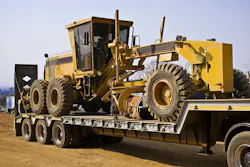
There was nothing particularly complicated about that down event. The drill hadn’t suffered a catastrophic mechanical breakdown. It simply wasn’t prepared for the conditions it was being sent into. And that’s where many equipment programs are missing the mark. Most fleets have preventive maintenance inspections, some perform more detailed periodic inspections, and nearly everyone has an operator pre-use inspection. Yet dead batteries, low tires, burnt-out lights, missing manuals, and overdue services continue to generate field calls almost immediately after machines arrive at jobsites.
The problem isn’t necessarily a lack of inspections. It’s what we’re inspecting for. A deployment inspection, also called a mobilization/demobilization or on-hire/off-hire inspection, serves two important purposes: 1) documenting the machine’s condition and 2) confirming its readiness for the assignment. Many fleets already inspect equipment before it leaves the yard. The question is what level of inspection is being performed.
Too often, deployment inspections are carbon copies of the operator’s pre-use or shop’s PM checklist. Both contain useful information, but neither was designed for this purpose. The result is often too much of the wrong information and too little of what matters. An operator pre-use inspection checks that a machine is safe to operate that shift. A PM inspection focuses on servicing, mechanical condition, and scheduled maintenance. A deployment inspection has a different job. It must identify problems operators can’t reasonably check without additional tools or expertise, verify the machine is ready to work, and establish a consistent record of the machine’s condition.
Take tires, for example. During a pre-use inspection, the operator visually checks for obvious things like low inflation, cuts or damage — often seeing only the outer sidewalls and exposed tread. A deployment inspection goes further, measuring and recording tire pressures by position, tread depth, inside and outside sidewall condition, and suitability for the application complete with photos. A periodic inspection may go deeper still, checking tire diameter differences against applicable OEM drivetrain tolerances and investigating any abnormal wear before expensive components fail.
Is your equipment department more than a cost center?
Should equipment departments simply recover costs, or should they help drive profitability? Certified Equipment Manager Craig Gramlich explores how contractors can rethink fleet management, make smarter purchasing decisions, improve utilization, and maximize equipment investments. Learn why the best equipment teams are becoming strategic business partners. Read the story right here.
Same tires. Three inspections. Three different jobs.
That is why deployment inspections should be performed by a competent mechanic familiar with the equipment and its common failure points, not simply the truck or whoever happens to be available in the yard. The accompanying table summarizes the differences between the common inspection types.
Note: Level of detail varies by machine type, condition, and application.
The right to use: one inspection, two bookends

Rental companies have long used on-hire/off-hire inspections to document equipment condition, identify damage or excessive wear and determine which customer should pay. Why should our internal equipment fleets be any different? Every time equipment is assigned to a project, there’s an informal transfer of the right to use that machine taking place between Equipment and Operations, accompanied by some expectations and responsibilities for its use and care. Mike Vorster explores this concept further in the article, “How to Obtain the Right to Use Equipment.”
Deployment inspections provide the condition record supporting that handoff. At mobilization, the inspection establishes condition and confirms the machine’s readiness. At demobilization, the same inspection documents the condition being returned. Ideally that return check happens at the project before transport, so damage from that project or in transit can be distinguished before it heads to the next job.
Consider an excavator returned with cracked glass, damaged engine panels, missing manuals, or excessive undercarriage wear. Which project should pay? Without condition records, those costs often get absorbed into the equipment account or charged to the next project where the damage is discovered. Sometimes, the damage isn’t discovered until the machine has sat in the yard for weeks or months, by which time the responsible project may already be closed and unable to accept additional charges.
Date- and time-stamped reports with meter readings, wear measurements, photographs, attachment inventories, and deficiencies provide a consistent before-and-after record, reducing disputes over damage and responsibility. Normal wear remains an equipment cost. Damage or excessive wear attributable to a project can and should be charged to that project under the company’s right-to-use terms. This improves the accuracy of both project and equipment costs and prevents project-caused damage from unnecessarily driving up internal equipment rates that need to remain competitive for future work.
The return inspection also tells maintenance what needs attention before the next deployment.
Inspect for the assignment

A machine might be perfectly fine sitting in the yard today, but that doesn’t mean it’s ready for the jobsite tomorrow. A deployment inspection is the last controlled opportunity to deal with the predictable problems before the equipment becomes somebody else’s production problem. In the yard, mechanics, tools, parts, and facilities are close at hand. In the field, even a jug of fuel additive can be difficult to obtain.
Documenting condition is one thing. Preparing for the assignment is another. Where is the machine going? What work will it do, for how long, and in what conditions? How many hours will it run? What client, environmental, or safety requirements apply? Those answers determine what needs to be checked and addressed before shipping.
Consider a machine that’s sat in the yard for two months and needs a boost to start. It fires up, gets loaded, and shipped, but was the battery or charging system ever tested? The boost got it onto the trailer, but it didn’t fix the underlying problem. The next morning, that same machine could be a no-start at the jobsite. Only now, there’s a crew waiting, a client expecting production and a mechanic being dispatched.
The same thinking applies to upcoming maintenance. A machine with 40 hours remaining before its next scheduled service may be fine for an assignment requiring 20 hours of work, but what if it’s expected to run 60 hours a week? Servicing it before mobilization may be far less disruptive than sending a mechanic, service truck, parts, and fluids to interrupt production a few days later. Alternatively, arranging service around the jobsite’s schedule and combining several machines into one visit can reduce interruptions and build trust.
Fewer field calls = more planned maintenance

Deployment inspections won’t eliminate every breakdown. Nothing will. But they can eliminate many of the predictable problems that pull mechanics away from planned work and send them scrambling to jobsites. Every preventable field call costs far more than the mechanic’s time. There’s travel, parts, lost production, and operations personnel now pulled away from managing the job to deal with something that could have been taken care of in the yard.
When equipment consistently arrives ready to work, operations builds confidence in the fleet. That can reduce the tendency to hold spare machines as insurance against breakdowns or rent externally because the condition of available equipment is uncertain. The result in the long-term is better utilization and potentially less equipment needed to support the same workload.
Fewer preventable field calls also give maintenance more time to complete scheduled services, plan repairs, as well as find and address developing problems before they become breakdowns.
The measure of success isn’t how many inspections were completed. It’s how many problems were caught before they reached the field. And with fewer mechanics chasing those preventable problems, there might finally be time to advance that planned maintenance schedule. You do have one of those, right?
The little things are our job
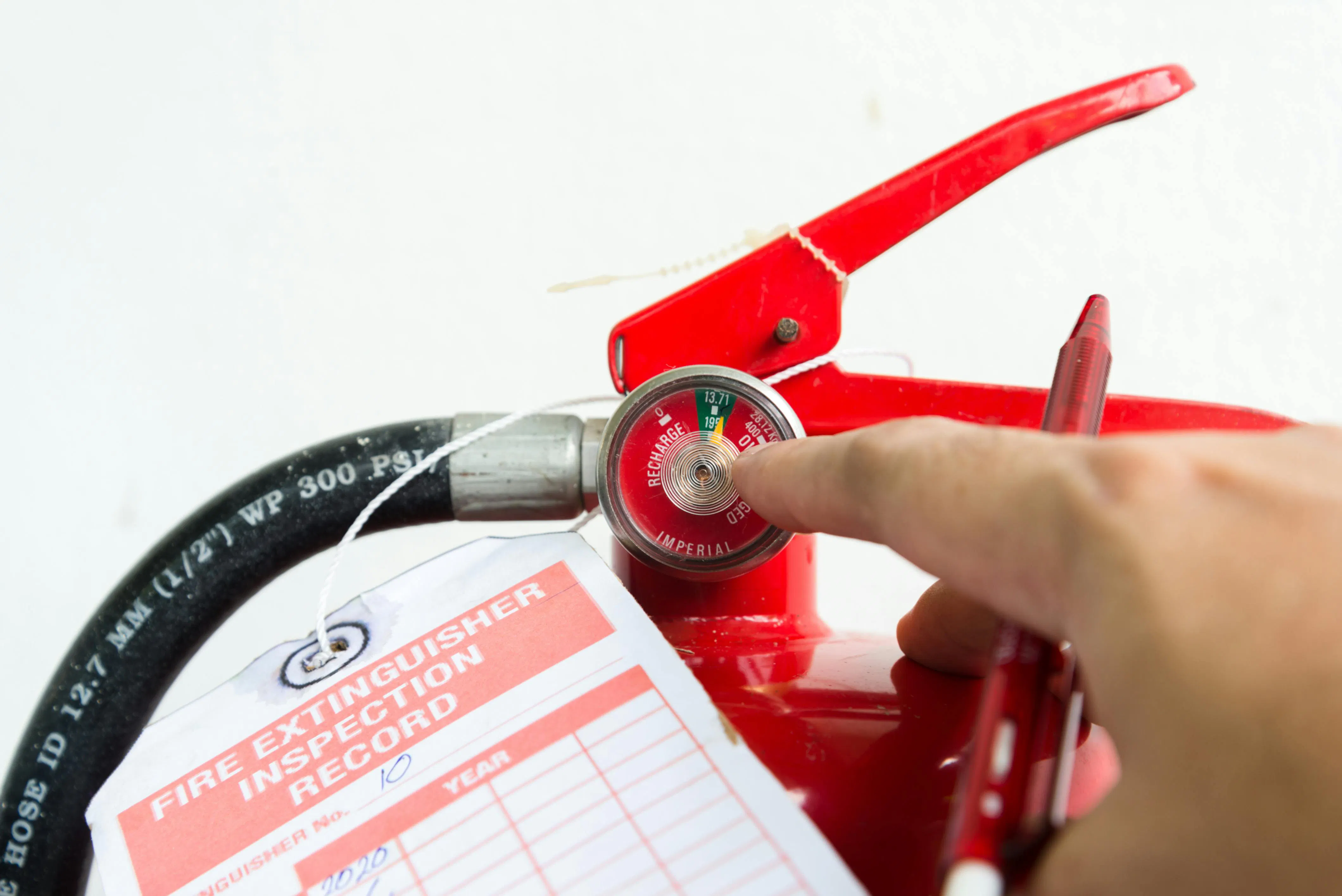
Consider a fire extinguisher whose annual certification is due next month. The machine is headed to a three-month project. Technically, it meets the requirements today, but why ship a predictable problem? Replace the extinguisher with one whose inspection will remain current throughout the project duration.
Client safety inspectors regularly flag these types of items. A missing manual, expired certification, or other compliance related deficiency can take equipment out of service or even shut down the entire jobsite until corrected. The resulting downtime and disruption can cost far more than addressing the issue before mobilization. Project managers and superintendents have enough to manage between people, production, schedules, changed conditions, and additional work that needs to be priced and billed. They shouldn’t also be worrying about equipment deficiencies that maintenance could have anticipated and addressed.
Those small equipment details are our responsibility as maintenance professionals. Taking care of them shows we understand how to support operations — we earn our keep not simply by getting machines out the gate, but by helping the field stay productive. That doesn’t mean repairing or replacing everything before deployment. It means making sure the machine is ready and capable of performing the work — understanding its condition, how much component life remains, and what needs to be repaired, monitored or planned for.
Some deficiencies should stop deployment. Others can be documented, monitored with future inspections, and addressed with parts ordered or repairs already planned. In either case, responsibilities and next steps must be clearly communicated to operations. The important part is knowing what you’re sending, rather than leaving the jobsite to discover what you missed.
About the Author
 Craig Gramlich
Craig has extensive experience in equipment management across transportation, heavy lifting, civil projects, mining, and construction sectors. Driven by a passion for cost and data analysis, he excels in enhancing equipment accounting, rate modeling, and developing programs for rate escalation and transfer pricing.
Through Lonewolf Consulting, Craig effectively unites Equipment, Operations, and Accounting departments, leveraging his extensive field experience to help companies streamline operations and find cost savings, significantly boosting ROI.
He holds a Bachelor of Commerce from the University of Alberta and a Certified Equipment Manager (CEM) certification, along with a variety of professional development courses, showcasing his commitment to ongoing professional growth.