The 3 Cs of Equipment Maintenance Work Orders: Complaint, Cause, and Correction
Key Highlights
- Describe the problem clearly. Write down what the operator noticed and when it happened. “Travel issue” doesn’t give a technician much to work with.
- Explain the repair. Record what caused the problem, what the technician did, and how they checked that it was fixed.
- Bascially, you need to use better words, but you gotta read the article below for practical ways to capture the 3 Cs.
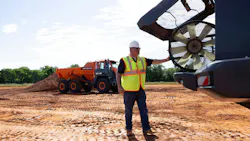
Across the industry, thousands of work orders get opened, completed, and closed every day, yet one of the most common gaps in maintenance management remains the quality of information captured. A work order can originate from almost anywhere. An operator reports a noise. A technician finds a leak during a PM. An inspection identifies a worn hose. Telematics report a fault code. Oil analysis flags abnormal wear metals. A site supervisor reports incident damage.
How that information is captured affects the speed and quality of today’s repair — and whether the next technician has somewhere useful to start tomorrow. Unfortunately, information has a way of getting lost every time it changes hands. It’s like the old telephone game. What started as “hello Hanna” somehow becomes “yellow banana.”
An operator reports a “metal-on-metal feeling while traveling.” By the time the work order is opened, the Complaint says only “travel issue.” The technician finds loose mounting hardware allowing the linkage to contact the floor plate. The Cause gets shortened to “loose bolt.” The linkage is repositioned, the hardware replaced and torqued, and the machine is tested again. The Correction gets entered as “fixed.” The machine is back to work, everyone moves on, and that feels like success. But if the repair took longer than it needed to and the details never make it into the work order, the organization loses the most valuable part of the repair: what was learned along the way.
A simple way to preserve that knowledge is through the 3 Cs.
What are the 3 Cs in a maintenance work order?

There are three fundamental pieces to the story of any repair: complaint, cause, and correction — the 3 Cs.
- The Complaint captures what was reported, observed, or identified.
- The Cause records what inspection, testing, and diagnosis confirmed.
- The Correction records what was done and how the repair was verified.
Each one builds on the one before it. The Complaint gives the technician a starting point. The Cause explains what was actually found. The Correction closes the loop.
The First C: Complaint or Concern
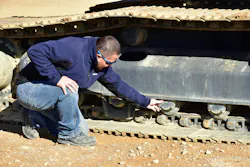
The Complaint is the reason the work order exists. It is the issue or thing wrong with the machine and needs to be corrected. The word “concern” may be just as accurate because the information doesn’t always come from an operator. It can come from a PM, inspection, telematics alert, oil analysis, supervisor, or recommendation from an earlier repair. No matter the source, this “C” must capture what was reported, observed, or identified before diagnosis begins. When it comes from an operator, their actual words matter. Operators spend more time with the equipment than almost anyone and often notice small changes long before a failure occurs.
“Metal-on-metal feeling through left travel pedal when traveling downhill” is a much better starting point than “issues while traveling — check travel motor.” One describes what happened. The other has already decided what might be wrong and can send the technician down the wrong path before diagnosis even begins. At this stage, it’s important to think big picture and ask questions. When does it happen? How often? At what speed or rpm? Hot or cold? Under load? Were there warning lights or fault codes? What was the machine doing at the time?
Don’t forget sounds, smells, temperatures, and vibrations either. Sometimes the smallest detail is the one that points the technician in the right direction. A good Complaint doesn’t diagnose the problem. It gives the technician the best possible starting point for finding it.
The Second C: Cause

The Cause is the diagnosis — the verified reason behind the Complaint or Concern, established after inspection, testing, and troubleshooting. Symptoms can be misleading. A fault code can point toward a system without identifying the failed component. A leaking hydraulic hose may be the obvious failure, while the real cause is a loose clamp that allowed it to rub against the frame. The failed part is not always the root cause. Replace the hose but leave the loose clamp and the same repair will likely be needed again.
Experience matters. A good technician who has seen the problem before may get to the answer much faster. But experience can only guide the diagnosis, not replace it. Before moving to the Correction, go deeper and ask: Was the cause confirmed or was it an experiential guess? Where possible, can the issue be replicated? Not every concern can be replicated. If it can’t, document what was tested, what was ruled out, and the conditions during testing. An honest “could not duplicate” with good supporting detail is far more useful than guessing at a Cause — or taking a “parts till it starts” approach just to do something. No diagnosis is better than the wrong diagnosis.
Once satisfied with the diagnosis — document it. Include enough detail to show what was inspected or tested, the important measurements or readings, what was confirmed or ruled out, and how the root cause was reached.
The Third C: Correction
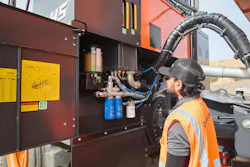
The Correction is what was actually done to address the Cause and return the machine to service. “Fixed,” “repaired,” or “warning light went away” doesn’t tell much of anything. What was replaced, repaired, adjusted, calibrated, programmed, or otherwise changed? Document it — and don’t forget to capture how the repair was verified. Ideally, that verification ties right back to the original Complaint, proving the original issue was actually corrected.
If the issue only happened traveling downhill, test it downhill. If the hydraulic leak only appeared under pressure, bring the system back to pressure. If the warning only appeared when the machine was hot, verify the repair at operating temperature where practical. Also remember there can be more than one acceptable way to make the repair.
A machine nearing the end of its planned life may not need the same repair as one expected to remain in service for another 10,000 hours. With only 1,000 hours left in its target life, a seal kit may make more sense than dismantling and re-chroming the cylinders. Or the diagnosis may change the conversation altogether and make the machine a candidate for earlier replacement.
The important part is making that decision before the money is spent — and, where possible, before failure occurs. Established spending limits help ensure larger repair decisions are reviewed at the right level. The same principle applies to other issues found along the way. Document enough detail for supervision to decide what must be corrected to return to service and what can be backlogged and monitored. That creates time to plan the work and source parts normally instead of turning every sweating seal into an emergency — or waiting until a breakdown forces a 911-level air freight, hot-shot, and expediting.
Why the 3 Cs matter in fleet maintenance

At its simplest, a work order records what was wrong, what work was done, by whom, and when — but a good work order does more. A work order may look like one event, but the 3 Cs create a timeline of the repair — from when the issue was reported or discovered through diagnosis, correction, and return to service. Those dates and timestamps also help measure maintenance responsiveness.
That record builds trust. When a project or operations manager asks why a repair took three days, cost what it did, or whether the machine is ready to work, the answer should be in the work order — not dependent on finding the mechanic who worked on it. Good documentation also supports warranty claims, reduces repeated troubleshooting, and makes technician hand-offs cleaner. Its value also grows with time. A work order that seems obvious today may be read six months or several years from now by someone who wasn’t there. That record can change the next diagnosis — showing what was already tested, what was missed, what failed before, and where the next technician should start.
Good documentation keeps the organization from relearning the same lesson twice — even after the people involved have moved on. Those individual records eventually become the machine’s service history, where patterns start to show up — repeat failures by component, machine type, operating hours, application, or work method. That information supports better cost tracking, resale and lifecycle decisions about whether to repair, rebuild, replace, or extend life.
A pattern can’t be found in information that was never captured.
There is also a safety and legal side that shouldn’t be overlooked. If a serious incident ever occurs, the work order may become one of the few point-in-time records showing what was reported, what was found, and what was done about it. That’s not when anyone wants to discover the last entry only says “fixed.” The details matter — what interventions were made, what parts were replaced, what was tested, and how was it tested. Keep the record factual: observations, measurements, testing, and actions — not blame, assumptions, or speculation. Those details may become some of the strongest evidence the company has of what actually happened.
Putting the 3 Cs into practice
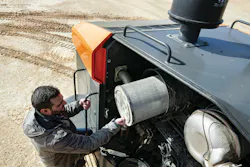
A new work order system is rarely needed to start using the 3 Cs. Most systems can already capture them, even if the fields aren't called Complaint, Cause, and Correction. Get creative — rename an existing field, add the three headings to a comments box, or build them into the work order template. Wherever the system allows it, keep a 1:1 relationship between the Complaint, Cause, and Correction for each repair. Some users lump several repairs under one work order, but each repair should retain its own 3 C sequence so the history remains searchable, understandable, and useful for analysis.
Where the system supports failure, component, or repair codes, use them too — but don’t let a code replace the 3 Cs. Codes make the information searchable. The 3 Cs make it understandable. The bigger task for leadership and supervision is helping people understand what the 3 Cs are and what good documentation looks like. Technicians carry an enormous amount of knowledge in their heads. The goal is to help translate that knowledge into information and data the rest of the organization can use long after the repair is finished.
Voice capture can help, especially in the field. Just as important, technicians need enough paid time between jobs to finish their notes properly instead of trying to remember the details days later when they finally get back to the shop or office. A system can only capture the information put into it.
Before closing a work order

Before hitting complete or closed, make sure the story is actually finished. Capture any follow-up, inspection, or break-in requirements. Things like: Stay below 3,000 rpm for the next 50 hours. Change the oil in 150 hours. Recheck the repair at the next service. If that work falls outside the normal PM program, create the next work order now. Don’t bury it in the notes and hope somebody else finds it or remembers.
Attach anything that helped confirm the Cause or support the Correction — technician notes, test results, fault codes, manufacturer procedures, photos, or videos. That information can be as valuable as gold when another technician takes over or another machine develops the same problem. Capture it while it's fresh. Three days later, the technician may remember replacing the hose but not the exact pressure reading, where it was rubbing, what contributed to the failure, or how the repair was verified.
Wrapping it up
Without good work-order detail, the organization stays dependent on tribal knowledge like Joe the Mechanic being there and remembering what happened last time. The 3 Cs turn the work order into organizational knowledge. Good work orders don’t need to be novels. They just need to clearly answer three questions: What was the Complaint? What was the Cause? What was done to Correct it? Capture those three things while they're fresh and don't close the work order until the record is complete.
Bonus tip
Before hitting Closed, ask: Could someone who wasn't there understand what happened, why it happened, and what was done about it? That includes someone in fleet or office administration without technical equipment training. If the answer is no, the work order is not finished. Technical knowledge can unconsciously fill in the blanks of what wasn't written. The next person may not have that same understanding or context.
About the Author
 Craig Gramlich
Craig Gramlich
Craig has extensive experience in equipment management across transportation, heavy lifting, civil projects, mining, and construction sectors. Driven by a passion for cost and data analysis, he excels in enhancing equipment accounting, rate modeling, and developing programs for rate escalation and transfer pricing.
Through Lonewolf Consulting, Craig effectively unites Equipment, Operations, and Accounting departments, leveraging his extensive field experience to help companies streamline operations and find cost savings, significantly boosting ROI.
He holds a Bachelor of Commerce from the University of Alberta and a Certified Equipment Manager (CEM) certification, along with a variety of professional development courses, showcasing his commitment to ongoing professional growth.