Compact Wheel Loader Q&A: Hitachi Talks Tech, Attachments, Snow Removal, and Buying Tips
Key Highlights
- Compact wheel loaders are attachment-takers. From snow pushers and grapples to brooms and forks, today's machines are built to switch jobs fast and keep crews productive.
- Snow removal is fueling compact wheel loader growth. High-flow hydraulics, maneuverability, and quick attachment changes are making these machines winter workhorses.
- Hey gamer 🎮 the next operator might work from an office. Hitachi sees remote operation helping contractors tackle labor shortages while attracting a new generation of equipment operators.
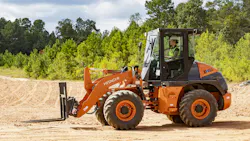
Compact wheel loaders continue to multiple on jobsites and dealer lots. They are great material movers, but they are also tool carriers. Grab a broom, grapple, or bale spear and find work in construction, landscaping, snow removal, and ag. That’s why we’re sitting down with the industry’s leading manufacturers to discuss where the market is headed. In recent weeks, we’ve talked with experts from John Deere and Takeuchi. Now it’s Hitachi Construction Machinery’s turn.
The timing couldn’t be better. We recently attended the company’s North American dealer meeting in Atlanta, where Hitachi announced another major step in its evolution. Beginning in 2027, Hitachi Construction Machinery Americas will become Landcros, marking a new chapter for the brand.
In this Q&A, we snagged Drew Norton, product specialist for compact equipment at Hitachi Construction Machinery Americas, to discuss Hitachi’s compact wheel loader lineup. He’s a great resource. We also dive into attachment trends, snow removal, operator-assist technology, remote operation, electric machines, and what contractors should consider before buying their first compact wheel loader. Let’s get into the discussion.
CE: Hey Drew, big thanks for taking the time to talk with Construction Equipment today. We’re doing a bunch of interviews with various companies who produce compact wheel loaders, and we’re excited to talk about the Hitachi and Landcros brands. Maybe we can start off with a quick summary of your compact wheel loader lineup. How many models do you offer? What cool options and tech do you have? Maybe even what differentiators you bring to the market?
Norton: Hitachi Construction Machinery Americas currently offers three compact wheel loaders whose operating weights range from 7,310 to 12,600 pounds: the ZW30, ZW30, and the ZW80. They are precision engineered to deliver maneuverability and reliability in a compact size. They are intentionally simple, making them easy to operate across applications with a comfortable, high-visibility cab that is accessible from both sides to provide convenient access. Like all Hitachi equipment, they were also thoughtfully designed to simplify maintenance. Their wide-open engine hoods and side-by-side essential components provide easy access for regular maintenance and cleaning.
What applications are driving the strongest growth in the compact wheel loader market right now — landscaping, snow removal, agriculture, rental, something else?
Our compact wheel loaders were engineered to perform across a wide range of applications, but they excel in snow removal. Their maneuverability and attachment capabilities make them a dependable solution for clearing parking lots, roads, and other snow-covered areas efficiently. To support the growing demand in this market, we continue to strengthen our dealer network so that customers have convenient access to the equipment, parts, service, and expertise they need throughout the snow season.
Why are some contractors choosing compact wheel loaders over skid steers or compact track loaders for material-handling applications?
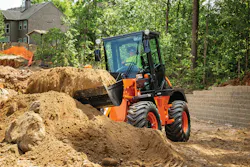
Wheel loaders provide several things skid steers and track loaders can’t. One key thing is the added visibility you get from sitting higher up in a wheel loader. This added visibility means operators can work more confidently and safely. Hitachi compact wheel loaders also has more reach than skid steers and track loaders. Combined with a higher tipping load, their reach gives them more stability and makes them more capable for jobs like loading a truck or handling materials.
Which attachments are popular in the CWL market today? Got a favorite?
With their growing popularity in snow removal, snow pushers are popular attachments. But I live in the Southeast, so I’m biased toward attachments that can tackle jobs like land clearing or logging work. My favorite is a grapple bucket because it can firmly grip and handle irregular materials like logs, brush, and debris. This versatility improves efficiency and makes a job much easier to accomplish.
What coupler options are available on compact wheel loaders today? Are more customers requesting skid steer-style couplers to share attachments across fleets?
Pin and hook style and hydraulic quick couplers are very common. Hitachi compact wheel loaders come standard with couplers that are compatible with skid steer style couplers to allow for attachment sharing. This is something that is becoming increasingly popular as contractors make their fleets more dynamic.
What operator-assist technologies are becoming standard on compact wheel loaders? Are features like return-to-dig, ride control, creep mode, and throttle lock becoming must-have options?
Mid and larger sized wheel loaders have proven that this technology is beneficial to operators and are effective in improving machine operation. Our engineering team has taken note of that as they design future models of our compact loaders.
What cab comfort features matter most to operators today?
One of the most important things is that the entire cab space works together, which is why Hitachi compact wheel loaders are designed ergonomically. An operator spends their entire day working inside this space, so it is essential to have everything in well thought out positions, within easy reach. They also have a 12-volt plug which allows operators to charge their phones during long workdays. Every little detail adds to operator comfortability.
How are manufacturers addressing operator shortages and the need for easier machine operation?
Hitachi Construction Machinery has been addressing shortages on multiple fronts. Primarily, we focus on designing equipment that is easy to use. An operator who has any forklift experience can jump in a Hitachi compact wheel loader with little to no learning curve. On another front, we have been working with partners like Teleo, who offer supervised autonomy solutions where an operator can remotely operate wheel loaders from an office like environment. This technology has the potential to broaden the operator pool and help address workforce challenges.
How are compact wheel loaders evolving for snow removal applications?
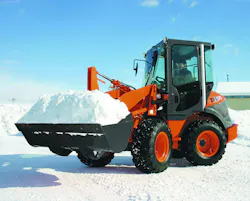
As attachments require more hydraulic flow, compact wheel loaders are increasing their hydraulic capabilities. In snow removal, removing snow quickly and efficiently is key to the business. Having the capabilities to run high-flow attachments becomes essential to maintaining a competitive business.
What daily or weekly maintenance items have the biggest impact on uptime and long-term durability?
Greasing the machines daily in all the appropriate spots is one of the most important maintenance steps. Proper lubrication helps protect critical joints, pins, bushings, and bearings from excessive wear by reducing friction and preventing contamination. Protecting these high-wear components extends their service life while helping maintain peak performance.
How important is tire selection and tire management for compact wheel loader performance?
It’s very important. Tires are engineered specifically to add to a machine’s capabilities in different environments and applications. Potential buyers should always do thorough research to ensure they have the right tire for the job.
What advice would you give buyers trying to size a compact wheel loader correctly for their operation?
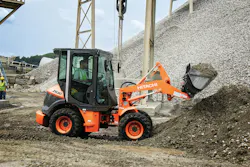
It is imperative that buyers understand the application. Dealers have a wealth of knowledge on which size would work best for which job, so buyers should work closely with them when equipping a new job.
What specs should pros consider before purchase? Lift height, breakout force, travel speed, and attachment capability?
All these specs are uniquely important and should be considered depending on application. Some jobs may need a higher breakout force, but not a higher travel speed, or they may need basic attachment capabilities, but a higher lift height. In any case, pros should weigh out their needs in each area and see which machine fits them best.
Are electric compact wheel loaders gaining real traction in North America, or is the market still early?
The market is still in its early phases of electric compact wheel loaders. The broader infrastructure needed to support electric machines effectively is not widely available yet. There are several solutions in progress that would address these needs. One of them is from our partner, Dimaag AI, who created a swappable battery system that would solve many of the challenges people perceive when considering electric equipment.
What technologies or features do you think will define the next generation of compact wheel loaders?
I think remote operations will start gaining momentum as the work force evolves. The next generation of operators has grown up in a highly connected, technology driven world and will expect equipment to incorporate advanced technology that makes the machine easier and more efficient to operate. Solutions like Teleo’s remote operation technology align with these expectations. In many ways, the experience can feel like the interactive digital environments younger generations are already familiar with. One of our key strengths is that we collaborate openly with partners like these to help us deliver reliable solutions for our customers through the generations.
What advice would you give to contractors or fleet managers buying their first compact wheel loader?
When purchasing your first compact wheel loader, it’s important to look at your specific needs and the machine’s capabilities, but it’s also important to consider the long-term value it will bring to your overall operation. Reliability, productivity, ease of maintenance, and strong dealer support should all be key factors in the decision-making process. Hitachi compact wheel loaders deliver exactly that. They are designed to provide dependable performance across a wide range of applications and are backed by an experienced dealer network who can reliably support our machine’s needs.
Awesome info, Drew. Just to round us out, Hitachi will be changing its name soon, correct?
In 2027, Hitachi Construction Machinery will become Landcros. This change represents our expanded vision for delivering innovative solutions that help our customers solve evolving challenges. While our name will change, the heritage of engineering excellence we have built over the last 76 years will still be driving us. That means the teams responsible for engineering, manufacturing, and support will all remain the same. These teams will continue to operate with the same dedication to quality that customers have trusted for decades.
As Landcros, we will continue to advance the performance of our machinery while expanding technologies and solutions to generate lasting value.
About the Author
Keith Gribbins
Keith Gribbins is the head of content at Construction Equipment, where he leads editorial strategy across print, digital, video, and social channels. An award-winning journalist with more than 20 years of experience, Keith has won 17 national and regional editorial awards and is known for his hands-on reporting style, regularly visiting manufacturers, operating equipment, and covering major industry events worldwide.