Compact Wheel Loader Q&A: Attachments, Technology, Tires, and Takeuchi
Key takeaways:
- Compact wheel loaders keep expanding into new markets. Construction, roadwork, rentals, agriculture, municipalities, and snow removal are all driving demand for these versatile material handlers.
- Buy for your application — not the biggest machine. Takeuchi says lift height, operating capacity, travel speed, attachment compatibility, and jobsite conditions matter more than simply choosing the largest model.
- Technology now drives productivity. Operator-assist features like return-to-dig, ride control, automatic bucket positioning, and hydraulic quick couplers are becoming expected features that improve efficiency and reduce operator fatigue.
Compact wheel loaders are quietly becoming one of the industry’s most versatile material movers. Today’s models work anywhere and everywhere — road construction, site development, snow removal, muni work, and more. This category brings a unique combination of features to the compact class. Faster travel speeds, excellent visibility, attachment versatility, and operator-friendly controls (think a steering wheel and pedals) have helped these machines carve out a growing role alongside skid steers and compact track loaders.
To better understand where the market is headed, we grabbed the attention of Dylan Freeman, product manager at Takeuchi-US. In this Q&A, he discussed a little of everything. We talked about what buyers should look for before purchasing a compact wheel loader. We discussed the technologies shaping the next generation of machines. We touched on why contractors are increasingly choosing wheel loaders for their material handling needs. I’ll just quit telling you what we talked about and let you read it for yourself.
CE: Hey Dylan, big ole thanks for taking the time to talk with Construction Equipment today. We’re doing a bunch of interviews with various brands who produce compact wheel loaders, and we’re excited to talk about the Takeuchi brand today. We’re big fans. Dylan, maybe we can start off with a quick summary of your compact wheel loader lineup. How many models do you offer? What cool options and tech do you have?
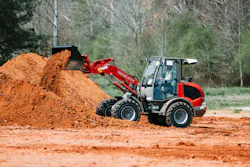
Freeman: Takeuchi currently offers three compact wheel loader models in North America: the TW60 Series 2, TW80 Series 3, and TW95. While compact in size, these machines are designed to deliver the performance, durability, and operator-focused features contractors typically associate with larger wheel loaders. The three wheel loader models cover a broad range of applications, including material handling, site development, road construction, snow removal, and general construction.
Our wheel loaders combine hydrostatic drive systems, articulated steering, and durable Z-bar loader linkages to provide strong breakout forces, lifting performance, and maneuverability. Available features include hydraulic quick couplers, auxiliary hydraulics, ride control systems, and performance-enhancing automation features such as return-to-dig, boom height kickout, and automatic bucket positioning. The TW60 Series 2 and TW80 Series 3 also feature a universal skid steer-style coupler that allows operators to utilize a wide range of compatible attachments.
What I believe helps Takeuchi wheel loaders stand out from the competition is their ability to deliver big-machine capability in a more compact, highly maneuverable package. Operators benefit from an elevated seating position with excellent all-around visibility. The machines offer strong lifting performance, the ability to cover more ground during the workday, and the versatility to tackle a wide variety of jobsite tasks. In applications involving material transport, truck loading, pallet handling, and road construction, compact wheel loaders can provide significant productivity advantages while maintaining the agility needed to work in tighter spaces.
What applications are driving the strongest growth in the compact wheel loader market right now — landscaping, snow removal, agriculture, rental, or something else?
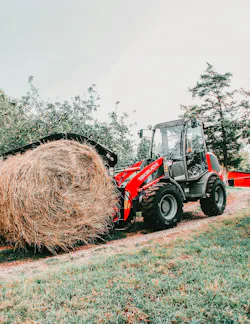
We continue to see strong demand for compact wheel loaders in construction, site development, material handling, and road construction. These applications happen in environments where operators need to move materials efficiently, travel longer distances, and maintain productivity in confined spaces. In these scenarios, compact wheel loaders can provide advantages through fast travel speeds, excellent visibility, and strong lifting performance. The rental market also remains an important growth segment. Many contractors are using rentals to evaluate compact wheel loaders before making a purchase decision, and rental companies appreciate the machines’ versatility and broad appeal across multiple customer types.
Municipal, snow removal, and agricultural applications continue to be important markets as well, particularly for customers looking for a machine that can perform a variety of tasks throughout the year. As attachment compatibility and machine capabilities continue to expand, compact wheel loaders are becoming an increasingly attractive option for equipment owners seeking greater productivity and utilization from a single machine. Rather than one segment driving all the growth, we’re seeing increased interest across a variety of industries as more contractors and equipment owners recognize the benefits compact wheel loaders can provide.
Why are some contractors choosing compact wheel loaders over skid steers or compact track loaders for material-handling applications?
Many contractors view compact wheel loaders and compact track loaders as complementary machines, with each offering advantages depending on the application. For material-handling tasks, compact wheel loaders can provide several benefits that make them an attractive option.
One of the biggest advantages is visibility. The elevated operator station provides an excellent view of the work area, forks, bucket, and surrounding jobsite, which can improve both productivity and safety when loading trucks, handling pallets, or moving materials.
Compact wheel loaders also typically offer faster travel speeds than skid steers and compact track loaders, allowing operators to move materials more efficiently across larger jobsites. Lifting performance is another important factor. Compact wheel loaders are designed for material handling and can deliver strong lift capacities, breakout forces, and load-carrying capabilities. Features such as articulated steering, ride control systems, and automation functions like return-to-dig and automatic bucket positioning can further enhance efficiency during repetitive loading and transport tasks.
Ultimately, the decision comes down to the application. While compact track loaders remain a popular choice for grading, excavation, and attachment-intensive work, many contractors find that compact wheel loaders can increase productivity in applications focused on loading, carrying, and transporting materials throughout larger or more spread-out jobsites.
Which attachments are popular in the CWL market today? Got a favorite?
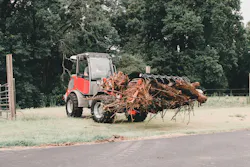
Buckets and pallet forks remain the most widely used attachments in the compact wheel loader market because they align so well with the machine’s strengths in material handling, truck loading, and site logistics. Forks are especially popular for moving pallets of materials, pipe, block, and other jobsite supplies, while buckets continue to be the go-to attachment for loading, stockpiling, and moving aggregate, soil, and other bulk materials. We’re also seeing continued interest in grapples, snow pushers, snow blowers, and other specialty attachments that help owners maximize machine utilization all year long. As more attachments become available for compact wheel loaders, they’re being used in a wider variety of applications than ever before.
If I had to pick a favorite, it would probably be pallet forks. They may not be the most exciting attachment on a jobsite, but they highlight what compact wheel loaders do exceptionally well. The combination of excellent visibility, strong lifting performance, and fast travel speeds makes compact wheel loaders highly productive material-handling machines, and pallet forks allow operators to take full advantage of those capabilities.
What coupler options are available on compact wheel loaders today? Are more customers requesting skid steer-style couplers to share attachments across fleets?
Compact wheel loaders are available with several coupler options today, including mechanical couplers, hydraulic quick couplers, and universal couplers. Hydraulic quick couplers have become increasingly popular because they allow operators to change attachments without leaving the cab, reducing downtime and improving productivity. Universal couplers provide additional flexibility by allowing operators to use a broader range of attachments from different manufacturers.
We continue to see strong interest in attachment compatibility across equipment fleets. Many contractors already own a wide variety of skid steer and compact track loader attachments, so being able to use those same attachments on a compact wheel loader can provide both operational and financial benefits. Sharing attachments between machine types helps simplify fleet management, reduce equipment costs, and maximize utilization.
Within Takeuchi's lineup, the TW60 Series 2 and TW80 Series 3 feature a universal hydraulic skid steer-style coupler that allows operators to use a wide variety of compatible skid steer attachments. Our larger TW95 models feature hydraulic pin-and-hook couplers that simplify attachment changes while providing durability and efficiency across a range of applications.
Ultimately, customers are looking for versatility and return on investment. The ability to quickly switch attachments and, in some cases, share them across multiple machine types allows contractors to get more productivity from both their machines and their attachment inventories.
What operator-assist technologies are becoming standard on compact wheel loaders? Are features like return-to-dig, ride control, creep mode, and throttle lock becoming must-have options?
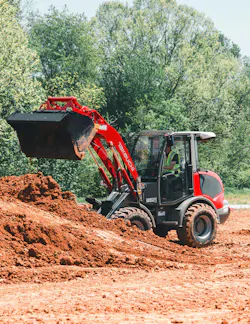
Operator-assist technologies have become increasingly important as equipment owners look for ways to improve productivity, reduce operator fatigue, and help less experienced operators become skilled more quickly. Features such as return-to-dig, boom height kickout, and automatic bucket positioning are becoming more common because they improve consistency and efficiency during repetitive loading and material-handling tasks.
Ride control is another feature that many now consider highly desirable, particularly in applications that involve carrying loads over longer distances. By reducing bucket bounce and material loss during transport, ride control can improve both productivity and operator comfort.
We’re also seeing continued demand for features that simplify machine operation, including multifunction joysticks, intuitive control layouts, and hydrostatic drive systems that allow operators to focus more on the task at hand. Depending on the machine and application, features such as creep mode and throttle management functions can further improve precision and attachment performance.
Rather than viewing these features as premium options, owners and operators are coming to expect them because of their overall positive impact on productivity and efficiency. As labor shortages continue to challenge contractors, technologies that make equipment easier to operate and more productive are likely to become even more important.
What cab comfort features matter most to operators today?
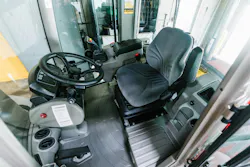
Today’s operators expect compact wheel loaders to deliver the same level of comfort and convenience found in larger machines. Because many compact wheel loaders are owned and operated by the same individual day after day, features that reduce fatigue and improve the overall operating experience have become more important.
Visibility remains one of the most important considerations. Operators want clear sightlines to the attachment, the work area and the surrounding jobsite to improve both productivity and safety. Comfortable seating, intuitive controls, and low-effort multifunction joysticks are also important because they help reduce fatigue during long workdays.
Climate-controlled cabs with heat and air conditioning are now widely expected, as are features such as front and rear wipers, defrost systems, LED work lights, and well-designed cab layouts that make controls easy to access and operate. Operators also appreciate spacious cabs with ample legroom, low noise levels, and convenient entry and egress points.
How are manufacturers addressing operator shortages and the need for easier machine operation?
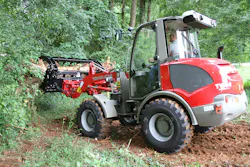
As labor challenges continue across the construction industry, manufacturers are placing greater emphasis on making equipment easier to operate, more intuitive, and less fatiguing for operators of all experience levels. The goal is to help operators become productive more quickly while also improving efficiency and consistency on the jobsite.
We're seeing increased adoption of operator-assist features such as return-to-dig, boom height kickout, and automatic bucket positioning, which help simplify repetitive tasks and improve productivity. Intuitive control layouts, multifunction joysticks, and hydrostatic drive systems also help reduce the learning curve for newer operators while allowing experienced operators to work more efficiently.
Operator comfort remains an important part of the equation as well. Features such as spacious cabs, improved visibility, ergonomic controls, suspension seating, and climate control help reduce fatigue during long workdays, which can have a positive impact on both productivity and operator retention. Ultimately, manufacturers are focusing on technologies and machine designs that help operators work smarter rather than harder. Equipment that is easy to learn, comfortable to operate, and capable of delivering consistent performance can help contractors maximize productivity regardless of experience level.
How are compact wheel loaders evolving for snow removal applications?
Compact wheel loaders have long been popular in snow removal because of their visibility, maneuverability, and ability to move quickly between work areas. What’s evolving is the combination of attachment technology, hydraulic capability, and machine versatility available to snow contractors and municipalities. Today’s compact wheel loaders can be equipped with a wide range of snow-removal attachments, including snow pushers, plows, snow blowers, angle brooms, and other specialized tools. At the same time, hydraulic systems and quick-coupler technology continue to improve, making it easier to switch attachments and adapt to changing conditions throughout a storm event.
Operator comfort and productivity are also receiving greater attention. Snow removal often involves long shifts, overnight work, and challenging weather conditions, so features such as climate-controlled cabs, enhanced lighting packages, ride-control systems, and improved visibility help operators remain productive and comfortable for extended periods. Rather than investing in equipment dedicated solely to winter work, many contractors and municipalities are looking for compact wheel loaders that can handle material handling, loading, and maintenance tasks throughout the year, and then transition into snow-removal duties when winter arrives.
As attachment options, coupler technology, and operator-assist features continue to evolve, compact wheel loaders are becoming even more productive and versatile tools for snow-removal operations.
What daily or weekly maintenance items have the biggest impact on uptime and long-term durability?
The maintenance items that have the greatest impact on uptime are often the ones operators can address in just a few minutes each day. A thorough walkaround inspection can identify hydraulic leaks, damaged hoses, loose hardware, tire issues, or excessive wear before they turn into costly repairs. One area that is sometimes overlooked is lubrication. Properly greasing loader linkage pins, articulation joints, and other wear points helps reduce component wear and can significantly extend machine life. Likewise, keeping radiators, coolers, and engine compartments free of debris is especially important when working in dusty environments or handling materials that can restrict airflow.
Hydraulic systems also require close attention. Because compact wheel loaders spend much of their time lifting, loading and operating attachments, catching a damaged hose, worn fitting, or small leak early can prevent more significant downtime later. Ultimately, the owners and operators who get the most uptime from their machines are typically the ones who make proactive inspections and preventative maintenance part of their routines.
How important is tire selection and tire management for compact wheel loader performance?
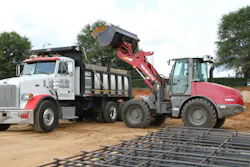
Tire selection plays a significant role in compact wheel loader performance because the machine's productivity, stability, traction, and operating costs are all directly affected by the tires it runs on. Choosing the right tire begins with understanding the primary application and operating environment. Contractors working on paved surfaces may prioritize tire longevity and ride quality, while those operating on loose material, mud, or uneven terrain may require a more aggressive tread pattern to maximize traction. Snow-removal applications often have their own tire requirements, depending on surface conditions and regional weather patterns.
Proper tire management is equally important. Maintaining the correct tire pressure helps optimize traction, improve ride quality, and reduce unnecessary tire wear. Regular inspections can also identify damage, uneven wear, or other issues before they lead to downtime or replacement costs. Because compact wheel loaders rely on tires for traction, stability, and material handling performance, the right tire selection can have a meaningful impact on overall productivity. A tire that is well matched to the application can improve machine efficiency, operator comfort, and long-term operating costs, while the wrong tire can limit performance and accelerate wear.
What advice would you give buyers trying to size a compact wheel loader correctly for their operation?
The most important step is to start with the application rather than the machine itself. Buyers should consider the types of materials they handle most often, the weight of those materials, how high they need to lift them, and the attachments they plan to use. Those factors will help determine the appropriate operating capacity, lift height, breakout force, and hydraulic performance required for the job.
The jobsite itself is equally important. Consider the amount of space available to maneuver, the distance the machine will travel throughout the day, and the surface conditions it will encounter. A larger machine may offer greater lifting performance, but it may not be the most productive choice if the work takes place in confined areas or requires frequent maneuvering.
One mistake buyers sometimes make is assuming that bigger is always better. While it can be tempting to purchase the largest machine within your budget, selecting a model that closely matches the work being performed often results in better productivity, lower operating costs, and improved overall efficiency. Ultimately, buyers should focus on matching the machine's capabilities to their most common applications rather than their most extreme applications. A properly sized compact wheel loader will deliver the best balance of performance, maneuverability, operating costs, and return on investment.
What specs should pros consider before purchase? Lift height, breakout force, travel speed, and attachment capability?
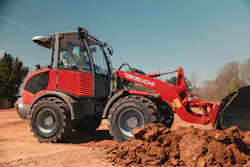
Lift height, operating capacity, breakout force, travel speed, and attachment compatibility are all important considerations, but how you prioritize them will depend on the application. Before comparing machines, buyers should first identify the work they expect the wheel loader to perform most often. For material-handling applications, operating capacity, lift height, and visibility are often among the most important factors. Contractors loading trucks or handling pallets need to ensure the machine can safely lift and place materials at the required height. For applications involving aggregate, soil, or other bulk materials, breakout force can be a key performance indicator because it directly affects the machine’s ability to penetrate surfaces and fill the bucket efficiently.
Travel speed is another consideration, particularly on larger jobsites where operators routinely move materials over longer distances. A machine that can transport materials efficiently across the site can have a significant impact on productivity. Attachment capability is another important consideration. Buyers should evaluate auxiliary hydraulic performance, coupler options, and attachment compatibility to ensure the machine can support both current and future applications.
Finally, don't overlook practical considerations such as machine dimensions, operating weight, serviceability, and operator comfort. The best compact wheel loader isn't necessarily the one with the highest specifications — it's the one that best matches the work being performed and delivers the greatest overall productivity for the operation.
Are electric compact wheel loaders gaining real traction in North America, or is the market still early?
Electric compact wheel loaders continue to generate interest in the North American market, but adoption remains relatively limited compared to traditional diesel-powered machines. While some manufacturers have introduced electric models and certain customers are evaluating them for specific applications, diesel-powered compact wheel loaders remain the predominant choice across most industries and jobsite environments.
As with any equipment purchase, customer requirements ultimately drive adoption. Buyers continue to evaluate factors such as machine performance, runtime, operating costs, infrastructure requirements, and overall fit for their applications. Those considerations can vary significantly from one customer and jobsite to another. At this point, we would characterize the electric compact wheel loader market as emerging rather than mainstream. It remains an area of interest within the industry, but conventional compact wheel loaders continue to be the primary solution for most equipment owners and operators.
What technologies or features do you think will define the next generation of compact wheel loaders?
We believe the next generation of compact wheel loaders will continue the trend of bringing more capability, comfort, and productivity features from larger machines into the compact equipment segment. Customers consistently tell us they want compact machines that deliver the performance and functionality of larger wheel loaders while maintaining the maneuverability and efficiency that make compact models so attractive.
Operator-assist technologies will likely continue to evolve, particularly features that improve productivity and consistency during repetitive tasks. Automation functions such as return-to-dig, boom height kickout, and automatic bucket positioning help operators work more efficiently, and we expect continued interest in technologies that simplify operation and reduce fatigue. We also anticipate continued advancements in attachment versatility, hydraulic performance, and operator comfort. Features such as intuitive controls, spacious cabs, enhanced visibility, and improved ride quality have become increasingly important as equipment owners focus on both productivity and operator retention.
Ultimately, we believe the future of compact wheel loaders will be defined by solutions that help operators get more work done with greater efficiency, comfort, and ease of operation.
What advice would you give contractors or fleet managers buying their first compact wheel loader?
My first piece of advice would be to focus on the work you need the machine to perform most often. Before comparing models, identify the materials you'll be handling, the attachments you'll be using, the lift heights you'll need to reach, and the conditions in which the machine will operate. Understanding your application is the best way to determine the right machine size and specifications.
I would also encourage buyers to think beyond the initial purchase price. Factors such as productivity, fuel efficiency, attachment compatibility, operator comfort, maintenance requirements, and long-term operating costs can have a significant impact on overall return on investment.
For contractors who have never operated a compact wheel loader, it's important to understand that these machines have strengths that differ from other types of compact equipment. Their travel speeds, lifting capabilities, and material-handling performance can make them exceptionally productive in the right applications. Taking the time to evaluate how a compact wheel loader fits within your overall equipment fleet can help maximize its value.
Finally, don't be afraid to work closely with your equipment dealer. A knowledgeable dealer can help match the machine to your application, recommend appropriate attachments, and provide valuable training and support. The more time you spend evaluating your needs before making a purchase, the more likely you'll be to select a machine that delivers long-term productivity and value.
About the Author
Keith Gribbins
Keith Gribbins is the head of content at Construction Equipment, where he leads editorial strategy across print, digital, video, and social channels. An award-winning journalist with more than 20 years of experience, Keith has won 17 national and regional editorial awards and is known for his hands-on reporting style, regularly visiting manufacturers, operating equipment, and covering major industry events worldwide.