The Art of Motor Grading: Expert Operating Tips for Better Grading and Longer Machine Life
Key Highlights
- Joysticks replace the lever jungle: Today's graders are easier to run with joystick controls and machine intellegence.
- Smooth operation = happy customers: Consistent passes, proper blade angles, and grade control mean less rework and happier clients.
- A clean motor grader actually works better: Wash it, grease it, inspect it, and your resale value (and service tech) will thank you.
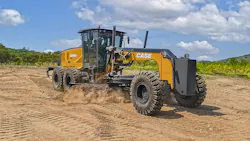
Motor graders have never been easy machines to master. Back in the day, old pros earned their reputations by coordinating a dozen or more levers and pedals, balancing articulation, steering, throttle, and blade controls while reading the terrain with their own eyeballs. A great grader could leave behind a perfectly crowned road, but unfortunately, an inexperienced one could leave behind washboards, waves, and rework.
Today's a little different. I wouldn’t say that graders have become simpler. They’ve just become smarter. On most units, electronic joysticks have replaced the forest of hydraulic levers. Integrated 2D and 3D grade control, automated blade functions, telematics, and camera systems have all made moving dirt a lot easier. The motor grader market continues to evolve as manufacturers like John Deere, Caterpillar, Case, Volvo CE, Komatsu, and others invest heavily in machine intelligence.
Yet, regardless of how advanced the technology becomes, good grading still comes down to the operator. In this quick guide, we share some practical operating tips, setup advice, and maintenance habits that will help you produce smoother grades, work more efficiently, and extend the life of your machine.
How to grade smoother, faster, and with fewer mistakes
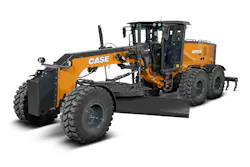
This section was written by George MacIntyre, product manager, motor graders, Case Construction Equipment.
The key to getting good grading performance is making the right adjustments so you can keep a steady pace and avoid tire slippage. Slipping tires are the last thing you want since it may result in an uneven grade. On the Case GR930 and GR935 models for example, the continuous variable transmission (CVT) helps avoid tire slippage. When you use the auto feature, the grader holds a consistent ground speed, and the engine RPMs automatically rise or fall based on the load you are pulling.
Road building puts a lot more demand on graders compared to basic maintenance work. When you are cutting a new road, you usually need a steeper moldboard angle to dig in and move more material. For maintenance, you want a flatter blade angle so you can smooth, lightly cut, and reshape the surface. No matter which job you are doing, the goal is to make smooth, consistent passes every time.
The best grader operators plan ahead, stay consistent, and use precision technology when the job calls for it. A good operator will picture the whole job before they even start and then knock it out in as few passes as possible, keeping a steady direction so they are not crossing over and messing up the finished surface. Also, while 2D and 3D grade control systems cost more upfront, they usually pay for themselves quickly with better accuracy, faster work, and less time spent regrading.
A lot of the mistakes you see from less experienced operators come from rushing or trying to cut corners. Sudden adjustments will mess up a good grade in no time. It is critical to keep the moldboard height, angle, and pitch steady all the way through the pass. Smooth, controlled blade work is what really makes for an accurate grade.
Inconsistent blade control, poor machine setup, or skipping your layout checks can leave you with uneven surfaces, washboarding, a bad crown, or missed slopes. Running too fast, using the wrong blade angle, or not managing your material well also puts extra strain on the circle, moldboard, articulation joints, and drivetrain. And if the grader isn’t maintained properly, you’ll feel it later in reduced resale value.
It is important to have the grader set up for the job you are doing. For example, with snow removal, that often means adding a snow wing. A wing gives you a much wider clearing path and lets you push snow farther off the road. It also makes it easier to bench back those tall snowbanks that build up after multiple storms. Because the moldboard and wing share the workload, you can get the job done in fewer passes, finish routes faster, and put less wear on the main blade. Snow crews also like wings because they let you pull snow from the ditch line without having to move the grader onto the soft shoulder.
Keeping the grader clean really pays off. A clean machine makes it easier to spot issues, runs more reliably, and holds its value better when it’s time to sell. It’s always a good idea to do a quick walk-around before you start your day. Look for anything that seems off, check for wear on the cutting edges and end bits, inspect the hydraulic lines for leaks or rubbing, and make sure the circle drive is free of debris or excessive play. The protected circle on the Case graders helps here by reducing the need for shims and other maintenance headaches around the slewing ring bearing. And don’t forget the basics: Keep up with greasing the circle, drawbar, and articulation joints, and remember to check your fluids.
Four technologies helping motor grader operators
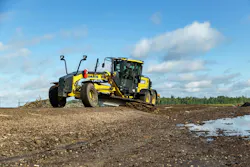
This section was written by Todd Bresemann, senior operator instructor and developer Komatsu.
- Palm steering control reduces operator fatigue by enabling precise steering inputs with minimal hand and arm movement, improving comfort and control during long operating shifts and fine-grading work.
- Auto return-to-center function simplifies machine control by automatically bringing the steering/articulation back to neutral, reducing overcorrection, improving straight-line travel, and lowering operator workload during repetitive operations.
- Automatic differential lock improves productivity with minimal operator input by auto locking and unlocking based on steering angle, which allows the machine to maintain straight travel and traction on soft or uneven ground without manual switch management. This reduces distraction, improves consistency, and allows the operator to stay focused on blade control.
- For heavy grading applications, the drawbar and lift cylinders should be maintained in a centered position to ensure maximum torque efficiency and effective cutting and material carrying performance, supported by correct blade pitch and angle.
Watch these motor graders in action
Reading about motor graders is one thing. Seeing them work is another. We recently spent time with two of the newest grader lineups in the industry. If you're shopping for a machine, these videos are worth a few minutes.
John Deere P-Tier: Smart graders get smarter
John Deere's latest P-Tier motor graders put grade control front and center. In this episode of The Weekly Iron, we walk through the new SmartGrade options, expanded automation features, redesigned operator station, improved visibility, and connected diagnostics. This is an excellent overview of Deere’s new eight-machine lineup, from the 620 P-Tier to the flagship 872 P-Tier.
Case GR Series: Big graders return
Case is back in the heavyweight motor grader market, and the new GR Series makes a strong first impression. This video explores the new GR925, GR930, and 325-horsepower GR935. We also cover standout features like the CVT transmission, Blade Impact Absorption System, and low-maintenance Precision Circle design, along with where these new machines fit into today’s grading market.
About the Author
Keith Gribbins
Keith Gribbins is the head of content at Construction Equipment, where he leads editorial strategy across print, digital, video, and social channels. An award-winning journalist with more than 20 years of experience, Keith has won 17 national and regional editorial awards and is known for his hands-on reporting style, regularly visiting manufacturers, operating equipment, and covering major industry events worldwide.