Remote-Control Trench Roller Q&A: Ammann Explains the Technology and Its Products
Key Highlights
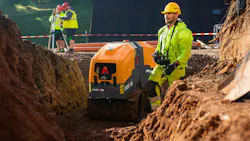
- 🕹️ Get out of the trench: Remote control keeps operators away from some seriously dangerous work.
- 🛑 Lose sight, machine stops: Ammann’s infrared system shuts the roller down if line of sight is lost for more than a second.
- 🚧 Bigger machines could be next: Remote control is starting to show up on compactors above 5 tons, though they’re still specialty applications.
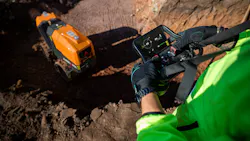
Remote control is just a common-sense safety technology for trench compaction. Trenches are dangerous. Trenches can collapse. We don’t want workers in the trenches. So, when a trench needs compaction, let's wave in the remote-control trench roller. We recently wrote an excellent overview of the remote-control trench roller market. We explored how the technology keeps operators out of trenches and away from vibration, dust, and moving equipment — and how remote control is beginning to move into larger compaction machines.
For a closer look at the technology, we asked Ammann director of sales and distribution development Mike Conley and global product specialist Josef Dementev about these machines. They discussed infrared controls, safety systems, operator training, intelligent compaction, and where remote-controlled rollers might be headed next. Now, let's get into this.
CE: Mike and Josef, thanks so much for your time today. We’re big fans of the Ammann brand, and we’re excited to talk about trench rollers and compaction equipment overall. Let’s start off with the basics. What type of remote-control options does Ammann offer for its compaction equipment? Is it just your trench rollers?
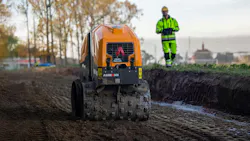
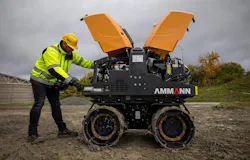
Mike Conley: The only remote we offer for end-users is the remote for our ARR 1575-2 trench roller. It uses infrared communications. We strongly believe that IR is still the safest and most reliable solution.
Josef Dementev: The advanced infrared control system is available for two models of trench rollers.
ARR1575-2 — Articulated trench roller
ARR1585-2 — Rigid-frame trench roller
For these units, we have Roll Angle Warning [RAW] technology. This helps prevent machine rollovers. The system automatically measures the lateral machine angle and communicates it to the operator. The operator is warned if the angle is becoming unsafe, and that the machine should be moved from the potentially dangerous situation. If the angle continues to increase, the machine deactivates the vibratory system to avoid roll-over, providing the operator with an opportunity to relocate to a flatter area.
We also have 3D-LF Near-Field-Detection. With this system, antennas transmit signals in a 6.5-foot radius around the machine to create an active safety zone. The machine automatically stops if it enters that safety zone. Of course, trench work can be tight, so operators can override the safety zone via remote control. They can move within the 6 1/2 feet, but never closer than 1.6 feet.
What compaction applications are seeing the strongest growth in remote control right now?
Conley: Confined spaces and deep trenches are the applications that require remotes for the safety of personnel and equipment. I would imagine that any application that put human safety at risk could benefit from some type of remote-control application.
Dementev: From our perspective, trench applications remain the top priority due to work in hazardous environments. Deep trenches and unpredictable conditions require operator protection, including remote machine control from a safe distance. Additionally, based on initial projects, we can see that the trend of remote control applications is becoming visible also in machines above 5 tons of operating weight. However, these are still considered special applications or unique products in low volumes.
What communication systems do these machines use — infrared, radio frequency, GPS, or something else?
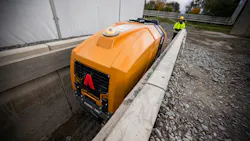
Dementev: Our products use infrared solutions. It is one of the most secure wireless signal technologies for machine control and has been successfully used on ARR trench rollers for many years. It requires direct visibility between the machine and the remote control. If visibility is lost for more than a second, the machine stops automatically. This ensures safe operation and prevents damage when the operator does not have full control of the working environment.
What happens if the operator loses the signal or line of sight with the machine? How far away can operators safely control remote compactors?
Conley: Infrared technology requires direct line of sight. Our equipment is engineered so that any loss of communications longer than one second results in a safety shut down of the equipment. Wirelessly, the remote can operate safely between 6.6 feet and 66 feet.
Dementev: The machine immediately stops if the operator loses direct visibility for more than a second. The machine will not operate if it is less than 6 or more than 60 feet from the operator.
Can remote-control systems be added to existing compactors, or do they need to be factory installed?
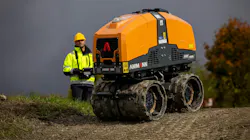
Conley: At the moment, we only offer one product that uses a remote (ARR 1575-2 trench roller). This is a standard feature of this product and is installed at the factory.
Dementev: No, remote-control system must be installed in the factory.
What kind of operator training is required before using a remote-controlled compactor?
Conley: This depends on how complicated the remote is to use, considering all of its features. The Ammann ARR 1575-2 trench roller remote is very simple to use and the controls are intuitive. An operator can master the use of it within a few minutes of field experience.
Dementev: Training is very easy. It can be confidently said that after just five minutes of explanation, the operator can safely control the machine. The full machine control is almost self-explanatory and very intuitive.
What are some of the most common mistakes operators make when they first start using remote compaction systems?
Conley: They are not familiar with the equipment or the controls and are usually tasked with figuring it out real time under pressure. If operators could be trained prior to use, even a very short five-minute familiarization session, they would have more success operating the equipment. This can be done by manufacturers with short videos that can be scanned on a QR code with a smart phone. Examples include operator’s standing too close or too far from the machine, triggering safety modes.
Dementev: Our experience is that issues don’t result from the remote control. They result from operators not understanding the machine’s functions, or properly following safety instructions.
Are there specific OSHA or jobsite safety best practices contractors should follow when operating remote compactors?
Conley: OSHA, MSHA, and other governing bodies all have certain safety standards that should be adhered to. I recommend checking with them for specific policies.
Dementev: Contractors must know the safety regulations on the jobsite as each jobsite has different conditions, size, and regulations are different from country to country.
How well do remote-controlled compactors perform in mud, dust, rain, and other harsh jobsite conditions?
Conley: The remote control does not affect machine performance. The controls have no bearing over the physical, mechanical design, and capabilities. The only difference that could be noted is that when an operator is not riding on a machine or controlling it directly by hand or grip, there is a loss of visuospatial, proprioception, and spatial reasoning. This makes it more difficult for operators to gauge depth, slope, and other factors.
Dementev: Overall, our trench rollers, thanks to two different working widths [23.6 inches and 33.9 inches] and the padfoot drum design, perform well on various materials without any problems.
What machine features pair especially well with remote control — telematics, intelligent compaction, cameras, or machine guidance?
Conley: All of these would pair well with remote control technology.
Dementev: Every roller offers remote access to machine status information via the Ammann ServiceLink telematics system. It provides information on machine position, working hours, and battery voltage. It can be used for individual machines and their utilization or as a fleet management tool.
The optional ACE intelligent compaction system increases productivity and eliminates unnecessary passes of the roller. A few key points about ACE:
- It’s a relative compaction measuring device that provides continuous information about compaction levels — and displays compaction progress in real time.
- It indicates when maximum compaction has been achieved and therefore reduces the number of compaction passes. This leads to increased machine productivity and delivers savings on fuel, labor and machine wear.
- The system is able to quickly react to all surface changes and prevents under/over compaction. It also indicates double-jumping to protect the machine and material from damage.
- LED Lights change color to inform the operator about compaction status or double-jumping. The system is automatically activated when vibration is engaged. Optimally placed LED strips — on both sides of the machine and the top and rear of the hood — ensure the operator maintains visibility, whether working in a deep trench or an open space.
What advice would you give buyers who are choosing a remote-control platform for a piece of compaction equipment?
Conley: I would encourage anyone to consider safety and simple controls.
Dementev: Ensure it utilizes infrared remote technology for consistent linking and safety like automatic shut-off if signal is lost. Confirm there is a safety zone in machine operation, and examine the difficulty in establishing it and look for option of operating machine within the safety zone Find a system that is easy to learn. The machine still matters. Look at the basics, such as compaction output, drum pad design, and durable components.
About the Author
Keith Gribbins
Keith Gribbins is the head of content at Construction Equipment, where he leads editorial strategy across print, digital, video, and social channels. An award-winning journalist with more than 20 years of experience, Keith has won 17 national and regional editorial awards and is known for his hands-on reporting style, regularly visiting manufacturers, operating equipment, and covering major industry events worldwide.