2027 Truck Engine Emissions Rules Are Coming (Let's Recap Them)
Time flies and January 1, 2027, will be here soon, bringing with it a new round of emissions-reduction requirements and a series of very clean-burning diesels. They will be more complex and expensive to those who habitually buy new heavy and medium-duty trucks, and some “pre-buying” of current trucks to beat the upcoming price hikes is reported. Those who run older equipment, including many construction fleets, can shrug and, as they’ve done in the past, let the progressive well-heeled companies sort out the problems that could come with new hardware.
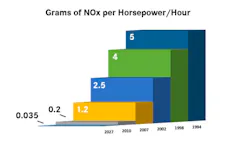
Manufacturing lead times mean trucks with ‘27-spec diesels will reach dealers and customers somewhat later in the year. The rules require diesels to emit 82.5 percent fewer oxides of nitrogen, or NOx, cutting it to 0.035 grams per horsepower-hour, and 50 percent fewer particulates than current models, which in turn are vastly cleaner than diesels of the mid-1990s, when exhaust emissions limits began.
Industry pushback and EPA response
The trucking industry sees '27 limits as onerous and expensive, and last August the American Trucking Associations petitioned the Environmental Protection Agency to ease certain limits and delay the rules for four years. ATA cited insufficient testing and high cost of compliance amid a continuing “drought” in freight shipments and reduced revenues for trucking companies.
But in October, the EPA announced it would not change the limits or delay the effective date. EPA said it would develop a proposal to revise warranty and useful life requirements to help address cost concerns, according to Patrick Kelley, ATA’s vice president for energy and environmental affairs. EPA’s proposal is expected this spring.
Addressing other concerns, in mid-February ATA asked EPA to add flexibility for manufacturers in a credit averaging, banking, and trading program, which some builders use to meet standards, and to issue nonconformance penalties for manufacturers that are lagging in meeting new pollution limits. “EPA is likely to increase credit market flexibility,” Kelley said, “but the nonconformance penalty request divides the truck manufacturers, so it’s not clear how EPA will respond to that request.”
GHG rescission
Meanwhile, in late January of this year, the EPA rescinded the 2009 “endangerment finding” that greenhouse gases are harmful to humans. That finding had led to limits on carbon dioxide and other gases that warm the Earth — a condition supported as fact by most scientists and taken seriously by other countries but rejected as “a hoax” by Trump. The rescission was met with howls by environmentalists, who immediately sued to overturn it. The rescission does not affect the '27 exhaust emissions’ limits because they deal with NOx and particulates, which are pollutants, not greenhouse gases. Reducing pollutants has been mandated by Congress, so it will continue unless Congress changes things.
What the rescission will end, according to observers, are the phased-in GHG rules that have required fuel-saving equipment for certain trucks and trailers. These complex rules have required aerodynamic devices and low-rolling-resistance tires, which reduce engine loads and save fuel. Less fuel burned means fewer emissions. That also saves money, so those devices may well stay in use, though mostly with on-highway, freight-hauling vehicles, and seldom on construction trucks where they do little or no good.
Some relief
Meanwhile, the EPA says it will reduce a scheduled extension of emissions-equipment warranties and is easing previous requirements for engine “derating” — automatic power reduction when parts fail or diesel exhaust fluid runs out. And it is going to bat for owners suffering breakdowns of emissions equipment. Fleets have reported frequent equipment failures and breakdowns, with derates leading to near-shutdowns, stranding trucks on the road. EPA is eliminating regs that demand much of the derating, giving drivers and operators more time to seek repairs and easing the urgency to replenish the fluid tanks. EPA has told manufacturers to issue software updates to effect that change and has asked for failure data to further address the systems’ lack of reliability.
Meanwhile, the administration is expected to cut an extended warranty period for that troublesome equipment, which was to go to 650,000 miles, which would require manufacturers to pay for through steep price increases. The warranty will likely revert to the current 435,000 miles of repair coverage, which will reduce price hikes that were estimated to range as high as $30,000 per vehicle.
“I don't sense that the cost premium is going to be in the $30,000 range,” said Allen Schaeffer, executive director of the Engine Technology Forum, which advocates for traditional internal combustion power. “I don't have any vision on specific OEM numbers, but I would guess in the $15,000 to $20,000 range. Vocational is a smaller market generally, but it shares the principal, if not identical core powertrain components with over-the-road,” so upcharges should be similar. With shorter warranties to pay for, the cost to a buyer for emissions reduction will probably be closer to $10,000, other observers think.
Manufacturers almost never discuss pricing publicly, partly because prices vary with purchase factors and are negotiated with customers privately. But prices go up every year to pay for increased materials and component costs due to inflation, and since last year, President Trump’s constantly changing tariffs. And manufacturers need to recoup many millions of dollars in development costs to pay for emissions-reduction technology. One thing’s for certain: Nothing will get cheaper.
Emissions equipment
To achieve the newest requirements, diesel builders are employing enhanced combustion methods, including specially shaped pistons and more intricate valve action. And they’ll use varying methods to remove NOx from exhaust streams yet keep diesel particulate filters hot so they can burn off ash from motor oil. Generally, there’ll be less use of exhaust-gas recirculation, or EGR, that cools combustion temperatures to discourage NOx formation, and more use of exhaust fluid to chemically neutralize NOx formed during combustion.
At least two engine makers, Cummins and Volvo-Mack, will use heating elements powered by 48- and 24-volt alternators. Detroit Diesel, International and Paccar will not use heaters but rely on mechanical improvements, less EGR, and more aftertreatment with exhaust fluid. Paccar announced it is readying two new engine platforms which will have the changes for 2027. Detroit is the proprietary supplier to Freightliner and Western Star; International diesels go into International trucks; and Paccar makes engines for Kenworth and Peterbilt.
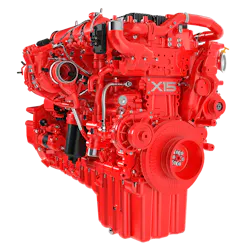
All truck builders also offer Cummins’ X15 and a few offer the X12, which is being dropped along with the L9, with a new X10 as their replacement. The X15 and X10 are both ready for 2027, Cummins says. All domestic builders of medium-duty trucks use Cummins’ B series diesel, which for ’27 will have a larger displacement, from 6.7 to 7.2 liters, and get exhaust aftertreatment equipment similar to the builder’s heavy-duty engines.
What about EVs?
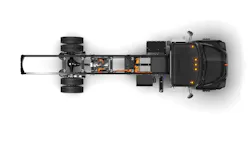
Federal government support for electric trucks and cars is gone, thanks to the Trump-backed One Big Beautiful Bill. It ended hefty tax credits to offset the price premiums for EVs. Also gone is federal support for the buildout of an electric charging network, though previously allocated funds for chargers are still being spent. So, sales of the zero-emission electric vehicles have begun slumping. Heavy and medium-duty battery-electric trucks are still available because they make sense in some applications. That does not include construction, but vocational electric trucks are on the market, including Mack’s heavy LR Electric that’s used primarily for trash collection. Recently, Kenworth and Peterbilt have announced electric versions of two vocational models. Battery-electric midrange trucks include Freightliner’s eM2 and Mack’s MD Electric.
For now, electric trucks and cars are still are backed in certain states, primarily California and some in the Northeast, though their support will be hampered by cuts in federal revenues. And the feds have stripped California of some of its authority to regulate emissions and demands for zero-emissions vehicles, which is another story. But electric vehicles are likely to stay on the market as long as sales are possible. And shifting political winds could result in a return of a federal administration sympathetic to environmentalists’ concerns. Time will tell.
Cat + Geotab Bring the Full Fleet into One View
Caterpillar is expanding VisionLink again — this time onto the highway. The company is partnering with Geotab, widely considered the largest telematics company in the world, to pull on-highway trucks into its VisionLink ecosystem. The goal is simple: one dashboard for everything. Yellow iron. Highway tractors. Service trucks. Vans. One system. Geotab handles on-road telematics through its GO devices, cameras, and asset trackers, all connected through the MyGeotab platform. VisionLink becomes the single pane of glass. The result: fleet managers can now see on-highway vehicles alongside Cat and non-Cat equipment in one place. Zoom out, and this fits squarely into Cat’s broader digital push. Caterpillar has been building VisionLink into a central command center for mixed fleets. This partnership extends that strategy onto the road. Now the service truck and the excavator it supports can finally live in the same system.
About the Author
 Tom Berg
Tom Berg
Tom Berg is widely acknowleged as one of the top truck writers in the industry. He has covered construction for more than 34 years, and has test-driven well over 150 trucks for Construction Equipment.