AI-Powered Monitor Aims to Catch Driver Drowsiness Earlier
Have you had any micro eye movements lately?
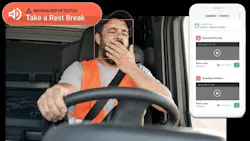
The correct answer is yes, but you'd never know — unless you had something like Teletrac Navman's new Driver Monitoring Sensor (DMS) — an AI-powered driver-facing visual sensor that tracks those movements to find early signs of driver drowsiness and fatigue.
Its goal is to catch you earlier than ever in the nodding off process.
The DMS is available with the company's Smart Dashcam Quad, which combining four HD cameras and AI-powered video analytics to identify risky behaviors, deliver real-time coaching, and provide actionable driver insights that help fleets improve safety and performance.
Smarter eyes: AI cameras have arrived for construction equipment
DMS works alongside Smart Dashcam Quad to provide deeper detection of drowsiness, fatigue, and microsleeps, giving fleet operators greater visibility into driver risk.
While drowsiness detection is already available across Teletrac Navman's safety solutions, DMS takes detection a step further by tracking micro eye movements rather than relying solely on late-stage visual cues.

How it works
It seems like Teletrac Navman has thought of everything to fight drowsy driving, including a jolt in the backside.
DMS is a purpose-built visual sensor mounted on the vehicle's dashboard, with a clear view of the driver's eyes, face and head. It measures scientifically recognised drowsiness indicators, including blink patterns, eye closure percentage, and head movements.
Warning signs such as slow or excessive blinking help flag tiredness early. It can also identify microsleeps and extended eye closures, including nodding off. Through its infrared capability, DMS operates in low and harsh light and can detect drowsiness through many non-polarised sunglasses and high-visibility gear.
DMS generates compound alerts by combining these indicators with advanced driver assistance system (ADAS) data, such as lane deviation. Alerts weigh multiple signals to determine severity. This approach is designed to reduce false positives and provide a clearer picture of a driver's current fatigue level, so fleet operators can focus on the events that require action.
When DMS detects drowsiness, the driver receives multiple audio alerts in the vehicle, along with haptic feedback through seat vibration where fitted. Both are designed to improve driver awareness and help drivers self-correct. The back-office team receives real-time, severity-based notifications, so they can act sooner.
"The most effective way to manage fatigue risk is to stop incidents before they occur," said Ricardo Buranello, CEO, Teletrac Navman. "DMS is designed to detect early signs of fatigue, which can help prevent events and incidents and support a safer environment."
Preventive management
A dedicated management dashboard helps safety teams prioritise risk, with historical reporting that reveal recurring behaviours and support more targeted coaching. Automated drowsiness detection and severity classification help businesses that have limited time to review events.
DMS also records interventions and follow-up actions, creating a clear audit trail that helps businesses demonstrate a proactive approach to fatigue management and support their duty-of-care obligations.
The product is launching in Australia and New Zealand first.
About the Author
 Frank Raczon
Frank Raczon has influenced and covered the equipment industry for 35 years, including 15 years as senior editor of Construction Equipment, and marketing, advertising, and public relations work for the industry's top manufacturers. He authored "Caterpillar: Modern Earthmoving Marvels" (Motorbooks, 2015), and has won numerous awards in his career, highlighted by nods from the Construction Writers Association, the Association of Equipment Manufacturers, the Business Marketing Association, and BtoB magazine. Raczon has also won awards from publishing peer groups such as ASBPE and TABPI.