Roll With It: The Latest Asphalt Rollers, Buying Tips, and Technologies
Key Highlights
- Choose the right roller for the job: Learn the differences between tandem vibratory rollers vs. pneumatic tire rollers vs. a roller attachment. Basically, we talk a lot about asphalt rollers.
- Improve mat quality with smarter compaction: Discover how drum diameter, tire pressure, roller weight, and asphalt temperature can increase density and reduce surface defects.
- See the newest asphalt rollers on the market: What's cool and new? I guess look below to explore the latest machines and technologies from Cat, Hamm, Sakai, Volvo, Ammann, JCB, Basic Equipment, and Bobcat.
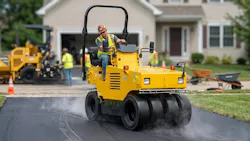
With today's asphalt compaction rollers, you got options — tandem vibratory rollers, pneumatic tire rollers, combination rollers, electric models, towable rollers, and even hydraulic roller attachments for compact equipment. You need rollers. We got rollers. Each brings strengths to the paving train, whether you’re chasing density on an interstate or just sealing some joints on a random parking lot.
What’s the difference between all these machines?
Well, tandem vibratory rollers are those classic asphalt rollers, using two big, smooth steel drums and vibration to quickly achieve density. Tandems are still the go-to category for highway and commercial paving. Pneumatic tire rollers (as the name might imply) use rows of rubber tires to knead the mat, sealing surface voids and improving density. They use from seven to 11 rubber tires to do this (check out that top photo above). Then there's combination rollers that merge both approaches with a steel drum up front and pneumatic tires in the rear, giving contractors extra versatility on smaller jobs.
And this category continues to evolve. Today, oscillation is a top technology. Oscillation compacts asphalt by twisting the steel drum back and forth instead of vibrating it up and down. This reduces stress on the mat and can reduce the risk of over-compaction on bridge decks, thin lifts, and other sensitive surfaces.
Continuing with tech, there are some battery-electric rollers on the market from brands like Volvo Construction Equipment, Dynapac, and Hamm. It's cool to see those units gaining a little traction on urban and indoor projects where noise and emissions matter. There are also some unique options on the market. Maybe a towable roller can help a municipality or utility crew move faster between patching jobs, or perhaps a hydraulic roller attachment on a skid steer or compact track loader can tackle that small paving project.
Before we begin to explore all those options, let’s start off by pointing out a few previous stories we’ve written on asphalt compaction.
Past asphalt paving insights
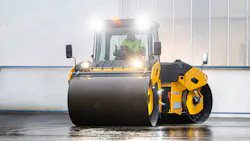
- What to look for in tandem rollers: Electric rollers, smarter safety systems, and the return of the Vibromax name are reshaping the tandem roller market. Learn which features matter most before your next purchase.
- How to size a roller by drum width: Bigger isn't always better. Discover why effective drum width — not just drum length — plays a major role in productivity, rolling patterns, and pavement density.
- How to keep asphalt paving safe: Struck-by incidents remain one of the biggest hazards on paving jobsites. This feature explores the latest safety technologies, training strategies, and best practices to protect both operators and ground crews.
The rolling physics of large-diameter drums
This section was written by Joseph Hawkins, compaction product manager, Volvo Construction Equipment.
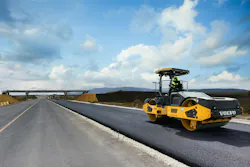
When evaluating a tandem asphalt roller for high-production paving, it’s important to look beyond a machine’s vibratory specifications to the actual physical size of the steel drum. Experienced paving crews consistently favor large-diameter drums because the structural geometry of the drum itself alters how weight and force hit fresh asphalt.
The primary mechanical advantage stems from a shallower impact angle where the steel meets the hot mix. Smaller drums naturally exhibit a steeper entry angle, which causes them to plow or push the tender, uncompacted material forward. This behavior creates microscopic surface ripples and bow waves that compromise overall smoothness. Because a larger drum rolls over the material with significantly less horizontal resistance, it minimizes this pushing effect, allowing crews to achieve a flawless mat surface and secure their bonuses.
This physical profile also directly affects rolling speeds and impact spacing. To maintain a uniformly smooth surface, a smaller diameter drum requires more impacts per liner foot due to a thinner contact area. The only way to achieve more impacts per foot is by slowing the propulsion speed of the machine or increasing the speed of the eccentric. In other words, the larger the diameter of your drum, the faster you can compact while maintaining surface finish. By naturally spreading the machine’s operating weight across a wider contact area, large drums also reduce localized shear stress on the outer edges. This keeps the hot asphalt mix from tearing, scuffing, or cracking during tight turns, ensuring uniform density across the entire width of the pass.
Maximizing pneumatic compaction performance
This section was written by Brad Belvin, manager of sales and marketing, Sakai America.
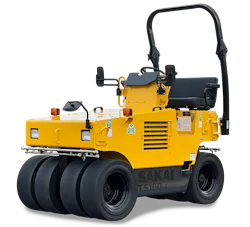
Pneumatic tire rollers (PTRs) are essential in the asphalt compaction train for their unique kneading action, which seals surface voids and improves mat density. Beyond the common static PTRs, the dynamic kneading effect of vibratory tire rollers also provides a boost to longitudinal joint quality as well as a further density increase. For all PTRs though, operators looking to maximize their quality of output should focus on three operational pillars: tire pressure, weight, and temperature.
First, ensure tire pressure is uniform across all tires. Uneven pressure can lead to localized compaction variations, resulting in a wavy or uneven mat surface. Second, optimize roller weight for the application by either selecting the appropriately sized machine, utilizing ballast if applicable, or by simply adjusting amplitude settings in the case of a vibratory pneumatic tire roller. Heavier weights are typically required for base layers or thick lifts, while lighter configurations may be preferred for thin lifts and delicate finish work.
Finally, manage your rolling window based on asphalt temperature. Pneumatic tire rollers are most effective when the material is still warm enough to be kneaded; if the mix cools too quickly, the "kneading" effect is diminished, and surface tearing may occur. If the mix is too hot, the temperature differential to the tires will be too great and pickup will occur.
Always maintain clean tires and utilize release agent when beginning or restarting rolling to buy the tires some time to heat up. Preventing the mix from picking up is critical for achieving a high-quality, long-lasting finish. Following these guidelines will ensure a trouble-free job and a final product that will earn you repeat business.
Asphalt roller product showcase
Asphalt rollers keep rolling, blending smarter automation, better compaction technology, and improved operator comfort into machines that deliver higher-quality mats with fewer passes. In this showcase, you'll find the latest tandem rollers, pneumatic tire rollers, and compaction attachments designed to boost paving performance, reduce operating costs, and help crews hit density targets more consistently.
Cat CB10 tandem vibratory roller
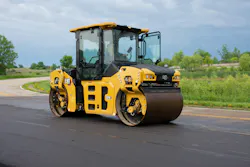
The Cat CB10 tandem vibratory roller combines automation, compaction performance, and operator-friendly technology to help paving crews achieve consistent results. The Versa-Vibe system can match amplitude and frequency to paving conditions, helping improve density performance across a wide range of paving applications. The optional oscillation system excels on thin lifts, bridge decks, and near sensitive structures while minimizing the risk of over-compaction. Built-in application profiles allow operators to save and recall preferred settings, reducing setup time and improving repeatability from job to job. Automated features such as Green Zone speed control, Auto Vibe activation/deactivation, and the automatic water spray system help maintain proper impact spacing, optimize compaction, and deliver consistent drum coverage with less operator input. Compaction Control technologies, including pass-count mapping, temperature mapping, and Compaction Meter Value (CMV), provide real-time feedback to support quality results. The operator station is designed for productivity and comfort with touchscreen controls, handwheel steering, camera options, with an available climate-controlled cab for enhanced comfort. For more info, visit Cat’s website.
Hamm HD+ 120i VIO-2 HF tandem roller
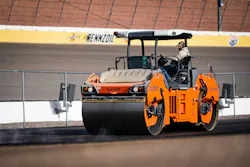
Hamm’s HD+ 120i VIO-2 HF provides an impressive degree of flexibility with high compaction power and a wide range of options for the operator to compact with. The HD+ 120i VIO-2 HF is equipped with two VIO drums while offering nine different combinations to choose from when selecting a compaction method. This tandem roller’s versatility provides exceptional compaction across a multitude of mix designs. For construction site uses, an automatic control feature on the HD+ 120i VIO-2 HF ensures that the front drum (in relation to the direction of travel) is always working in vibration mode, while the rear drum uses oscillation or static compaction to achieve the best possible results with increased working speeds and fewer passes. The HD+ 120i VIO-2 HF has also been designed as a high-frequency machine (HF), offering a vibration frequency of 67 Hz or 4,020 vpm (front and rear). For more info, visit Hamm’s website.
Sakai TS160-4 pneumatic tire roller
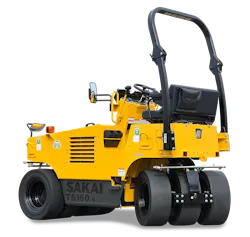
The Sakai TS160-4 is a 3-ton-class static pneumatic tire roller designed for finishing applications on parking lots, driveways, and municipal roads as well as chip seal jobs. Featuring a 51-inch compaction width via specialized wide super-flat tires (four front, three rear), the roller efficiently kneads hot mix asphalt to create a dense, uniformly sealed surface. Maneuverability is prioritized through a compact frame and unique rear-wheel steering, allowing for precise operation in confined applications. The TS160-4 is powered by a 21-horsepower Kubota diesel engine that operates entirely without a DPF, DEF, or ECM, significantly reducing maintenance complexity and potential downtime. Additional features include reliable analog controls and a heavy-duty, triple-filtered water spray system with all-metal spray bars/tips to prevent material pickup. Built for mechanical simplicity and ease-of-use, the TS160-4 delivers consistent, reliable performance for commercial and residential paving operations. For more info, visit Sakai’s website.
Basic Equipment compaction options
Basic 700 pneumatic roller
The Basic Model 700 rubber tire roller is engineered to deliver dependable performance, superior compaction, and long-term reliability for today's paving professionals. Its innovative seven-wheel design provides greater ground pressure than conventional nine-wheel rollers in its weight class, producing excellent density while maintaining maneuverability on parking lots, driveways, subdivision streets, chip seal projects, and utility repairs. Independent wheel oscillation ensures 100 percent surface contact, allowing the pneumatic tires to blend seams and eliminate steel drum marks for a smoother, more professional finish. The Model 700's simple, proven hydraulic design minimizes maintenance, reduces downtime, and extends machine life. Powered by a Kubota diesel engine, it offers consistent performance with low operating costs. The centered operator station provides outstanding visibility for edge rolling, while its compact size allows for easy transport between jobsites. For more info, visit Basic’s website.
Basic Model 240VT towable split drum roller
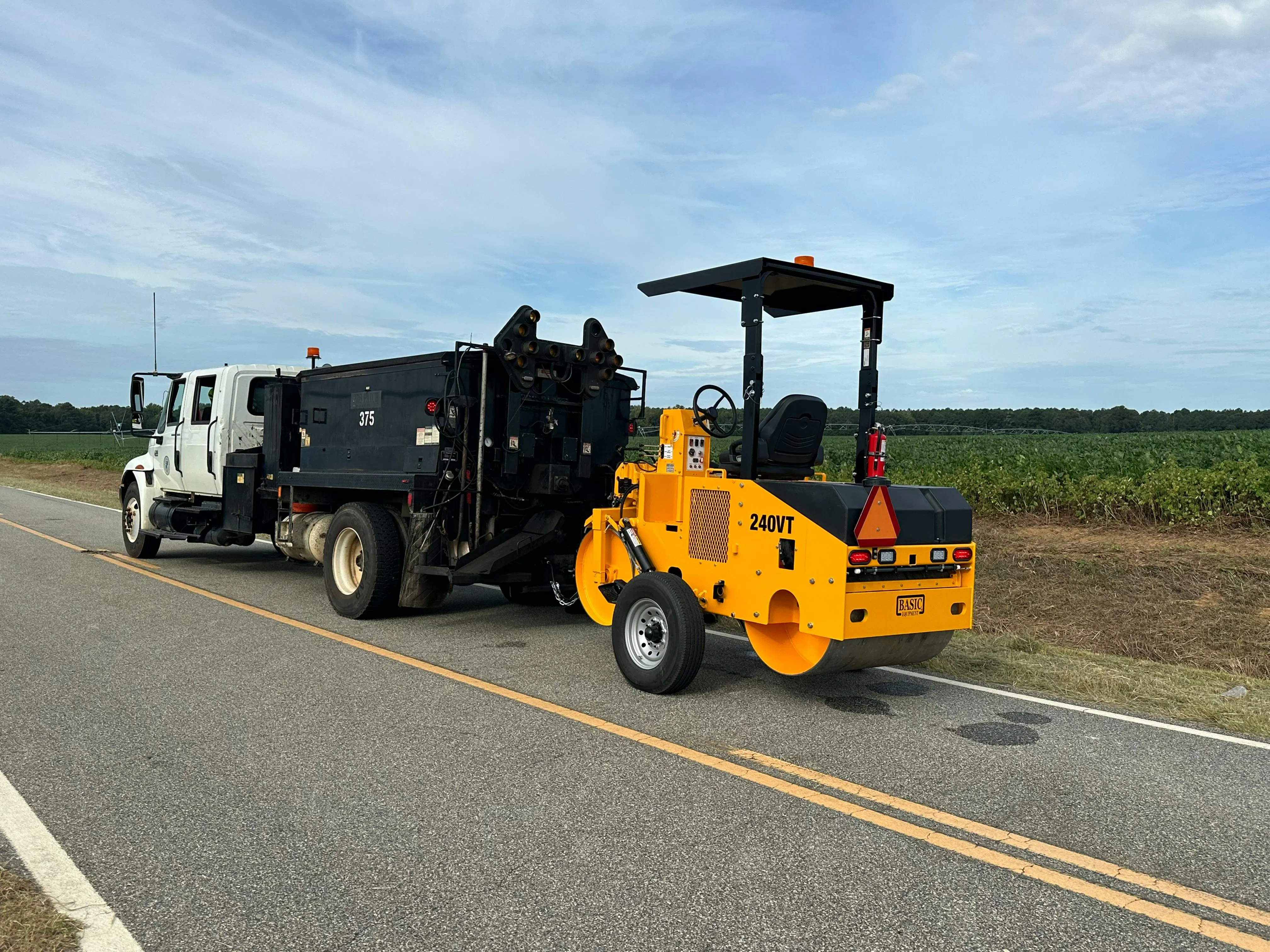
The Basic Model 240VT towable split drum vibratory roller is the industry's only towable split drum vibratory roller currently manufactured, providing a unique solution that maximizes productivity while reducing transportation time and costs. Designed specifically for municipalities, utility contractors, and asphalt maintenance crews, the 240VT tows directly behind a work truck, eliminating the need for a trailer, additional towing vehicle, and the time required for loading and unloading equipment. Its split drum design allows tight, controlled turns while minimizing tearing and shoving of fresh asphalt for a tighter, smoother finished surface. Powered by a dependable Kubota diesel engine and built with simple hydrostatic controls and proven hydraulic components, the 240VT is easy to operate, maintain, and service. Ideal for utility cut repairs, street maintenance, parking lots, and patching operations, it enables crews to complete more jobs each day with fewer resources. For more info, visit Basic’s website.
Volvo DD128C tandem asphalt roller
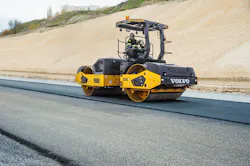
The ability to seamlessly switch from highway paving to delicate thin lifts without changing machines is exactly why operators rely on the Volvo DD128C tandem asphalt roller. It is engineered to handle the full spectrum of paving challenges by offering the most drum amplitude settings and one of the widest ranges of drum amplitudes on the market. Equipped with drums capable of an ultra-high frequency up to 4,800 vibrations per minute, the DD128C allows operators to adjust drum amplitudes from a super-low 0.003 inches up to a high of 0.030 inches. This wide operating window means you can dial the vibration down to compact ultra-thin lifts without shattering aggregate or dial it up to achieve density on deep 4-inch lifts. With this level of precision, one compactor can do the job of many on a single jobsite. This saves fuel and simplifies logistics while ensuring a smooth, consistent mat every time. For more info, visit Volvo Construction Equipment’s website.
Ammann’s impressive roller lineup
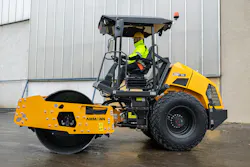
Ammann offers a wide variety of solutions for asphalt compaction applications ranging from small patch work jobs and driveways to the largest parking lots and highways. Ammann's tandem product lines include double drum and combination (drum/rubber tires) rollers, ranging from 1.5 ton up to 16 tons. Ammann also has the ART 240 (all tire roller at 24 tons) for specialty jobs such as airport runways, racetracks, and highways. Ammann's products have productivity, ergonomics, serviceability, and sustainability built into the design DNA. The operator platforms are comfortable with adjustable seats, high visibility and intuitive controls. Ammann's ECOdrop lowers cost of ownership by reducing fluids, oils, and grease. Automatic engine RPM control reduces fuel consumption. Variable frequencies and amplitude selections allow machines to get the job done quicker. With over 150 years in the business, Ammann continues to produce products with the quality demanded by the ever-changing market. For more info, visit Ammann’s website.
JCB CT380 and CT430 JCB vibratory tandem rollers
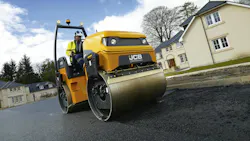
CT380 and CT430 JCB vibratory tandem rollers feature dual-drum widths of 55 inches and 51 inches, respectively. They deliver centrifugal forces of up to 13,800 pounds and 14,600 pounds per drum, respectively. Both JCB compactors feature maximum travel speeds of 6.2 mph, enabling swift movement across job sites. Standard adjustable seats, intuitive controls and greater visibility reduce fatigue and enhance operator productivity, according to the company. JCB LiveLink telematics provides advanced tracking and monitoring. With the addition of the CT380 and CT430, JCB has expanded its tandem roller lineup to four models. For more info, visit JCB's website.
Bobcat vibratory roller attachment
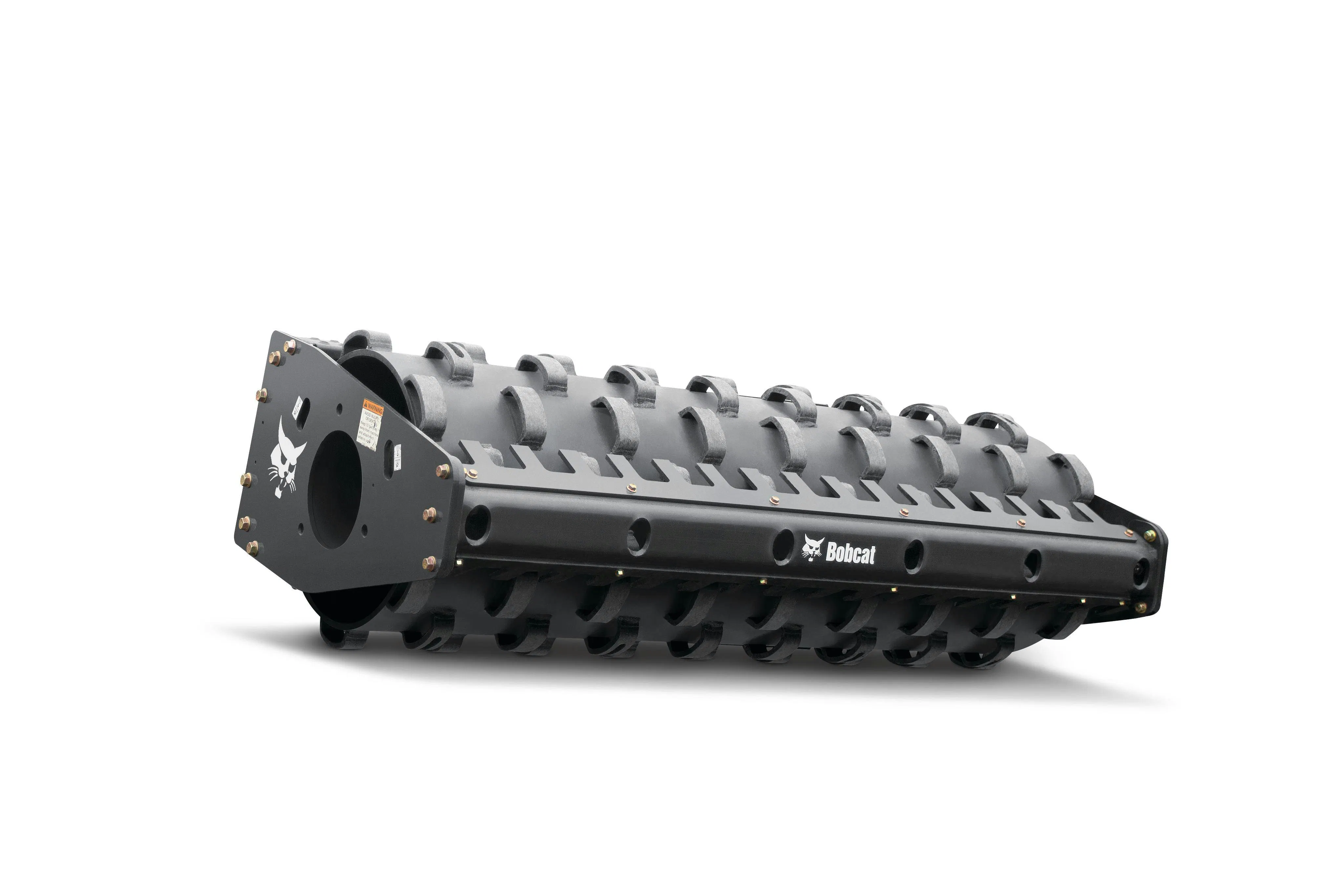
The Bobcat vibratory roller attachment helps operators achieve consistent, professional compaction for site preparation, landscaping and paving applications. Its bi-directional vibration motor delivers hard-packing performance while traveling in either forward or reverse, helping complete jobs faster in fewer passes. A free-oscillating drum maintains better contact with uneven ground for more uniform compaction and improved control on slopes and varying terrain. The offset drum design allows operators to work efficiently alongside sidewalks, curbs and walls, making it well-suited for confined jobsites. An isolation mounting system reduces vibration transferred to the operator, improving comfort during long workdays while maintaining consistent ground pressure for reliable compaction results. Operators can choose a smooth drum for sand, gravel, pea rock and asphalt patching, or a padded drum for heavy soils, clay and clay-based backfill. Easy to transport between jobs, the vibratory roller attachment delivers productivity, versatility and dependable compaction performance across a wide range of construction applications. For more info, visit Bobcat’s website.
About the Author
Keith Gribbins
Keith Gribbins is the head of content at Construction Equipment, where he leads editorial strategy across print, digital, video, and social channels. An award-winning journalist with more than 20 years of experience, Keith has won 17 national and regional editorial awards and is known for his hands-on reporting style, regularly visiting manufacturers, operating equipment, and covering major industry events worldwide.