Mega Projects Are Reshaping the Construction Equipment Rental Market
Key Highlights
- Specialty rental is booming. Power, trench safety, scaffolding, and other niche categories are outpacing traditional rental.
- Rental giants are buying a LOT of iron. United, Sunbelt, and Herc could spend about $9.5 billion combined on rental equipment.
- Mega projects love rental. Big jobs need lots of different machines at different phases. Buy everything? Nah. They're renting more and more.
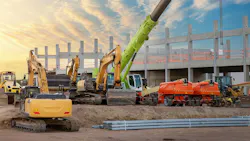
Everyone’s renting these days. You’re not? No? Perhaps I heard you wrong, but that’s interesting. According to the reports I’ve been reading, renting machinery and jobsite tools is more popular than ever, but I guess you're right — they're only reports. The American Rental Association’s latest forecast expects combined U.S. construction and industrial equipment and general tool rental revenue to reach $83.5 billion in 2026. That’s up 3.4 percent from last year. ARA expects growth to accelerate to 4.4 percent in 2027 and 5.1 percent in 2028. From that same forecast:
“The rental revenue increase indicates the preference for renting over ownership,” said Tom Doyle, ARA vice president, program development. “The reasons are many for the growth, including the access to the equipment versus the asset ownership and the economics of renting.”
But he also cautioned:
“While rental revenue has increased, the results are mixed,” said Doyle in the same quote. “If you have any of the large infrastructure projects or data center buildouts, you’re in a stronger market with generally better results.”
That’s been the story lately. We just wrote about this in our summer construction report: Overall construction remains active, but growth is increasingly concentrated in verticals like digital infrastructure, power, and public works. So, there’s a bunch of mega projects out there eating up all the iron. This is causing some interesting trends, so I thought I’d share.
Specialty equipment is on the rise
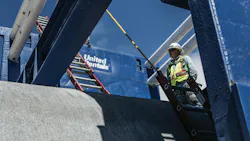
For instance, specialty equipment is having a moment. Specialty rental equipment includes things like portable power, load banks, pumps, trench safety equipment, scaffolding, a hodgepodge of, well, specialty equipment. This quote comes from Sunbelt’s June fiscal fourth-quarter and full-year 2026 results:
“We finished the year with strong momentum with fourth quarter rental revenues in our North America Specialty segment increasing 15 percent, and our North America General Tool growing at 4 percent,” said Brendan Horgan, chief executive officer. “With this momentum, we are well positioned to continue driving profitable growth and deliver long-term value for our stockholders.”
Note: General Tool is rental-industry slang for that broad, traditional rental fleet, including much of the construction equipment our readers use every day, but also hand tools, pressure washers, forklifts, etc.
Getting back to Sunbelt, it says its 15.1 percent growth in North American Specialty rental revenue was led by “power and HVAC, in particular load banks, and was also fueled by flooring, temporary fencing, structures and walls, trench safety, and scaffold.” That’s an interesting shopping list.
Sunbelt isn’t alone here. United Rentals is seeing an even bigger gap between its traditional and specialty rental businesses. In the second quarter of 2026, United’s Specialty equipment rental revenue increased 24.8 percent year over year. General equipment rental revenue grew 6.6 percent too, which is pretty decent.
Mega projects are pushing rental telematics services
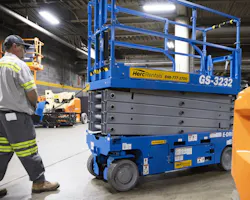
Think about the equipment cycle on a big project, and you can see how it will fuel different equipment categories. Picture a data center, an Amazon distribution facility, or O’Hare’s $12.5 billion “ORDNext” redevelopment program. As the project progresses, the equipment cycle changes. Telehandlers move the material in. Scissor and boom lifts put workers in the air. Excavators help install utilities. Graders come in to smooth the various surfaces. Generators and temporary power keep everything electrified. These mega projects create a great big rental ecosystem.
That ecosystem is pushing mega-project contractors into rental telematics services. EquipmentShare is a great example. EquipmentShare is a fast-growing U.S. construction equipment rental company that's built around its T3 proprietary telematics and fleet-management platform.
“As customers undertake larger and more complex projects, they are increasingly consolidating spend with EquipmentShare because of our ability to combine equipment, technology, and service through one integrated platform,” explained Jabbok Schlacks, founder and CEO of EquipmentShare in this 2026 Q2 financial report. “Looking ahead, customer demand remains healthy, our mega-project pipeline continues to expand, and we remain confident in our outlook and see a meaningful opportunity for growth.”
Here’s an interesting stat.
“We built T3 to run EquipmentShare, and increasingly our customers want to run more of their businesses on it,” said Willy Schlacks, founder and president of EquipmentShare in that same report. “Customers that engage with T3 spend approximately six times more with us, and we are seeing the platform expand beyond rental into mixed fleet, service, logistics, and broader enterprise workflows.”
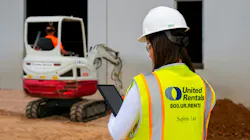
EquipmentShare isn’t alone in combining rental iron with fleet tech. United Rentals offers Total Control, its fleet and worksite management platform, and I have the perfect mega project example for you. United Rentals partnered with a general contractor and a large client on a 10+ year data center build. UR provided an entire onsite branch stocked with rental equipment, and to help streamline operations across 12+ contractors, it used Total Control. This gave the general contractor visibility into equipment utilization and helped identify underused machines. Read the case study right here.
Sunbelt has its own version with Connected Solutions and its Command Center platform. Sunbelt says it collects data from more than 340,000 connected pieces of equipment and processes more than 80 million sensor readings every day. That’s pretty wild.
Rental companies are buying billions in iron
Sunbelt expects to spend between $2.45 billion and $2.85 billion on gross rental equipment in fiscal 2027. Herc expects gross rental equipment expenditures between $1.25 billion and $1.4 billion in 2026. United Rentals expects to purchase approximately $4.85 billion to $5.25 billion worth of gross rental equipment this year. At the high end, that’s about $9.5 billion in planned rental fleet purchases from United, Sunbelt, and Herc alone. Those numbers come from all the reports you can find on this page.
Rental contiues to consolidate
All this growth is also making the big rental companies bigger. One of the best examples came in 2025, when Herc Rentals acquired H&E Equipment Services. This wasn’t some tiny deal. Herc Rentals acquired H&E Equipment Services for $5.3 billion, including debt, according to this Simpson Thacher article. H&E brought about 160 branches across more than 30 states. Interestingly, United Rentals originally agreed to buy H&E for about $4.8 billion before Herc swooped in with a higher offer. Herc completed the acquisition in June 2025 and called it the largest acquisition in rental industry history.
United Rentals has spent years building its network through acquisitions. It bought Ahern Rentals for about $2 billion in 2022, adding 106 locations and roughly 60,000 rental assets. In 2024, it paid about $1.1 billion for Yak Access, adding a major ground-protection business to its Specialty portfolio. Sunbelt’s been busy too, focused on Specialty equipment (that’s a hot category).
“I’m excited to announce today the acquisition of Reliant Asset Management, a leading modular space solutions provider,” said Brendan Horgan, Sunbelt CEO in this report. “This is a great example of our bolt-on acquisition strategy as a compelling opportunity to expand our Specialty offering and advance our Sunbelt 4.0 strategic objectives. Through this acquisition, we are demonstrating our capital allocation priorities and a clear intention to use our leadership position in North America to expand and grow across new highly complementary verticals, creating sustainable long-term value for stockholders.”
How does all this affect you, the fleet manager?
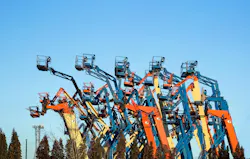
None of this means contractors should stop buying equipment. As you well know: It’s all about utilization. If you can keep an excavator, CTL, wheel loader, or other machine working day after day, ownership still makes a lot of sense. But… maybe you land a mega project and need four more excavators for nine months. Maybe the next phase requires 20 scissor lifts. That’s where rental can become a good strategy.
Also, there's a lot of uncertainty in the world.
“One of the risks to the forecast is what is happening in the Middle East,” said Scott Hazelton, managing director at S&P Global, the international forecasting firm that compiles data and analysis for the ARA forecast. “The war [with Iran] is not the problem for the U.S; the problem is the transmission of inflation through energy rates — both because of lower supply and because of the risk of transporting through the Strait of Hormuz. If inflation stays elevated through this year, that limits what the Federal Reserve can do with interest rates, and in fact we’ve seen housing starts fail to move and most recently the numbers we saw for construction spend and home improvement spending was down too.”
When the economic forecast gets complicated, flexibility might be your greatest asset.
About the Author
Keith Gribbins
Keith Gribbins is the head of content at Construction Equipment, where he leads editorial strategy across print, digital, video, and social channels. An award-winning journalist with more than 20 years of experience, Keith has won 17 national and regional editorial awards and is known for his hands-on reporting style, regularly visiting manufacturers, operating equipment, and covering major industry events worldwide.