The Daily Tire Inspection That Protects Safety and Uptime
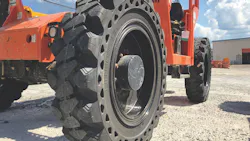
Tire inspection should be part of your daily machine walk-around, plain and simple, because safety and uptime hang in the balance.
Tire blowouts on construction equipment —even with smaller equipment like skid steers — can be dangerous for multiple reasons.
Learn about maintaining skid steer tires
There’s not only the chance for the equipment to veer suddenly or drop a heavy load, but also the rapid release of air from a tire can act like an explosion throwing sharp pieces of heavy-duty rubber and metal shrapnel with enough force to cause severe injury to bystanders.
And any flat tire on a jobsite means lost productivity, which means lost money. The folks at tire manufacturer OTR Engineered Solutions have a comprehensive plan worth following.
Visual cues (and some feel, too)
The first step in a good tire maintenance plan is a daily, pre-shift visual inspection, which is quick and easy to do.
Additionally, when operating machines, pay attention to traction and how often your tires are spinning or losing grip. This can be an obvious sign that a more in-depth inspection is warranted or that new tires are needed.
When checking tread wear, identify what the original (new) tread depth was and use a tread depth gauge to accurately determine both the amount of wear so far and the remaining tread depth.
Tread depths should always be taken at the center of the tread. Do multiple readings to detect any irregular wear patterns.
Beyond the tread, do a visual inspection of the sidewall and shoulder area to determine the overall condition of your tires and determine if an injury or cut needs to be addressed.
Key issues to look for include penetrations (nails, screws, or large stones embedded in the tread), impact damage (bulges, bumps, or separation), sidewall cuts (gouges or abrasions that expose the internal belts or cords), mismatched wear (bald spots, scalloping, or uneven tread wear), and wheel damage (pitted, bent, or cracked rims as well as missing lug nuts).
Minor sidewall cuts and damage should be expected given the application, but anything more serious should be addressed.
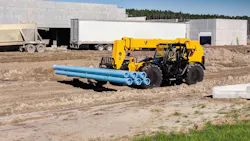
Air pressure
When operating a machine with pneumatic tires, a routine check of air pressure will prevent accelerated wear or unnecessary damage. The more your machine is used, the more often you should be checking the pressure. Also, tires should be rotated every 50 to 100 hours.
If operating a machine with foam-filled or solid tires, maintenance requirements are significantly reduced, but operators should still perform routine inspections and rotate tires as needed. Like with pneumatic tires, rotations are typically done every 50 to 100 hours to maximize tire life.
The latest tire-buying advice from CEAT Specialty/Camso
Again, it’s worth repeating — to maximize both jobsite safety and tire life, a good tire maintenance plan involves conducting daily, pre-shift inspections of all tires on all equipment. It’s not just a smart practice, but it’s mandated for most off-road construction equipment by OSHA.
Have operators do their part
Beyond routine maintenance, it also makes sense to put a little effort into educating operators about easy ways to avoid unnecessary tire wear and maintenance. Here are some tips:
- Keep all four tires on the driving surface. This is particularly relevant with skid steers, but going up on only two tires when scraping, digging in hard-packed dirt, traveling with a raised load, etc., will result in uneven wear.
- Avoid overloading the machine.
- Avoid overly spinning the tires as you engage material.
- Avoid turning the machine while stationary.
About the Author
 Frank Raczon
Frank Raczon
Frank Raczon has covered and influenced the equipment industry for 35 years, including 15 years as senior editor of Construction Equipment, and marketing, advertising, and public relations work with the industry's top manufacturers. In addition to authoring "Caterpillar: Modern Earthmoving Marvels" (Motorbooks, 2015), he has won numerous awards in his career, highlighted by nods from the Construction Writers Association, the Association of Equipment Manufacturers, the Business Marketing Association, and BtoB magazine. Raczon has also won a number of awards from publishing peer groups such as ASBPE and TABPI.