Camso Still Lives as Part of CEAT Specialty, and It Has Advice for You
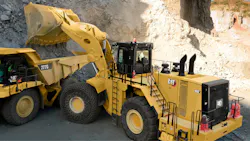
You may be familiar with the tires and tracks brand Camso, which was purchased by Michelin back in 2018.
There's another, lesser known, chapter to Camso's story: It was purchased by an Indian (mostly agricultural) tire company, CEAT, on Christmas Eve, 2024.
That likely explains how the purchase fell under the media radar.
CEAT had been focusing on building its off-highway tire (OHT) business, which consisted of 900+ product offerings and covered around 84% of the range requirement in the agricultural segment.
The Camso purchase gave CEAT the ability to widen its product base into tracks and construction tires and access to a global customer base, including over 40 international OEMs and premium international OHT distributors.
CEAT has brought Camso the ability to expand to other segments such as agriculture tires. It looked like a win-win for both brands.
Flash forward to today and Camso's tire and tracks offerings fall under the CEAT Specialty brand label. Construction Equipment caught up with CEAT Specialty presdident Ryan Loethen on purchasing advice for your fleet — both on- and off-road.
Off-road buying advice
"For off-road applications, tire selection should be driven by the total cost of ownership rather than the initial purchase price alone," Loethen says. "Managers should evaluate the specific operating environment, including terrain conditions, load requirements, travel distances, and machine utilization rates."
Key considerations Loethen points out include:
- Application fitment: Tires should be matched to the machine type and duty cycle. A wheel loader operating in a quarry has very different requirements than a telehandler on a construction site.
- Durability and cut resistance: OTR tires often operate in harsh environments where punctures, cuts, and impact damage can lead to costly downtime.
- Load-carrying capacity: Tires must be capable of handling the machine's operating weight and payload without compromising performance or safety.
- Traction and stability: Proper tread design improves productivity, machine control, and operator confidence across varying surfaces.
- Service life: Longer tread wear and stronger casing construction help reduce replacement frequency and lower operating costs.
- Fuel efficiency and rolling resistance: Tire design can influence fuel consumption, particularly on machines that travel significant distances.
- Dealer and manufacturer support: Access to technical expertise, warranty support, and tire availability is critical for minimizing downtime.
"At CEAT Specialty, our construction and industrial tire portfolio is engineered with heavy-duty compounds, robust carcass construction, and application-specific tread designs to maximize uptime and deliver dependable performance in demanding environments," Loethen says.
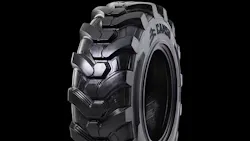
On-road purchasing advice
For on-road fleets, Loethen says the priorities shift somewhat from pure durability to a balance of durability, fuel economy, ride quality, and regulatory compliance.
Fleet managers should focus on:
- Tread life and wear consistency: Predictable wear patterns help optimize replacement schedules and lower operating costs.
- Fuel efficiency: Low rolling resistance designs can contribute to measurable fuel savings across large fleets.
- Load ratings: Tires must be appropriately specified for payload requirements and operating conditions.
- Retreadability: High-quality casings can extend tire life through multiple service cycles.
- Ride comfort and noise levels: Driver comfort contributes to productivity and can reduce operator fatigue.
- Traction and braking performance: Particularly important for dump trucks and trailers that may encounter mixed road and jobsite conditions.
- Durability under mixed-service use: Many fleets transition between highway travel and off-road work zones, requiring tires capable of handling both environments.
"The best tire choice is one that balances purchase price, expected service life, fuel consumption, maintenance requirements, and uptime performance throughout the tire's lifecycle," Loethen says.
About the Author
 Frank Raczon
Frank Raczon
Frank Raczon has covered and influenced the equipment industry for 35 years, including 15 years as senior editor of Construction Equipment, and marketing, advertising, and public relations work with the industry's top manufacturers. In addition to authoring "Caterpillar: Modern Earthmoving Marvels" (Motorbooks, 2015), he has won numerous awards in his career, highlighted by nods from the Construction Writers Association, the Association of Equipment Manufacturers, the Business Marketing Association, and BtoB magazine. Raczon has also won a number of awards from publishing peer groups such as ASBPE and TABPI.