Could Too Many Lubricant Suppliers Be Costing Your Fleet?
Key Highlights
🛢️ More suppliers, more complexity: Extra vendors can mean more products, paperwork, storage, and chances for misapplication.
🔧 Simplify the lube game: Fewer suppliers can make OEM compliance, troubleshooting, and maintenance easier to manage.
📋 Start with a fluid matrix: Map every machine to its required fluids before deciding what — or who — can be consolidated.

If you manage lubrication for a construction fleet, there’s a good chance your products come from more than one supplier. Each vendor may have earned a place for a good reason: price, availability, a relationship, or a product required for a specific machine. But over time, supplier lists can expand without anyone making a deliberate decision to expand them. The result is a lubricant program that may look manageable on paper but creates hidden costs in inventory, training, compliance, and maintenance execution.
The hidden cost of fragmentation
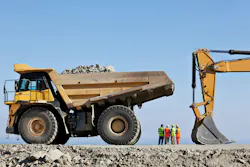
Managing multiple lubricant suppliers can create more than administrative complexity. As a fleet grows, it often means more product names, more storage locations, more cross-reference charts, and more opportunities for confusion. On a busy jobsite, where maintenance windows are short and technicians are moving quickly, the difference between the right product and the wrong one may come down to how clearly the program is organized and labeled.
Misapplication does not always create an immediate failure, which is why it can be difficult to trace. A grease that is not compatible with the existing product, a hydraulic fluid outside the required viscosity range, or an engine oil that does not meet the applicable OEM specification can all create performance concerns over time. In many cases, the issue may not become visible until a used oil analysis report, maintenance inspection, or component problem points back to the lubricant program.
Fragmentation also makes OEM compliance harder to manage. Different suppliers may use different product names, approval language, data sheets, and cross-reference tools. Keeping track of which product meets the requirement for each machine and each system can become a significant burden, especially for fleets without a dedicated lubrication specialist. That compliance work falls on maintenance managers who are already juggling uptime pressure, technician schedules, and everything else that comes with running a fleet in the field.
What consolidation gets you

Reducing your supplier list isn't about cutting corners. Done right, it's about gaining clarity. Here's what that looks like in practice:
- Simpler OEM compliance tracking. When your engine oils, hydraulic fluids, transmission fluids, greases, and coolants are supported through fewer supplier relationships, it becomes easier to work from consistent documentation, application guidance, and technical support.
- Clearer accountability. With multiple vendors, accountability can become fragmented as well. If a machine experiences a lubrication-related issue, the maintenance team may need to sort through several product histories, recommendations, and points of contact before getting a clear answer. A consolidated relationship gives the fleet one technical partner with broader visibility into the lubrication program.
- A partner who can flag problems before they become failures. A good technical partner isn't just there to fulfill orders. They may help flag when a spec changes, recommend adjustments when operating conditions shift seasonally, and help you identify where you've been assuming product compatibility that isn't actually documented. That last one matters more than it sounds, because the gap between assumed and documented compatibility is where compliance questions, warranty concerns, and avoidable maintenance issues can begin.
The risk of staying fragmented
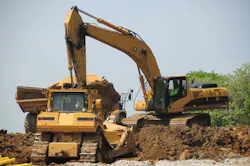
One reason fleets don't consolidate is inertia. The current vendor list works well enough and switching feels like disruption. But some fleets find that managing numerous suppliers can create additional administrative and operational challenges as equipment fleets become more complex. Consider what happens when a new machine enters the fleet. With multiple vendors, figuring out which existing product meets the OEM spec for that machine requires research and cross-referencing. Without a well-documented process, fleets may face a greater administrative burden in validating product selections against OEM requirements.
In a demanding construction environment, “close enough” can introduce unnecessary risk, especially for systems where viscosity, additive chemistry, or OEM approval requirements are tightly defined.
Seasonal conditions can create the same challenge. Heat, dust, heavy loads, and extended operating hours can all affect lubricant performance. A well-documented program, supported by a technical partner who understands the fleet, makes it easier to review whether current products and service intervals still fit the application.
A practical starting point
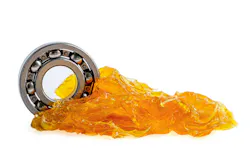
Consolidation doesn't have to happen overnight. A practical first step is to build a fluid specification matrix: a simple document that maps every machine type in your fleet to its OEM-required fluid by system. Once you have that picture, you can evaluate which of your current vendors actually covers your full requirements and where the gaps are.
From there, the conversation with supplier(s) capable of supporting multiple lubricant categories becomes a practical one: Can you meet the lubricant needs for everything in my fleet, and what does your technical support look like when I have a compliance question?
The goal is not simply to reduce the number of vendors. Nor is the goal necessarily to move to a single-supplier mode. The goal is to build a lubrication program that is easier to manage, easier to document, and better supported in the field. For construction fleets facing pressure to improve uptime, control maintenance costs, and keep equipment productive, that clarity can be a meaningful advantage.
Every fleet is different. Whether a fleet uses one supplier or multiple suppliers, lubricant selections should be based on OEM requirements, operating conditions, product performance characteristics, technical suitability, commercial considerations, and applicable procurement requirements. Consolidation may not be appropriate for every fleet and should be evaluated based on the fleet's individual circumstances.
Max Cundiff is an industrial sector manager with Chevron.