Q&A: Titan Tire on Off-Road Tire Musts
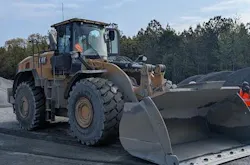
Titan International, although it recently went into the tracks business, is well known for its off-road tires.
Big ones.
We asked Pete Kearney, the company's director of OTR Tires and Wheels, some of the basics about purchasing and maintaining heavy equipment tires.
Kearney helps lead strategy and customer field support for off-the-road (OTR) tire and wheel solutions. He has been with Titan since 2010, including prior experience in field technical support, bringing a practical understanding of tire performance, service, and applications across mining and other OTR applications. Now, let's roll.
Q: What are the most important factors for managers to consider when buying off-road tires?
A: One of the biggest mistakes fleets make is treating off-the-road tires like a commodity purchase. In reality, the smarter decision starts with choosing a partner who understands the machine, the load, the haul profile, and the jobsite environment well enough to recommend the right solution, whether that is a bias or a radial.
At Titan, we believe tire selection should be application-driven from the outset, because that is what protects uptime, performance, and long-term value.
That becomes even more important when equipment moves across multiple jobsites. Ground conditions can shift from moderate to severe, and the wrong tread design or compound can quickly lead to lost productivity and unnecessary cost.
Titan’s broad OTR portfolio helps fleets match tires to the real-world demands of the application, giving customers confidence that their tire strategy is built for the conditions they actually face, not simply the ones they expect.
Q: What are the elements of a good tire maintenance plan and why are they important?
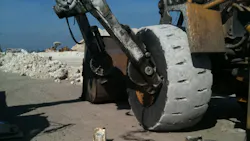
A: OTR tires are too significant an investment to manage reactively. The strongest maintenance strategies are disciplined, proactive, and built on consistency because small oversights in pressure, wear, or wheel condition can quickly lead to high operational costs.
Even in operations where equipment moves frequently between sites, the fundamentals remain the same.
How to maintain skid steer tires
The strongest programs combine regular inspections, pressure discipline, and service accountability with manufacturer-backed expertise. This approach helps customers move from a reactive maintenance mindset to a more strategic tire program that reduces downtime, extends tire life, and improves overall operating performance.
Key elements of an effective tire maintenance program include:
- Monthly fleet surveys to document equipment make and model, tire size, and recommended inflation pressures.
- Wheel and component inspections to identify issues that could negatively affect tire performance, with particular attention to side rings and wheel assemblies.
- Regular tire inspections to identify cuts, penetrations, or damage that can be repaired before they become major issues.
- Tread depth monitoring to evaluate wear patterns and determine whether tire rotations are beneficial.
- Routine air pressure checks and adjustments as required.
Pressure maintenance remains one of the most important factors affecting tire performance and service life. Air checks can be incorporated into operator pre-trip inspections or handled during refueling, but at a minimum, tire pressures should be checked weekly.
Just as important, the personnel responsible for those checks need to understand manufacturer-recommended PSI, the difference between hot and cold inflation pressures, and proper adjustment procedures, including the 15% variance rule.
Q: What technologies do you offer for tire monitoring and management?
A: Technology gives fleets a level of visibility they have historically lacked. Titan’s customizable tire tracking tools and Tire Pressure Monitoring Systems help customers monitor pressure, capture tire data, and identify issues before they become failures in the field. That kind of visibility supports better maintenance decisions, reduces avoidable damage, and helps fleets operate more proactively.
Technology alone, however, is not enough. It has to be supported by field expertise. Titan reinforces its OTR offering through safety-focused training and technical education, including Titan University.
This program highlights the company’s commitment to product knowledge, service readiness, and safe tire and wheel practices. Titan’s training platform has supported thousands of students and ongoing industry education efforts, helping promote safer practices and greater technical knowledge across the industry.
Titan signs 10-year pact with Triangle
In addition, Titan employs MSHA- and OSHA-certified OTR tire specialists and field engineers who can assist customers with site assessments, V-BOX studies, and operational evaluations. These services help ensure optimal tire and wheel performance while improving safety and maximizing tire life.
Q: What do fleets most often get wrong about tire buying and maintenance?
A: In many cases, fleets are not making dramatic mistakes; they are simply underutilizing the expertise available to them. Too often, tire buying and maintenance are treated as transactional decisions when they should be approached as part of a broader operating strategy.
The greatest opportunities often come from leveraging available expertise, whether through tire manufacturers, dealers, field specialists, monitoring tools, or training resources. These resources can help fleets make smarter decisions throughout the tire lifecycle and build more reliable, safer, and cost-effective operations.
That commitment is reflected in the support structure behind the product. Titan offers training, safety education, and application guidance that help fleet managers and service teams make better decisions in the field.
It is a practical extension of the company’s broader philosophy: performance improves when customers have both the right product and the right expertise behind it.
For fleets focused on improving uptime, safety, and total cost of ownership, the opportunity is clear: treat tires as a strategic asset rather than a line item.
By leveraging these available resources and maintaining open communication with manufacturers and service partners, fleets can significantly improve tire performance, safety, and total cost of ownership.
About the Author
 Frank Raczon
Frank Raczon
Frank Raczon has covered and influenced the equipment industry for 35 years, including 15 years as senior editor of Construction Equipment, and marketing, advertising, and public relations work with the industry's top manufacturers. In addition to authoring "Caterpillar: Modern Earthmoving Marvels" (Motorbooks, 2015), he has won numerous awards in his career, highlighted by nods from the Construction Writers Association, the Association of Equipment Manufacturers, the Business Marketing Association, and BtoB magazine. Raczon has also won a number of awards from publishing peer groups such as ASBPE and TABPI.