Overlooked Risk Factors when Switching Between Attachments
Key Highlights
- Attachments change the machine’s operating footprint. Grapples, buckets, brooms, mowers, and other tools can alter visibility, load dimensions, stability, and hazard zones.
- Verify connections and hydraulics before working. Confirm the attachment is mechanically secured, inspect hose routing and condition, and follow procedures for pressure relief and retention checks.
- Know the attachment’s limits. Machine capacity doesn’t automatically equal attachment capacity. Loads, leverage, obstructions, and unexpected resistance can stress both attachment and carrier.
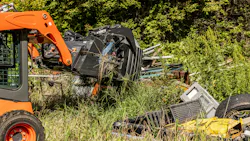
An experienced operator knows the machine's capabilities. After hundreds of hours in the cab, judging clearances, managing loads, and navigating active construction sites become second nature. But switch from a general-purpose bucket to a grapple for demolition cleanup, and some of those familiar operating characteristics change.
The machine is the same. The way it behaves isn’t. A taller attachment profile can limit visibility. Additional weight can affect stability. Even something as simple as a hydraulic connection can introduce unnecessary risk when crews move between applications throughout the day. Equipment safety discussions often focus on the machine itself, from operator restraints and backup cameras to maintenance and stability. But the attachment deserves just as much attention. Its design, condition, and interaction with the carrier all influence how safely equipment performs, especially on busy jobsites where crews, materials, and machines are constantly moving.
Recognizing these often-overlooked details helps operators identify potential hazards before they become incidents.
Account for the full operating footprint
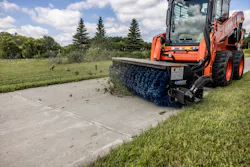
Let’s go back to the operator hauling demolition debris with a grapple. Their view of the work area hasn’t necessarily changed, but with rebar and concrete extending beyond the grapple’s edges, they may have lost sight of the outermost points of the load. That’s an important distinction when operating around structures, utilities, equipment, and other workers.
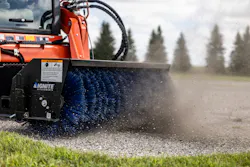
Every attachment introduces its own visibility considerations. A high-capacity bucket may obstruct the operator’s view of the ground immediately ahead, while a broom can throw debris into areas outside the operator’s direct line of sight. Even the position of an attachment matters.
Raising, tilting, or loading it can create blind spots that weren't present moments earlier. The key is understanding how visibility shifts throughout the work cycle, not just when the attachment is first connected. Operators should consider where they'll lose sight of critical working edges or load extremities and plan their movements accordingly. That might mean repositioning the machine, adjusting the travel route, or using a designated spotter while keeping other personnel clear of the operating area.
Attachment design can help reduce these challenges. Lower profiles and strategically positioned components can preserve sight lines to working edges and other critical reference points. But visibility isn't just about what an operator can see from the cab. It's also about understanding where the attachment and its load create hazards beyond that view. Whether it's debris discharged from a broom or material extending beyond a grapple, crews need to account for the attachment's full operating and hazard zones when planning work around other people and equipment.
Verify the connection before applying load
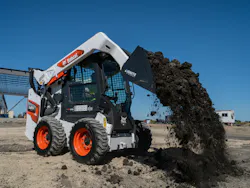
Visibility is only one consideration when switching attachments. It's just as important to make sure the attachment is properly secured before putting it to work. Quick-attach systems make it easy to move between applications, but an attachment can appear properly seated against the mounting plate even when the locking mechanism hasn't fully engaged.
Consider a loader bucket. Worn mounting surfaces, damaged locking components, or accumulated debris can prevent full engagement, even when the attachment coupler appears secure from the cab. The problem may not become apparent until the operator starts digging or handling a load, potentially creating a serious dropped-object hazard. On busy jobsites with multiple machines and coupler configurations, differences in connection procedures add another opportunity for oversight.
That's why verification needs to go beyond a visual check. Operators should confirm that locking pins, wedges, or other retention mechanisms have fully engaged and complete the manufacturer-prescribed retention test before applying a working load. For attachment couplers, that may include a controlled check of the bucket's retention using the procedure specified for that particular system. The objective is to confirm that the attachment is mechanically secured not simply resting in the expected position.
For operations running multiple machines or coupler configurations, establishing a consistent verification process while accounting for each manufacturer's specific requirements can help prevent an overlooked connection from becoming a dropped attachment.
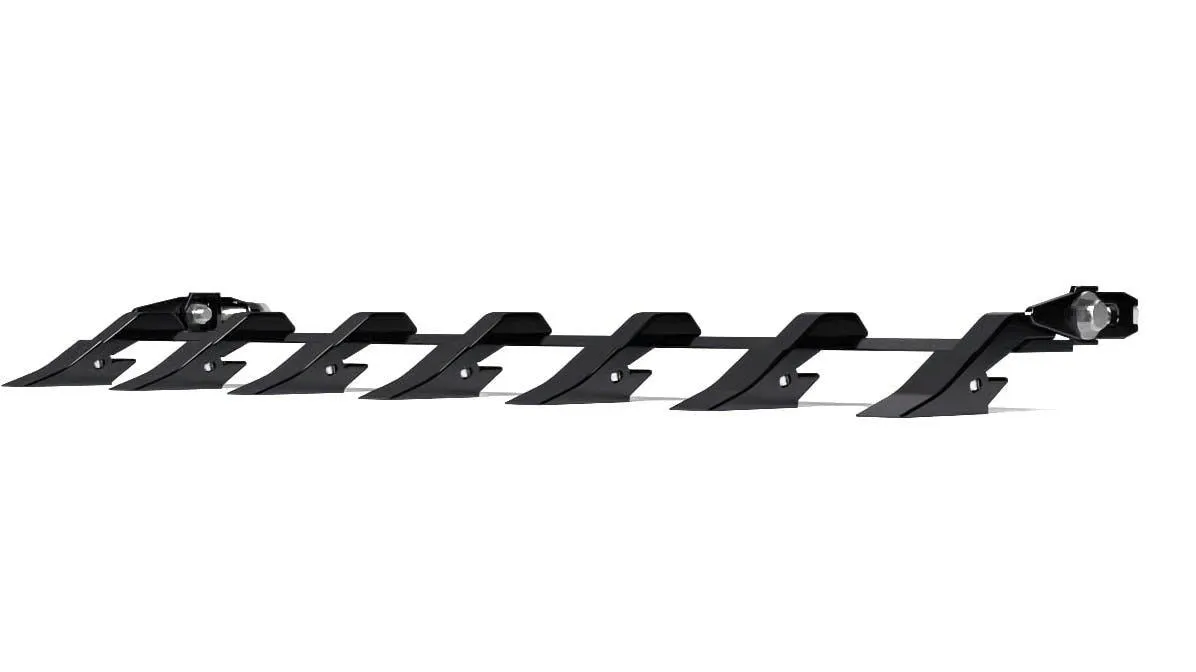
Wear parts are supposed to wear out — your attachments aren’t. Knowing when to reverse a cutting edge, replace bucket teeth, or retire a worn component can prevent a relatively cheap maintenance job from turning into an expensive repair. In “Reverse, Replace, or Repair? Learn How Smarter Attachment Wear-Part Decisions Save Money,” Darin Gronwold explains how to spot troublesome wear patterns, match wear parts to the application, use tooth bars effectively, and decide when replacement makes more financial sense than squeezing out one more week of service.
Account for hydraulic hazards
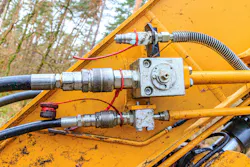
Hydraulic hoses introduce another potential failure point during attachment changes. A hose that appears properly positioned with the attachment lowered may become pinched, stretched, or caught on surrounding components as it moves through its operating range. Operators should check clearance throughout the intended range of motion, paying particular attention to pinch points near the mounting plate, cylinders, and pivot points. Abrasion, kinks, or leaks signal damage that requires attention before the attachment returns to work.
But hose damage isn't the only risk. Residual pressure can remain trapped in hydraulic lines after an attachment is disconnected, making conventional couplers difficult to reconnect. It's a familiar frustration on jobsites, but one that can create unexpected hazards. Operators trying to force stubborn connections may lose their grip or footing, particularly when reaching around an attachment or working from an awkward position.
This is where attachment design and component selection can make a difference. Flat-faced, connect-under-pressure couplers allow operators to make connections under certain residual-pressure conditions without excessive force, reducing the temptation to wrestle with fittings or attempt unsafe workarounds. Properly routed hoses and protective sleeves can also help minimize abrasion and exposure to damage. These features don't replace routine inspections or the manufacturer's shutdown and pressure-relief procedures, but they can reduce some of the risks associated with everyday operation.
Finally, damaged hydraulic lines present a hazard that isn't always immediately apparent. Even a small leak can release fluid at pressures high enough to penetrate skin and cause serious injury. Operators should never use their hands to locate a leak, and suspected injection injuries require immediate emergency medical attention.
Anticipate unexpected forces
An operator may know a machine's limits on uneven terrain, but adding an attachment introduces variables that can change how those limits apply. Weight is only part of the equation. Where that weight sits, how far it extends from the carrier, and the forces generated during operation all influence stability.
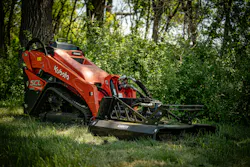
Consider an excavator working near the edge of an excavation. Extending a loaded bucket or swinging material to one side changes the forces acting on the machine, even though its position on the ground hasn't changed. The same principle applies to offset attachments, such as boom-mounted mowers working along drainage ditches or slopes. Extending the attachment shifts weight away from the carrier, while contact with an unexpected obstruction can introduce additional forces.
That's where understanding the attachment's operating envelope becomes especially important. A mower that catches a hidden stump or a bucket that encounters buried concrete can transfer sudden resistance back through the carrier. Depending on the machine's position and ground conditions, that force may affect stability or control.
Rather than evaluating terrain and machine capacity separately, operators and supervisors should consider how attachment position, load distribution, and potential obstructions interact throughout the work cycle. The critical question isn't simply whether the machine can handle the load, but how the entire configuration will respond when the attachment encounters resistance that wasn't anticipated.
Know the attachment’s limits
Ultimately, proper attachment operation comes down to understanding how the attachment and carrier work together. A secure connection, clear sight lines, and stable ground are important, but they don't tell the whole story. Operators also need to consider how loads, operating conditions, and unexpected resistance can affect the entire setup.
That includes knowing the attachment's limits, not just the machine’s. A carrier may have the breakout force to pry loose a stubborn concrete slab, but that doesn't necessarily mean the attachment is designed to withstand it. Excessive loading can damage mounting plates, welds, or hydraulic components, potentially putting nearby workers at risk. The goal isn't to anticipate every possible scenario. It's to recognize where familiar operations can introduce unfamiliar risks and make those considerations part of everyday jobsite planning. Knowing the machine is only half the equation. Knowing what’s attached to it is just as important.
Darin Gronwold is a product manager for Ignite Attachments.