Inside JLG’s Tech Stack: How the Aerial Equipment Expert Is Connecting Jobsites and Automating Machines
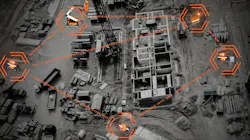
JLG news continues to fill up my inbox at an impressive pace. Acquisitions of AUSA, Canvas, and Hinowa. Cool-as-heck tech systems like Virtual Remote Assistant and ClearSky Smart Fleet. Then, of course, high-reaching new MEWPs like the 860SJ+ boom lift (an excellent 86-footer it announced at Conexpo). It’s not one product exactly that caught my attention, but this whole stack of connected ideas. Telematics. Automation. Robotics. Service tools. New tech-connected machines (some of them electric). The jobsite is becoming one linked system.
“What you’re seeing here is kind of the evolution of a lot of technologies that we’ve been working on for over a decade,” explained Brent Miller, JLG vice president of sales administration, marketing, and Latin America. We talked to Miller at JLG’s Conexpo booth in March. “Whether it’s building buildings or managing and delivering rental fleets, our customers and the people that use our equipment do really hard things. And our core mission is to make their life easier. So, everything we do is to build around that mission, trying to find problems and issues in jobsites and to make those easier for people to have a safer, more productive life and to use our equipment in the easiest way possible.”
Obviously, JLG is still about lifting people and products, but it’s also very much about syncing those people and products into an integrated network to make them more productive. The company sees a near future where machines help guide workflows and reduce wasted labor. That shift shows up everywhere in its products — from fleet telemetry to drywall robots. Let’s take a look at all these layers JLG is creating.
How does JLG’s ClearSky system work?
ClearSky Smart Fleet sits at the center of JLG’s tech push. JLG bills ClearSky as “the industry’s first true, two-way fleet management and communication platform that evolves connectivity into interactivity,” according to the website. We’ve been talking about this. Fleet telematics systems are becoming jobsite control centers, accessed via phones, tablets, computers, and machine monitors. Telematics is way more than tracking asset locations today. JLG’s ClearSky offers real-time diagnostics, Bluetooth analyzers troubleshooting machines, maintenance prompts, and over-the-air machine software updates.
These telematics systems are data hubs, and JLG’s ClearSky offers an integrated data feed into your API along with cloud storage and easy exporting. There’s also data filtering. When logged into the ClearSky Smart Fleet web portal, users can select filters to check on the exact details they want to know more about. There’s also plenty of security — like Digital Access Control — which allows fleet owners and managers to restrict or enable machine operation using the ClearSky Smart Fleet mobile app.
Thinking about hardware: ClearSky Smart Fleet uses a single “connectivity beacon” on top of each unit. It looks like this. It combines analyzers, telematics, and productivity applications — as many as 25 distinct features, says JLG — to deliver back-and-forth interaction through the ClearSky mobile app or web portal.
ClearSky connects the jobsite of the future
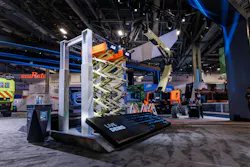
At Conexpo 2026, JLG’s booth presented a “Job Site of the Future” demo. JLG showed two scissor lifts working together in a coordinated application scenario. Connected to ClearSky, two semi-autonomous scissors lifted structural materials, while a semi-autonomous boom lift equipped with a welding end-effector performed precision welds at height. The demonstration highlighted how connected equipment can operate, detect, communicate, and coordinate tasks, allowing a single operator to oversee multiple machines simultaneously.
“It’s two of our production scissor lifts that have sensor kits on them,” explained Miller. “They’ve been mated together using our ClearSky Smart Fleet technology. So, they talk to each other. They connect the jobs. They connect to each other, and they connect to the machine over here and there. They form a mesh network. We’ve set up [this Conexpo demo] as a special use case — to lift this beam up in the air, move it in place, drop it down, and weld it. Together, this is all an assembly of the current technologies that we’ve been compiling over a long period of time.”
Connected machines could:
- Move and lift materials across jobsites automatically
- Follow workers as mobile carts
- Coordinate multiple machines in one task
- Feed connected data into fleet and workflow systems
Miller pointed out an example.
“I was in a data center the other day, and they had a person whose entire job was to just go grab carts for material,” he said. “And he was an electrician, right? Highly paid electrician. His whole job was to grab cart fulls of material and wheel it over so the other electricians could take it up and install it and run wire. It’s wasted time for a really highly compensated specialized employee. So, one of the other things we can do with this is our leader-follower technology where you can set it up as a material moving cart and it follows you through a jobsite. Or you can kind of say, ‘Hey, lay down all the materials over here. I want you to go over there, grab some stuff, and bring it back.’ We can start to bring sensors in to do that on a jobsite today.”
Virtual remote assistant tackles downtime
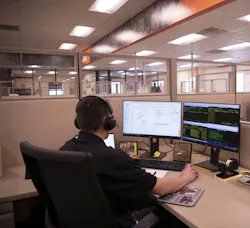
JLG is also attacking downtime from the service side. The company’s new Virtual Remote Assistant connects technicians with JLG support through live video. A tech points a phone at a machine. A JLG expert sees the issue in real time. That’s pretty cool. The Virtual Remote Assistant allows JLG technical support representatives to provide step-by-step visual guidance during a live session. Support agents can remotely circle, or point to components on the technician’s device screen, helping quickly identify critical issues that may be difficult to find.
For fleet managers, this is huge. Service delays kill utilization. This tool shortens that cycle. It also helps less experienced techs solve problems faster.
Acquisitions expand JLG beyond lifts
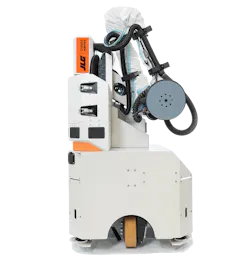
JLG is not just building cool equipment with future tech ecosystems. It’s also buying it. Recent acquisitions show where the company is headed with products and thought processes:
- Canvas: A drywall sanding robot platform
- AUSA: Compact telehandlers, dumpers, and material handling equipment
- Hinowa: Compact crawler booms and specialty access gear
“Right at the beginning of the year, JLG acquired the intellectual property and assets of a company called Canvas,” said Miller. “And what you’re seeing right here is the culmination of their work. This is a drywall sanding robot. So, this unit will actually apply mud. It has technology that allows it to recognize seams and drywall and apply mud to those seams. It allows it to dry and then to finish sanding projects. I think it’s going to really fit nicely in the portfolio. I think it’s just kind of an evolution of all the things we’re already doing here. [Canvas] has mastered how to engage with material, and we’re masters of working at height. I think when you start to put those two things together, you can do some really cool stuff.”
AUSA and Hinowa add more iron. Dumpers. Telehandlers. Compact crawlers. JLG is filling gaps in its portfolio and bringing European designs to North America (a trend across category spectrums).
“We’ve made some really nice acquisitions over the last couple years,” said Miller. “We of course purchased AUSA in Spain, and we also purchased Hinowa in Italy. We’re excited to start to bring their products into North America. We’ve had a long-standing partnership with Hinowa on its compact crawler line, but this is a new initiative for us with these [AUSA] dumper products.”
JLG continues to push electric and hybrid machines across its lineup
JLG’s ClearSky Smart Fleet offers a cool widget I haven’t mentioned yet. It can deliver insights on electric products, too, including a machine’s state of charge. Using this data, fleet managers can tell which electric machines need to be plugged in from the ones that are fully charged. And, by using the charging filter, users can see which machines are actively receiving voltage.
JLG continues to expand its electric and hybrid lineup across boom lifts, scissor lifts, and telehandlers. Machines like the E600AJ and EC600AJ electric boom lifts run on battery packs instead of diesel engines. They use electric drive motors for propulsion and electric-powered hydraulics for lift functions. That means quieter operation, zero emissions at the point of use, and fewer moving parts to maintain. JLG’s DaVinci AE1932 scissor lift takes it further with an all-electric architecture. It eliminates hydraulics entirely, using electric actuators for lift and drive. JLG’s electric E313 compact telehandler clocks up to four hours of continuous operation or extended intermittent use, driven by maintenance-free, 48V Lithium-Ion batteries. The E313 is equipped with a regenerative braking system, which generates power back into the batteries while minimizing brake wear.
On the hybrid side, units like the H800AJ articulating boom combine a diesel engine with electric drive components. The machine can run in electric mode for indoor or low-noise work, then switch to diesel for longer outdoor cycles. JLG also offers bi-energy crawler booms, which combine lithium-ion battery packs and a diesel engine.
Here is where fleets should pay attention
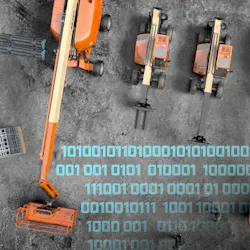
JLG wants to turn equipment into a system that works together. Not just machines that sit on the rental lot or go out on rent. Things worth thinking about:
- Connected machines reduce manual labor and improve coordination
- Practical automation can target repetitive, low-value tasks
- Remote diagnostics cut downtime and service costs
- Expanded product lines cover more applications with one supplier
- Electric options open new jobsite opportunities
About the Author
Keith Gribbins
Keith Gribbins is the head of content at Construction Equipment, where he leads editorial strategy across print, digital, video, and social channels. An award-winning journalist with more than 20 years of experience, Keith has won 17 national and regional editorial awards and is known for his hands-on reporting style, regularly visiting manufacturers, operating equipment, and covering major industry events worldwide.