2026 Pickup Truck Report: Crew Cabs and Gasoline Dominate
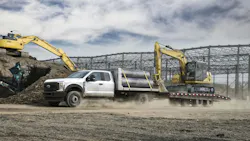
The next pickup truck you see is likely to have a four-door crew cab and could well be running on gasoline instead of diesel fuel.
That’s what automotive analysts report, though percentages in any specifications breakdowns vary by brand and intended use. And that pickup coming at you could be a mid-size or compact model, though full-size trucks still do the serious hauling and towing, especially in construction.
Pickup trucks remain desirable, useful, and highly popular in the United States and therefore a strong force in U.S. vehicle sales. The single most popular model for almost 50 years was the Ford F-150, but it was dethroned in 2024 by the Toyota RAV4, reflecting the overwhelming move to sport-utility vehicles in the automotive world, according to Forbes data.
Pickup popularity endures
But in general, popularity of pickups and cab-chassis models – heavier-duty offshoots that are upfitted with various work-truck bodies – remain strong because of their sheer usefulness and pleasing driving attributes. Sales remain strong in spite of spiking fuel prices due to the Iran war, and Trump-imposed, ever-changing tariffs that have increased the cost of manufacturing.

“Pickup trucks alone came in at 2.1 million units in 2021, 2.7 million in 2022, 2.8 million in 2023, 2.9 million in 2024, and about 3 million in 2025,” according to Jan Hodges of Hodges & Co., a marketing research firm. “We’re projecting a slight increase to about 3.1 million in 2026.”
Those figures are among 2025 total automotive sales of 16.2 to 16.4 million in the U.S., according to industry researchers.
A pickup is as much a construction tool as a shovel. Pickups are capable haulers and versatile conveyances. They can be austere, opulent, or somewhere in between in trim packages, with fancified adornments wildly popular among trucks bought by consumers and dual-use buyers – those who employ them for both work and personal transportation. Fancy or not, cab size has grown considerably in the last decade or so.
Big-boy cabs
Four-door crew cabs are especially popular in light duty, says Taylor Stewart, Ford’s product marketing manager. And that has migrated to heavier pickups. On average, 89% of all pickup sales have been crewcabs in the last two years, according to Standard & Poors data.
The reasons: The extra space turns the truck into a sedan for passengers or volume for tools, supplies and equipment to be carried and stowed behind locked doors. The large rear doors allow easy movement of whoever or whatever needs to go in or come out.
Extended cabs originated in the 1970s as enlarged regular cabs. When they gained rear doors in the ‘90s, they were rear-hinged, “suicide” style. In 2002 Ram switched the back doors of their Club Cabs to front hinged, which were thought to be more convenient for consumers to load in tight parking lots. General Motors followed suit with its Double Cabs in 2014.
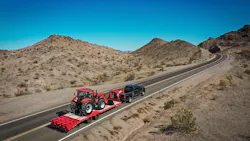
But Stewart noted that Ford’s Super Cab still uses “clam-shell” rear-hinged doors which make the rear area easier to access at work sites or anywhere because they fold back against the bed. And upfitters now offer storage and equipment racks for mounting in that area. Because of that, Ford will offer a seat-delete option starting with 2027 Super Cabs.
Watch: A Jeep Gladiator becomes a service truck
The overall split among crew, extended and regular cabs varies somewhat with the three builders. Regular cabs are more popular in heavy pickups sold to fleets, said Terence Standifer, an assistant product manager at Chevrolet, GM’s commercial truck brand. Chevy’s mix of cab sizes is similar to Ford’s and Ram’s.
Ram, the Stellantis truck brand, emphasized its Promaster vans at the Work Truck Show, billing them as adaptable to various tasks including construction. Dave Sowers, director of Ram professional operations and commercial products, described a van’s place with the example of a stick-built house:
“When it’s muddy, that’s not a van situation,” he said, so heavy trucks and 4x4 pickups populate the place. “But the tradesmen come in with their vans as soon as it gets to being a prepared site. So we are definitely going after construction with our Promasters,” which are offered in compact and full-size versions, both with front-wheel drive.
Since 1993, Ram pickups have built a following rivaling that of the other two domestic builders. Smooth-riding coil-spring rear suspensions are a distinction in current Ram light and some heavy pickups.
Engine and fuel options
And Ram has the advantage of Cummins diesel power, the ever-evolving inline-6 which goes into two-thirds of its Heavy Duty versions, Sowers said. In 1988 the Turbo Diesel’s displacement started at 5.9 liters and has since expanded to the current 6.7 liters.
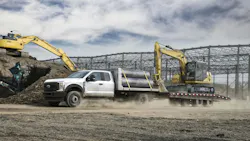
For gasoline power, Ram has reinstated the 5.7-liter Hemi V-8 in the 1500 series due to popular demand. For a year the 1500 got a substitute: a new double-turbocharged 2.8-liter Hurricane I-6 that makes more power and torque but, some customers believe, lacks the feel and growl of the “legendary” Hemi. Ram 1500s can also be had with the Pentastar 3.6 V-6 as well as the Hurricane. HD pickups offer the 5.7 Hemi and a 6.4 V-8, also a Hemi.
Ford’s diesel has always been a Power Stroke V-8, originally supplied by International and, since 2004, designed and built in-house. Now at 6.7 liters, it’s found under the hoods of many Super Duty pickups, though Ford doesn’t divulge the percentage. As with Ram, the diesel’s share compared to gasoline rises with weight ratings and annual miles. Ford is standard in its F-150 with a 5.3-liter gasoline V-8 and Super Duty models can also be had with 6.8- and 7.3-liter gas V-8s.
Our truck editor reviews a Ram pickup
GM’s Duramax 6.7 diesel remains the higher-end engine in HD pickups, and Chevy offers a Duramax 3.0 diesel in the 1500 series. Gasoline V-8s have 5.2- and 6.2-liter displacements, plus there’s a 2.7-liter inline-4 that makes a surprising amount of horsepower and torque (330 hp and 430 lb-ft, respectively).
Standifer says a gasoline-powered Silverado pickup costs about $10,000 less than diesel and maintenance is also less. That will be more true with upcoming 2027-spec diesels that will have more complex and potentially more troublesome aftertreatment equipment to meet tighter emissions standards. Among all pickup weight classes, gasoline claims a take rate of about 68%, according to S&P. Diesel has been about 22%, and a mix of hybrids, electric and alternative fuels accounts for the remaining 10%.
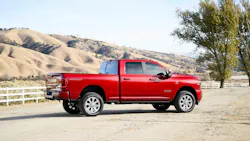
Among the three domestic pickup brands, the diesel upcharge is $9,000 to $11,000, and goes to $13,000 for a high-output version of the Ram-Cummins diesel. Diesel upcharges from all domestic builders will further rise to pay for development and equipment costs for 2027 models. Diesels perform better than gasoline while carrying heavy loads and pulling weighty trailers, but the higher costs have taken some of the shine off the oil burner.
And fuel costs $1 to $2 more per gallon than gasoline, while fuel economy might or might not be better. Prior to 2005, diesel fuel cost less than gasoline, but it’s taxed more now. And greater demand for jet fuel and heating oil – both distillates like diesel – and the ability to extract fewer distillates and more lighter fuel like gasoline from a typical barrel of crude oil have changed the pricing mix, according to the federal Energy Information Administration.
A new gasoline engine is the Cummins Octane, based on the 6.7 B-series diesel. It felt and sounded like a diesel, CE found during a short test drive of a Kenworth medium-duty box truck during the Work Truck Show in Indianapolis. But it’s a midrange engine and it won’t necessarily cost less than a diesel as offered by KW, Peterbilt and Freightliner, representatives hinted during the show. Meanwhile, Cummins is preparing a 7.2-liter B-series midrange diesel for introduction in 2027, with its tougher emissions limits.
Ford and GM offer inexpensive gaseous preparation packages with hardened valves and valve seats in their gasoline engines so they can run on hotter-burning propane and natural gas. The builders coordinate with specialty suppliers who offer fuel system conversions for the alternative fuels. In recent years there’s been little call for those, but with persistently spiking prices for gasoline and diesel, that could change.
Propane, also called liquified petroleum gas or LPG, usually costs substantially less than gasoline and distributors will set up fueling tanks at fleet locations as part of supplier agreements. Natural gas is also lower priced, though on-site and on-board storage tanks are expensive because they are high-pressure vessels. Propane tanks are low-pressure and cheap, note proponents of propane autogas, as it’s also called. Availability of either gaseous fuel varies by region, so sticking with gasoline often makes more sense. “Order what you know,” as Chevrolet’s Standifer says.
Electric sadness
Electric vehicles have taken a beating under the Trump administration and the Republican-majority Congress, which have canceled purchasing incentives and boosted oil and natural gas as the officially preferred energy sources. Some states still offer incentives for EVs, and those available have decent operating ranges, though with less hauling and towing capacity than with a gasoline or diesel engine.
Overall, sales of EVs have slackened, especially in pickups. Ford has ceased production of its F-150 Lightning EV and put its electric strategy “on hold,” Stewart says, though it still offers its Power Boost hybrid. Ram has delayed its Ramcharger electric but has the e-Torque mild hybrid. Chevy’s Silverado EV, which is configured like the old Avalanche with a drop-down rear cab wall, continues in its lineup. And Rivian’s R1T is still out there, though it’s primarily a consumer truck and sales are comparatively low.
Where loads are light, smaller pickups can make more sense than full-size models, especially since big pickups have grown in size and weight. Ford’s Ranger midsize pickup and Maverick compact – which includes a hybrid version -- have made a sales splash. GM’s Chevrolet Colorado and GMC Canyon mid-size models have been successful since they led the way from their temporary demise of 2011. Nissan’s Frontier and Toyota’s Tacoma are perennial mid-size favorites among consumers. And Ram is reviving its Dakota midsize pickup, which is due out soon.
The Toyota Tundra full-size pickup is a strong contender among consumers, though it comes only as a light-duty type and its commercial use is limited. Nissan axed its Titan after model-year ’24 due to persistently low sales.
High prices for domestic full-size pickups, which now list at $80,000 to $90,000 and more for upscale versions, have inspired grumbling among otherwise enthusiastic truck users. Internet discussion groups are full of comments from owners who declare their intent to keep their aging vehicles because repairs cost less than stiff monthly payments. Said one: “I’ll drive it ’til the wheels fall off, then I’ll put them back on.”