Caterpillar Makes Its Collision Warning Technology Standard. Other Brands Should Follow.
Key Highlights
- Some machines can intervene automatically. Depending on configuration, radar, smart cameras, Motion Inhibit, and emergency braking help reduce collision risks.
- Fleet managers gain better safety insights. VisionLink can help identify recurring hazards and close calls, supporting operator coaching and jobsite improvements.
- Fewer barriers to safer jobsites. Making collision warning technology standard gives more operators access to tools that can help prevent accidents.
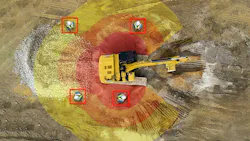
Caterpillar just made a cool move, and we hope others will follow. On November 16, Cat announced plans to make its Collision Warning System and Collision Mitigation System standard on the “majority” of new Cat construction machines being made in 2027 and beyond. Previously optional on select models and configurations, these technologies help operators identify potential hazards and can even intervene before a collision occurs.
“Keeping employees safe on busy jobsites is a priority for our customers, and we’re committed to helping them,” said Rod Shurman, group president of Caterpillar’s Construction Industries, in the press release. “Moving these technologies from optional to standard on eligible machines makes it easier to adopt consistently across jobsites and support safer operations today.”
This raises an important question: Shouldn’t more construction equipment manufacturers be doing the same thing?
How Cat’s collision warning systems work
Construction sites can be dangerous places to work. The construction industry recorded more workplace fatalities than any other private sector in 2024, the latest year with available federal data. According to the Bureau of Labor Statistics, 1,034 construction workers died on the job in 2024. That is a sobering number. Construction machines can do amazing things, but their size and power also create serious risks. Even experienced operators can’t see everything happening around them.
Caterpillar’s collision warning and mitigation technologies help address these problems. These systems use cameras and sensors to monitor areas around the machine and alert operators to potential hazards. Cat offers two related technologies with different capabilities:
Collision Warning System (CWS): This operator-assist technology improves awareness when reversing. Radar and smart cameras detect potential hazards and alert operators.
Collision Mitigation System (CMS): Along with warning systems, Motion Inhibit prevents reverse movement when a stationary machine detects a hazard. Going further, supported machines can automatically apply the brakes to help reduce collision risks.
Here’s a closer look at the technology available on supported Cat medium wheel loaders:
- Radar detection: Monitors objects behind the machine and provides escalating warnings based on proximity.
- People Detection: Uses smart cameras to recognize workers and highlight them on the operator’s display.
- Motion Inhibit: Prevents direct reverse gear engagement when the system detects a hazard behind a stationary machine.
- Automatic Emergency Braking: Applies the brakes when a reversing machine approaches a detected hazard and the operator doesn't respond.
- VisionLink integration: Collects safety event information and videos that fleet managers can use to proactively improve site safety.
Making safety standard changes the conversation
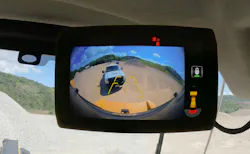
For equipment managers, the move from optional to standard technology should be an attention-grabber. Standardizing collision warning technology across new equipment will help reduce accidents. It also removes that awkward moral dilemma — do you need to spend extra money on safety technology? It appears contractors are already recognizing the value. In Cat’s press release, it noted major construction companies like Kiewit and VINCI Construction have already made their decisions about pedestrian detection and proximity cameras.
“Safety around construction equipment is a fundamental priority for VINCI Construction. Making collision warning, pedestrian detection, and mitigation technologies standard on new machines is an important step forward,” said Anthony Flandrin, equipment director for VINCI Construction. “It will help accelerate our deployment across fleets, provide operators with consistent access to awareness and support tools, and, ultimately, help us reduce equipment-related incidents on our jobsites.”
Kiewit has already invested in retrofitting collision avoidance and pedestrian detection technologies across its construction and mining fleets.
Other brands should take notice
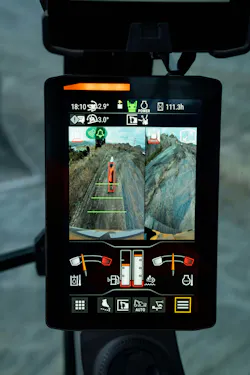
Caterpillar shouldn’t be the only manufacturer pushing advanced collision warning technology as standard equipment. We know other manufacturers already offer various proximity detection tech, cameras, and operator-assist systems. Let’s make that stuff part of the base machine. We, of course, understand that technology is not cheap to make or install, but the expense of not making it standard will be greater. Collision prevention shouldn’t be a luxury feature reserved for fleets willing to pay extra. It should increasingly become part of what operators expect when they climb into a modern piece of construction equipment. Hats off to Caterpillar on making this move across a huge lineup of equipment. Who will be next?
About the Author
Keith Gribbins
Keith Gribbins is the head of content at Construction Equipment, where he leads editorial strategy across print, digital, video, and social channels. An award-winning journalist with more than 20 years of experience, Keith has won 17 national and regional editorial awards and is known for his hands-on reporting style, regularly visiting manufacturers, operating equipment, and covering major industry events worldwide.
Related
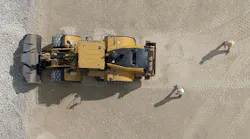
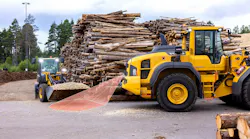 Volvo Collision Mitigation System