Sage Mfg. Bets Big on Growth with New Texas Campus and Upfit Business
Sage Mfg. president Aaron Sage likes to tell stories.
One of his favorites is how he came home from Texas A&M freshman year only to be stopped by his father, Sage Oil Vac inventor Gary Sage, who told him, "We're going to change the oil in all the irrigation engines today."
That's many engines over many sun-baked acres in the flatlands well north of Amarillo. The Sage Family tended to a very large corn crop in arid conditions.
Aaron saw his visions of fun blow away with the Texas Panhandle winds.
"I was the designated oil changer growing up," Aaron Sage says. "It was a messy, nasty job. We had to change the oil every 10 days and we'd dump the oil on the ground."
But his dad told him there was something he needed to see.
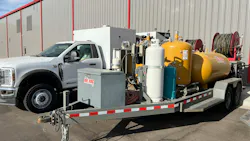
"Dad was pulling around this contraption he called an oil vac," Sage says. "He had put this machine together while I was down at school and essentially it was a quick oil-change system for these irrigation engines. He'd plug into the engine with a hydraulic coupling, take the old oil out and put the new oil in, all in a clean, automated process."
A company is born
"He did it because he wanted to stay cleaner and not dump oil on the ground," Sage says. "After using it, he realized that it was much quicker."
What used to take Aaron Sage a whole weekend out in the heat now took three hours.
Soon, neighbors would ask Gary Sage to build them a unit. He would build two one year; the next year, he might build 10.
"Then he got requests from Nebraska and Kansas, and other irrigated areas across the country," Aaron says. "He started doing the Amarillo Farm Show after that, and he started to think it might be a good sideline business to do while farming."
Around 2002, the family decided it might be a full-time business opportunity.
"It was a leap of faith, moving from the farm to Amarillo and making it a full-time business," Sage says.
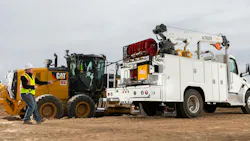
That faith has paid off. The company has gone from seven employees for the irrigation market in 2002 to expansion into the military, trucking, wind turbine, and construction markets.
"Anything that was mobile and needed oil changes, that was now the target market," Sage says.
Historically, Sage Oil Vac had to work to source the tanks it needed for its products.
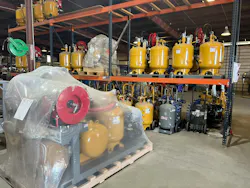
"In 2020, we were buying tanks for all of our product line from different vendors across North America, and we needed to bring that manufacturing and supply in house, so we acquired [a company now known as] Amarillo Tanks," Sage says.
Sage now had the capability of building all the tanks for the Sage Oil Vac product, whether that be fuel or oil tanks for skids and trailers, or larger tanks for trucks.
A few years back, Sage had the feeling that his brands could achieve even more.
"We stepped back, we looked at what our capacity was, we saw where we needed to add capacity," Sage says. "We did an aggressive 10-year growth plan to gain market share in lube skids, lube trailers, fuel and lube trucks. We also put targeted market share goals in place, and asked what resources do we need to meet these goals?"
"That's what led to this expansion and the building we're sitting in today," Sage says.
Take a tour of a 1,000-gallon fuel & lube truck
Sage has opened a new 20-acre headquarters and manufacturing campus in Amarillo, representing an estimated $21-million investment in facilities and infrastructure.
What's more, they have launched Sage Mfg. as the parent company of Sage Oil Vac, Amarillo Tanks, and a new venture, Amarillo Upfitters.
"Sage Mfg. represents the next step in our evolution," Sage says. "We've grown beyond the single company my father founded, now becoming a family of businesses that share a common purpose — helping hardworking people do their jobs more efficiently, more safely, and more profitably."

A new venture
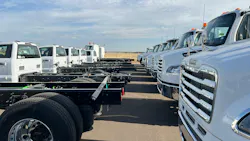
Amarillo Upfitters is a new vocational truck upfitting company built for contractors, municipalities, utilities, and fleet operators created to meet growing demand for smarter, safer, and more application-specific service vehicles.
It fills a gap in a fragmented market often served by generalist shops and template-driven builds, the company says, bringing engineering precision, technician-first design and hands-on craftsmanship together to create custom service trucks that solve the operational challenges standard equipment cannot.
Sage and Amarillo Upfitters officials don't seem to be worried they're entering a market with well-established companies.
How to spec service truck air and welders
"We're not after overall capacities," says Steven Farr, director of upfit. "We're not actually trying to go out and get the 200, 500, or 1,000 upfits, we are trying to really hone in on our craft, specialties. Other companies are out there trying to gather everything they can and just put it into a funnel.
"Operators in this industry are looking for an honest partner, not just a vendor, and that is exactly the gap we built Amarillo Upfitters to fill," Farr says. "With 30+ years of experience, grit, and real engineering behind us, we can understand customers' pain points before they walk through the door. One stop, the right stuff, the right people, and a commitment to be your upfitter for life."
"It really sucks!"
Another story Sage Mfg. CEO Aaron Sage likes to tell is about the company's early marketing efforts.
As a start-up family company, they were usually on their own for promotions.
Sage laughs about the tactics now, such as his dad doing a little dance to attract attention to the trade show booth, or Sage folks stopping every person walking by to ask, "Do you change your oil, or do you know anyone who changes oil?"
So... slick.
Then there were the "It really sucks!" buttons. You can probably imagine the reactions to those.
"I don't appreciate that language," one trade show attendee is reported to have said.
The company did hit a home run, however, with a "Mr. Clean" character decked out handsomely in a tuxedo, driving home the message that techs and operators won't get dirty using the Sage Oil Vac method.
Sage says he's still asked about Mr. Clean at trade shows. There's no word on where the life-size cardboard cut-out is.
About the Author
 Frank Raczon
Frank Raczon
Frank Raczon has influenced and covered the equipment industry for 35 years, including 15 years as senior editor of Construction Equipment, and marketing, advertising, and public relations work for the industry's top manufacturers. He authored "Caterpillar: Modern Earthmoving Marvels" (Motorbooks, 2015), and has won numerous awards in his career, highlighted by nods from the Construction Writers Association, the Association of Equipment Manufacturers, the Business Marketing Association, and BtoB magazine. Raczon has also won awards from publishing peer groups such as ASBPE and TABPI.