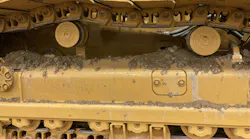
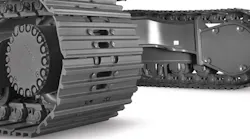
Undercarriage Maintenance: How to Get More Life from Tracks and Components
Key Highlights
-
Track undercarriage wear. 🔧 Record machine hours, component measurements, repairs, replacements, downtime, and like way more.
-
Focus on tension, cleaning, and operating technique. Improper tension, packed debris, high-speed travel, counter-rotation, they all accelerate undercarriage wear.
-
Inspect early and consistently. Daily walkarounds can uncover loose hardware, leaks, uneven wear, and track damage — but first inspect below.
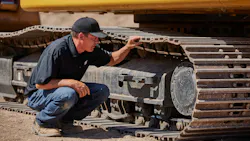
The undercarriage lives a hard life. It carries and balances the immense weight of an excavator or dozer. It pushes, climbs, travels, and provides flotation over all types of challenging terrain. The sprockets, idlers, and rollers are constantly exposed to dirt, moisture, heat, cold, brush, or whatever god-awful garbage finds its way onto the jobsite. It’s the reason undercarriage components can sometimes represent up to half the maintenance costs of a piece of earthmoving machinery. That makes it both a shop and fleet management issue.
While you can’t stop undercarriage wear, you can manage and mitigate it. There are a lot of factors you can plug into that formula. Application, terrain, machine configuration, operator technique — they all influence wear. Sand will act like an abrasive. High-speed travel will shorten component life. Economy aftermarket parts may respond differently than brand-approved replacements. There’s a lot going on, so you need to create a list. Create an undercarriage record for every tracked machine in the fleet. Track information such as:
- Application
- Typical ground conditions
- Machine hours
- Hours on current undercarriage
- Track and shoe type/width
- Track tension
- Component measurements/percent worn
- Left-versus-right wear
- Cleaning frequency
- Inspections
- Inspection findings
- Repairs
- Replacements
- Replacement parts/brand used
- Cost of repairs and replacement parts
- Downtime related to undercarriage
- Operator or crew
Then track which components are wearing fastest on which machines. Much of that wear can be managed. Focus on things like cleaning, inspections, track tension, and smarter operation. It’ll help your fleet get more hours from expensive components.
Compact track loaders need their own game plan
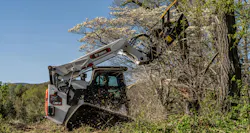
Everyone seems to own a compact track loader these days, so CTL undercarriage maintenance is a solid way to begin this story. Track loaders counter-rotate, work around curbs and debris, climb slopes, push material, and regularly operate on abrasive surfaces. Rubber tracks add another maintenance consideration. Cuts, chunking, exposed cords, and damaged embeds can eventually take a track out of service. And goddamn it, now there’s debris trapped between the track and undercarriage. How do you handle it all? Well, here's a few CTL-specific practices that can help:
- Inspect rubber tracks daily. Look for cuts, cracks, missing chunks, exposed cords, and damaged or exposed embeds. Also look for unusual wear on one side.
- Watch the drive lugs. Worn lugs can stop engaging correctly with the sprocket system. Side-slope operation can also create uneven lug wear.
- Clean 'round the rollers. Mud, clay, gravel, wire, rebar, and demolition debris can become trapped around undercarriage components. Pay particular attention to the front and rear roller areas.
- Avoid counter-rotating, embrace three-point turns. Counter-rotation is useful, but repeated sharp turns on abrasive material can chew through rubber and increase undercarriage wear. Wider, three-point turns can reduce the abuse.
- Limit track spin. Spinning rubber tracks against rock, concrete, asphalt, or other abrasive surfaces creates wear without accomplishing much work.
- Think about the slope. Traveling across slopes creates uneven loading. When the job allows it, working up and down the slope can distribute forces more evenly.
Some undercarriage maintenance advice from our archives
Construction Equipment has taken a few deep dives into crawler undercarriages over the years.
In “How to Maintain Undercarriages,” we looked beyond cleaning and track tension to examine application, terrain, operating technique, track width, and shoe selection.
“Save Costs with Crawler Undercarriage Care” digs into steel-track systems on dozers, excavators, and other crawlers. It covers cleaning, track tension, leaks, uneven wear, operating habits, and measuring component wear.
For this Construction Equipment showcase, we asked industry experts for their advice on protecting undercarriages and getting more life from tracks and components. Here’s what they recommend.
5 ways to extend steel undercarriage life
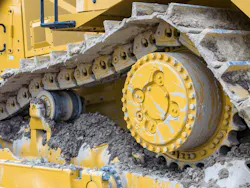
This section was written by Tim Nenne, market professional, at Caterpillar.
Undercarriage can account for up to 50 percent of a dozer’s maintenance costs, so following a set inspection and maintenance routine can help reduce these costs. Oversights in inspection and maintenance will result in excessive wear on undercarriage parts and lower operating hours. Extracting the most value from a steel undercarriage comes down to a few important practices:
- Track tension — This is one of the most significant practices in the ability to maximize life and save costs. Operating an excavator or dozer with the tracks too tight increases the loads between contacting components, and increased loads lead to increased wear rates. Keep the track tensioned to the OEM specifications, and it will help lead to more life and less downtime due to dry joints and internal wear.
- Keep it clean — Clean the undercarriage out on a regular basis. Material packed on the roller frame can contact the links and other undercarriage components during operation, causing increased wear. Best practice is to use a shovel and clean off the large accumulation of material from the tops of the frame. This will help increase life and help reduce the number of tight track instances.
- Limit high speed and unproductive tramming of the machine — The undercarriage wears when the machine is moving, and the more distance it covers in an unproductive manner, the less work you will get out of the undercarriage. Speed increases load on the undercarriage, and as discussed above, increased loads reduce life.
- Select the right undercarriage for the job — One type of undercarriage does not meet the needs of all applications and financial situations. Selecting the correct undercarriage can help reduce up-front costs, or it can help reduce maintenance by eliminating the need to replace components all at the same time or by eliminating bushing turns.
- Undercarriage and machine inspections — Completing a walkaround inspection on a regular basis can identify areas of concern. It can find loose or missing bolts, a tight track, or other things that need to be addressed before they create a downtime situation. One of the best ways to get the max life from an undercarriage is to do a full inspection and measure and inspect each component. This can identify maintenance opportunities or opportunities to help reduce costs and maximize life.
Know the warning signs of undercarriage trouble
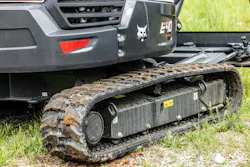
This section was written by Wayne Hintz, a senior business manager of parts at Bobcat.
Begin each shift with a walkaround of the excavator undercarriage. Remove packed mud, clay, rock, and other debris, then inspect tracks, rollers, idlers, sprockets, guards, bolts, and drive components for damage, leakage, or uneven wear. Check track tension against the operation and maintenance manual; tracks that are too tight increase component stress, while loose tracks can accelerate wear or derail. Operating technique also matters.
Minimize sharp turns, counter-rotation, unnecessary spinning, and long travel, especially on concrete, asphalt, rock, or other abrasive surfaces. Match track width to ground conditions and avoid repeatedly working across slopes when another approach is practical. Early warning signs of rubber track wear or damage include cuts, cracks, damaged or exposed embeds, exposed steel cords, lodged debris, unusual vibration, reduced travel performance, or wear concentrated on one side. Also inspect the undercarriage for pointed sprocket teeth, seized rollers, and oil leaks. Document findings and correct small problems promptly before they affect productivity, component life, or repair costs over its life.
How cold weather affects an excavator undercarriage
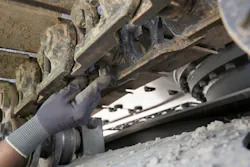
This section was written by Sejong Ko, product manager of excavators at Volvo Construction Equipment.
October and November are a great time to prepare for cold weather before frozen mud turns minor undercarriage wear into major headaches. The undercarriage makes up about half of your excavator’s maintenance costs, so quick daily and weekly walk-arounds go a long way. Items to look for in a daily inspection include loose or missing bolts; leaking seals; cracked links or track shoes; excessive or uneven wear; packed mud, clay, rocks, debris, or demolition material; damage to rollers, idlers, and sprockets; and track alignment issues.
For the weekly inspection, or about every 40 operating hours, you’ll need to power wash the tracks because you won’t be able to spot cracks, loose hardware, or leaking seals through caked dirt. Inspect one side at a time, looking closely at your rollers, idlers, sprockets and track shoes. Pay extra attention to track tension: frozen ground won’t give like soft soil does, so running tracks too tight will wreck your pins and bushings fast. And the last thing, compare the left and right sides. If one side is wearing faster, your operators might be favoring one direction or tracking long distances. Catch it now before the ground freezes solid.
A checklist of key excavator components to inspect
- Track chains (links, pins, bushings)
- Track shoes/pads
- Bottom rollers
- Carrier (top) rollers
- Idlers
- Drive sprockets
- Track frames and hardware
Tips to maximizing undercarriage life for all types of tracked equipment
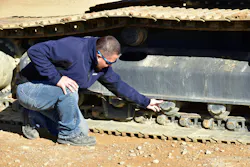
This section was written by Brian Kim, heavy excavator product manager at Develon.
Proper daily undercarriage care and smart operation are vital to controlling equipment ownership expenses. Incorporating key inspection and maintenance routines for both dozers and excavators can help protect your investment and prevent unexpected downtime.
- Operational best practices — How machine operators navigate a jobsite directly impacts track wear. Operators should avoid sharp turns or pivoting, which accelerate wear and increase the risk of de-tracking. Making wide, less aggressive turns helps reduce track spinning. When working on slopes, operators should keep the drive motor facing the back of the machine for proper balance and easier maneuverability. Additionally, operating on harsh surfaces like asphalt or concrete should be minimized whenever possible.
- Daily cleaning and visual inspections — At the end of every shift, operators should remove mud, rocks, and debris from the undercarriage using shovels or pressure washers. Allowing packed debris to remain can cause premature component wear, add excess weight that degrades fuel economy, and freeze in colder climates to lock up rollers. Performing a full machine walkaround is equally critical. Operators should inspect drive sprockets, idlers, rollers, track pads, track chains, and rock guards for excessive or uneven wear, loose bolts or broken pins. Any oil leaks around rollers, idlers, or drive motors require immediate attention to prevent severe system failure.
- Maintaining track tension — Checking track tension routinely ensures optimal power transfer and component protection. Tracks that are improperly tensioned, whether too loose or too tight, lead to accelerated parts wear, misalignment, or sudden de-tracking. Always consult the manufacturer’s operation and maintenance manual for exact tensioning specifications and measurement techniques.
About the Author
Keith Gribbins
Keith Gribbins is the head of content at Construction Equipment, where he leads editorial strategy across print, digital, video, and social channels. An award-winning journalist with more than 20 years of experience, Keith has won 17 national and regional editorial awards and is known for his hands-on reporting style, regularly visiting manufacturers, operating equipment, and covering major industry events worldwide.