Bridgestone Tire Q&A: How Construction Fleets Can Lower Tire Costs and Extend Tire Life
Yes, we've been heavy on tire info lately, but tires remain a huge part of maintenance costs. The more you know, the longer your assets keep rolling.
This time out, we hear from Bridgestone's Mike Tsakiries, the company's director of OTR marketing, covering buying criteria, maintenance plans, neat monitoring technologies, retreading, and (uh oh) common mistakes fleets make.
By the way, can I get a few sleeves of Bridgestone golf balls?
I'm kidding! Let's go.
Q: What are the most important factors to consider when buying off-road tires?
A: The best starting point in the market for new construction tires is to assess your total tire footprint. Tire manufacturers continually innovate and develop new features that enable optimal performance across a wide range of applications, so having a clear understanding of the equipment you use at your jobsite and the daily work they perform helps determine which tires could be right for your operation.
At Bridgestone, we recommend that all our customers work through this process with our extended dealer network, sales representatives, and field engineers. The trained professionals can help explain the differences between tires, especially regarding the compounds and tread patterns to ensure the correct tire for your application.
Your specific application is an important factor to consider in the tire selection process. Conditions can vary significantly, things like haul distance, load weight, surface type, and exposure to cuts, impacts, and debris all directly influence tire performance.
That’s why it’s critical to work with local dealers and manufacturer representatives who can evaluate your operation, site conditions, and tire wear to recommend the right solution. Once the correct tire is selected for theapplication, a strong maintenance program helps maximize performance, but getting the right tire for your specific application upfront has the biggest impact on total cost of ownership.
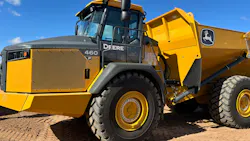
For example, if your project goal is to reduce overall operating costs for your loaders and articulated dump truck, you need a tire that is engineered with reliability, grit, and added durability.
Q: What are the most important factors to consider for buying tires for on-road fleets (pickups, dump trucks, haul trailers)?
A: For commercial fleets, tire performance is critical to maintaining productivity and minimizing downtime. With rising operational costs and an enhanced focus on sustainability, the tire industry has made significant strides in tire construction, performance, and durability to provide options for all fleet types.
Bridgestone recommends consulting with your local tire dealer. When having those conversations, it’s always important to understand your tire maintenance program. Proper tire maintenance provides several benefits, most notably extending tire life and improving overall performance.
Both of which help lower the total cost of ownership. With this information, combined with your fleet application, dealers can make tailored recommendations for your operation’s unique needs.
Q: What are the elements of a good tire maintenance plan and why are they important?
A: A good tire maintenance program is built on standardization, consistency, and continual optimization. If starting from the ground up, establish a formal tire inspection process and maintenance schedule.
Take daily tire-pressure readings for all your tires, as correct inflation provides optimal performance. Underinflation and overinflation can add unnecessary stress to a tire leading to premature removal.
Additionally, it is always a good practice to visually inspect your tires for any bumps, cuts, and tread depth. For tread depth, a traditional tread-depth gauge works well. Keeping consistent notes of daily wear and tear helps guide maintenance adjustments and can inform changes that can be made at the site itself.
How to maintain skid steer tires
Standardizing this process — ideally through a shared toolbox or checklist — and creating a record of your tires can provide long-term insights into your operations, keeping things running smoothly and reducing downtime.
Another key aspect of a successful tire maintenance program is how operators handle their equipment on the job. Operators who adhere to proper speeds and load limits engage in preventative maintenance practices that help extend tire life.
Another form of preventive maintenance is conducting daily inspections of high-traffic areas at the site. Removing large rocks or debris from a vehicle's path can go a long way toward tire health and improving uptime.
For additional help, construction businesses can turn to Bridgestone Engineering Solutions, which can conduct site surveys and on-site inspections to thoroughly evaluate working conditions and provide recommendations to improve efficiency.
Q: What are the technologies you offer for tire monitoring/management?
A: Bridgestone approaches tire monitoring and management through a combination of engineering expertise, industry experience, and advanced technology.
We start with engineering and deep industry knowledge, working directly with customers to understand their unique operating conditions. Through Bridgestone Engineering Solutions, we conduct studies on heat, weight, and g-forces, along with GPS assessments and drone surveys, to identify risks and optimize tire performance at the site level.
We then layer in technology to enable smarter, data-driven decisions. Our tire monitoring systems use sensors to track pressure and temperature in real time, delivering alerts through a cloud-based platform accessible on mobile devices. This helps operators proactively address issues and improve uptime.
Buy tires, add sensors later?
Finally, our asset management platform, Toolbox, provides a full lifecycle view of each tire from mounting and rotation to repairs and disposal, giving customers the insights they need to optimize usage, improve safety, and reduce costs.
Together, this integrated approach helps customers maximize performance, increase uptime, and drive overall operational efficiency.
Q: What are the pros and cons of retreading/recapping tires and what situations lend themselves to that strategy?
A: For truck and bus radial (TBR) tires, the use of retreads provides economic and environmental benefits.
Retreaded tires perform like new tires, but for a fraction of the cost resulting in significant savings over time.
In addition to the savings, retreads offer multiple tread patterns to customize your tire program to fit your operation’s unique needs, maximizing your fleet’s performance.
Environmentally, retread tires help fleets and tire manufacturers consume fewer resources. Creating a Bandag retread tire, for instance, uses 30% less energy compared to manufacturing a new tire. Incorporating retreads into your operation also reduces tire waste from prematurely entering waste streams.
Integrating retreading into your tire program can significantly reduce your tire cost. For medium-to-large construction fleets with a substantial number of on-road vehicles, a full new tire/retread program can provide many benefits to your operation. For smaller operations, buying retreaded tires can be a good option to reduce your operating cost.
Q: What do fleets most often get wrong about tire buying/maintenance?
A: One of the primary challenges tire manufacturers face is demonstrating the long-term benefits of investing in new tires. Frequently, construction companies emphasize the initial cost of a tire when making purchasing decisions.
While premium tires may have higher upfront costs, they typically last longer and deliver optimal performance throughout their use. This results in fewer tire replacements and installation expenses, ultimately leading to increased operational uptime and lower total cost of ownership.
About the Author
 Frank Raczon
Frank Raczon
Frank Raczon has covered and influenced the equipment industry for 35 years, including 15 years as senior editor of Construction Equipment, and marketing, advertising, and public relations work with the industry's top manufacturers. In addition to authoring "Caterpillar: Modern Earthmoving Marvels" (Motorbooks, 2015), he has won numerous awards in his career, highlighted by nods from the Construction Writers Association, the Association of Equipment Manufacturers, the Business Marketing Association, and BtoB magazine. Raczon has also won a number of awards from publishing peer groups such as ASBPE and TABPI.