Stop Over-Specing Buckets: Duty Levels Explained
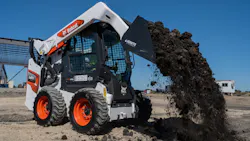
Ask any fleet manager the duty level of the bucket on their next PO, and you'll hear the same answer more often than not: the heaviest they got. It will last longer. Bucket duty levels are often treated like a simple upgrade path. If heavy-duty is good, severe-duty must be better. Operators and fleet managers spec up, assuming they are making a safer long-term decision.
That approach works in a lot of cases, but it’s not without trade-offs. Additional steel adds strength, but it also adds weight. That weight reduces available lift capacity and can affect how much material you move in each cycle. In some applications, that matters more than the added durability. On the other hand, running a bucket that's not built for the job can lead to accelerated wear and more frequent repairs.
The goal is not to choose the heaviest option available. It’s to understand how the bucket is built and how that design aligns with the work being done every day.
What “duty level” really means

One of the challenges with duty levels is that they are not standardized across the industry. What one manufacturer calls heavy-duty may not match another. The label provides general guidance, but it does not tell the full story. At a basic level, duty classification comes down to three factors: material thickness, reinforcement, and intended application.
General-purpose buckets are built for versatility and lighter-duty work. They are suited for materials such as topsoil, mulch, and loose gravel, where impact and abrasion are limited, making them a practical choice for a wide range of everyday tasks. Heavy-duty buckets are designed for more demanding applications. They incorporate increased material thickness and added reinforcement in key wear areas such as the cutting edge, side plates, and bucket floor to handle denser materials and more consistent use.
Severe-duty buckets build on that approach for the most aggressive environments, including rock, demolition, and highly abrasive conditions. In addition to reinforcing high-wear areas, these designs extend reinforcement across more of the structure, often incorporating plated or reinforced bottoms and additional bracing to handle repeated impact and sustained stress over time. The question then becomes when and where to add that reinforcement. Maintaining structural integrity without adding unnecessary weight is a balancing act with a direct impact on attachment longevity and overall ROI.
The solution is to rely on engineering tools that take the guesswork out of the equation.
Optimizing strength and weight
Finite element analysis, often referred to as FEA testing, is used by leading manufacturers to evaluate how an attachment will perform under load. It is essentially computer modeling that puts the attachment through extreme working conditions digitally, simulating stress, impact, and wear before the product is ever built. This type of modeling allows engineers to apply stress in a wide range of ways that would be difficult to replicate consistently in physical testing alone. Different load conditions, impact points, and material behaviors can all be evaluated early in the design process.
Once stress points are identified, engineers can reinforce those specific areas instead of overbuilding the entire bucket. This allows for a more efficient balance between strength and weight. This is where looking beyond the duty classification becomes important. Two buckets may fall into the same category on paper, but differences in how they are engineered can lead to very different results in the field.
Every machine has a fixed operating capacity, and the attachment’s weight reduces that limit. Buckets with targeted, stress-based reinforcement outperform broadly reinforced designs. They stay durable where it counts while freeing up more capacity for material handling in each cycle.
Getting the most out of each cycle

With base bucket weight as a constant in the equation, the next step is making the most of the carrier capacity that remains. This is where bucket geometry starts to matter, especially as higher-duty buckets reduce available capacity and make efficient use of what remains more important. Capacity is not just about width. Sidewall height, floor length, and bucket depth all influence how much material can be carried and how efficiently it can be handled. These factors determine how well a bucket maximizes usable capacity without unnecessary bulk. A taller bucket may offer more heaped capacity, but it can also make it harder to see the cutting edge and control the load, especially in grading or finish work.
Lower-profile designs have become more common to balance those trade-offs. By reducing the height of the back plate and extending the floor, these designs maintain usable capacity while improving visibility to the cutting edge. That improved sightline allows operators to work more precisely, particularly in applications where grade control matters. There is also an efficiency component. A bucket that is easier to see and control can reduce rework, minimize material spillage and improve cycle consistency. Over time, those gains can have as much impact on productivity as raw capacity.
When wear components make sense and when they don’t
Wear components can help extend a bucket’s capability, but they are not a one-size-fits-all solution. In the right application, they can improve performance and reduce wear without stepping up to a heavier-duty bucket. In others, they can add maintenance and fall short of the durability a properly matched bucket would provide. Bolt-on cutting edges are a common example. They protect the base edge and can be replaced as they wear, making them a practical option for abrasive materials.
Tooth bars improve penetration in hard or compacted ground, allowing the bucket to work more efficiently without relying on added weight. Side cutters and wear plates provide additional protection in high-contact areas, particularly in rock or demolition work, helping preserve the structure of the bucket.
These components can be effective when used for specific conditions, but they come with trade-offs. Relying on add-ons to push a bucket beyond its intended duty level can lead to increased wear on the structure, more frequent maintenance, and inconsistent long-term performance. What works in the short term may not hold up over time. The better approach is to match the bucket to the primary application first, then use wear components to fine-tune performance. Done right, this preserves capacity, maintains durability and supports better long-term ROI.
Spec for the work, not the label
Duty levels are a useful starting point, but they are not the only consideration. By understanding the trade-offs between strength and weight, contractors can avoid overbuilding or under-spec’ing their equipment. In the end, the best bucket is not the heaviest. It is the one that moves the most material efficiently, holds up to the demands of the job, and delivers the strongest return over time.
Darin Gronwold is a product manager for Ignite Attachments.