Why a Landfill Compactor Might Be the Perfect Doomsday Vehicle
Key Highlights
-
Cummins becomes the common engine. The 300-horsepower L9 diesel brings Cummins power across Bomag’s landfill compactor range.
-
Each configuration handles material differently. Landfill compactors use refuse blades, shovel compactors add buckets for material handling, and onward.
-
The apocalypse case is unusually convincing. Compactors can spread waste and shape soil, but maybe also move rubble and fight zombies — while looking terrifying.
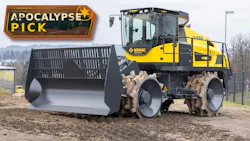
What machine would you choose for the end of days? Spider excavator? Mining truck? I think I’m going to go with … landfill compactor … which, if you think about it, already spends its days crushing society’s leftovers. These machines are ideal for the apocalypse — an enormous blade, weird spiky steel wheels, high visibility, and comfy cabs. I might choose a Bomag, as I just noticed the company updated its BC 473-5 and BC 573-5 series compactors. The changes affect the BC 473 RB-5 and BC 573 RB-5 landfill compactors, BC 473 RS-5 shovel compactor, and BC 473 EB-5 soil compactor. I’d highly suggest any of those units when society goes sideways.
The updates include a 300-horsepower Cummins L9 engine, revised controls, new displays, better lighting, and easier service access. From the press release:
“Our customers asked, and we listened. As part of our extensive voice of customer program, the Cummins engine was preferred for service and support convenience,” says Matt McDaniel, landfill sales manager, east for Bomag Americas. “Our design updates help take some of the most efficient and productive compactor models available to the market and make them easier and more efficient to operate.”
These changes should improve real-world productivity, but I feel these updates also just strengthen my argument for prioritizing the expanded use of these units in our fast-approaching Road Warrior society. So, here’s everything you need to know to prep.
What do landfill, soil, and shovel compactors do?
Great question. These machines share the same basic articulated compactor layout, but manufacturers configure them for different applications. All of them spread material and then reduce its volume through serious compaction. Their steel wheels use aggressive teeth to crush, mix, and compact material. These compactors also capitalize on articulated joints to help maintain ground contact and traction. The attachment at the front and the wheel configuration help distinguish how each style works. For instance…
Landfill compactors use a wide straight or semi-U blade to spread waste. The wheels use steel teeth to crush, mix, and compact it all. That’s what Bomag’s RB models do. After civilization collapses, that blade could clear road debris and position abandoned cars as makeshift barriers. Just saying.
Soil compactors often pair a tilting blade with steel wheels. The latter are fitted with staggered deep-compaction teeth. The blade spreads and grades soil, while the wheel teeth penetrate, mix, and make it dense. An example would be Bomag’s BC 473 EB-5. During the apocalypse, this config could prepare roads, building pads, and defensive berms.
Shovel compactors replace the blade with a bucket. The bucket can scoop, carry, place, and spread landfill material before the wheels compact it. The Bomag BC 473 RS-5 represents this style of unit. After doomsday, it could load supplies, move rubble, and handle civilization’s messiest cleanup jobs.
The Cummins L9 brings 300 horsepower
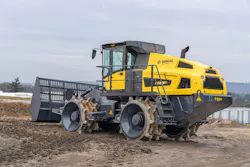
Let’s talk power. Bomag replaced its previous engines with a 300-horsepower Cummins L9 across these four configurations. The L9 delivers more power than the engine it replaces, according to Bomag, and it runs at a lower RPM for an increase in fuel efficiency. The L9 is also a pretty widely used engine platform found across construction equipment, trucks, and even buses. Technicians may already know the L9 from other off-highway equipment. According to the press release:
“Bomag’s full landfill compactor line, offering operating weights from 57,000 to more than 124,000 lbs, is now powered by Cummins engines, offering familiarity for service technicians, improving maintenance ease, and increasing convenience through locally sourced replacement parts.”
New controls simplify operation
The cab experience has improved. Bomag added a 7-inch touchscreen that displays operating information and fault codes. A separate standard 7-inch monitor displays the rearview camera feed. That rear visibility helps around haul trucks, ground personnel, and unpredictable landfill traffic. It might also reveal zombies approaching from behind. Bomag also offers an optional 10-inch camera monitor.
The redesigned joysticks divide the primary functions between the operator’s hands. The left joystick controls travel direction, forward, reverse, neutral, and the horn. The right joystick raises and lowers the blade. It also controls blade tilt on machines equipped with that option. A cool new cylinder-position sensor reports blade elevation through the touchscreen. This gives operators another reference when positioning material or controlling blade movements. Bomag also replaced the previous mechanical accelerator with an electronic foot pedal. The company says the new e-pedal “gives instantaneous throttle response without the delay encountered in previous designs,” according to the release.
Other upgrades
Bomag noted the updated interior also provides additional legroom, which is always welcome. The company also noted new electric side mirrors that allow operators to adjust the viewing angle without leaving the seat. A safety beacon now comes standard, and LED work lights improve what operators can see. There’s a winter package available that adds a hydraulic heating system for cold climates. That could prove useful during winter landfill operations, but it might also be useful for nuclear winter operations, although Bomag makes no official claims regarding fallout resistance. But the company did note it added an electrically operated engine hood that now opens and closes without starting the machine.
How to choose an apocalypse compactor
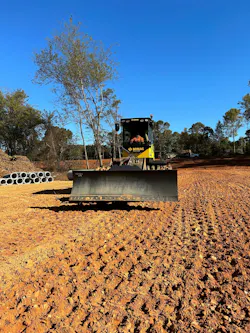
No responsible fleet manager should select a compactor solely because it resembles a vehicle from a dystopian action film. The machine still needs to fit its primary application in today’s still-functioning society. So…
- Match the compactor type to refuse, soil, mineral waste, or shovel-loading work.
- Evaluate operating weight against required compaction performance and site conditions.
- Compare blade configurations with spreading and material-handling needs.
- Assess visibility, lighting, camera coverage, and cab comfort.
I encourage you to go through all those normal application-focused selection processes. Then (maybe) consider the secondary benefits in a future dystopia. These machines could clear roads, rebuild foundations, shape barriers, and intimidate mutants. They will not outrun much, but they will look fantastic rebuilding society — or claiming the last Buc-ee’s gas station.
About the Author
Keith Gribbins
Keith Gribbins is the head of content at Construction Equipment, where he leads editorial strategy across print, digital, video, and social channels. An award-winning journalist with more than 20 years of experience, Keith has won 17 national and regional editorial awards and is known for his hands-on reporting style, regularly visiting manufacturers, operating equipment, and covering major industry events worldwide.